
Fire safety in aging adults requires taking specific precautions beyond what younger, more mobile people might need. Many older adults face greater risks from home fires because physical limitations—reduced mobility, hearing loss, or slower reaction times—can make escape more difficult.
A single fire safety failure, like an expired fire extinguisher or blocked exit, becomes much more serious when mobility is compromised or when someone lives alone and cannot call for help immediately. The good news is that most residential fires are preventable, and most fire deaths can be avoided with the right equipment and planning. For someone aging in place or managing mobility challenges, fire safety means creating layers of protection: eliminating ignition sources, installing proper alarms, keeping clear escape routes, and having a practiced plan to get out quickly.
Table of Contents
- What Makes Older Adults More Vulnerable to Fire Risks?
- Fire Detection and Alarm Systems for Aging in Place
- Creating a Safe Escape Route and Exit Plan
- Preventing Common Home Fire Causes
- Fire Extinguishers and When They’re Practical
- Special Considerations for People Living Alone
- Home Safety Inspections and Long-Term Planning
- Conclusion
- Frequently Asked Questions
What Makes Older Adults More Vulnerable to Fire Risks?
Older adults account for a disproportionate share of fire deaths, partly because they often have health conditions that slow evacuation—arthritis affecting mobility, hearing loss preventing alarm detection, or cognitive changes affecting judgment. A fall during evacuation could trap someone who might otherwise escape. Living alone compounds the risk because there’s no one else to notice a fire starting in another room or to help with evacuation. Specific fire hazards also increase with age.
Unattended cooking—leaving a stove on while distracted—is the leading cause of unintentional home fires among seniors. Smoking in bed or while drowsy is another major risk factor. Electrical hazards, like using damaged cords or overloaded outlets, also increase fire risk. For comparison, younger people may recover from a small fire because they hear the alarm, react quickly, and can exit in seconds; an older person with hearing loss or mobility restrictions might not hear the alarm until smoke has already filled the space.

Fire Detection and Alarm Systems for Aging in Place
Standard smoke alarms are only effective if someone can hear them, so hearing-impaired older adults need additional options. Strobe-light alarms and vibrating bed shakers are designed for people with hearing loss and are significantly more effective than sound-alone alarms for this population. Carbon monoxide (CO) detectors are equally important because CO poisoning kills silently, and older adults may attribute CO symptoms—dizziness, confusion, headache—to existing health conditions rather than a gas leak. The limitation of traditional alarms is placement: many people install alarms only in bedrooms and kitchens, but a fire can start anywhere.
Ideally, interconnected alarms mean one sounding alerts the whole house. Hard-wired alarms with battery backup are more reliable than battery-only models because they don’t depend on someone remembering to replace batteries. Test alarms monthly and replace batteries twice yearly, even if the alarm hasn’t beeped to signal low battery. A home with no working alarms has roughly twice the fire fatality risk of one with functioning alarms.
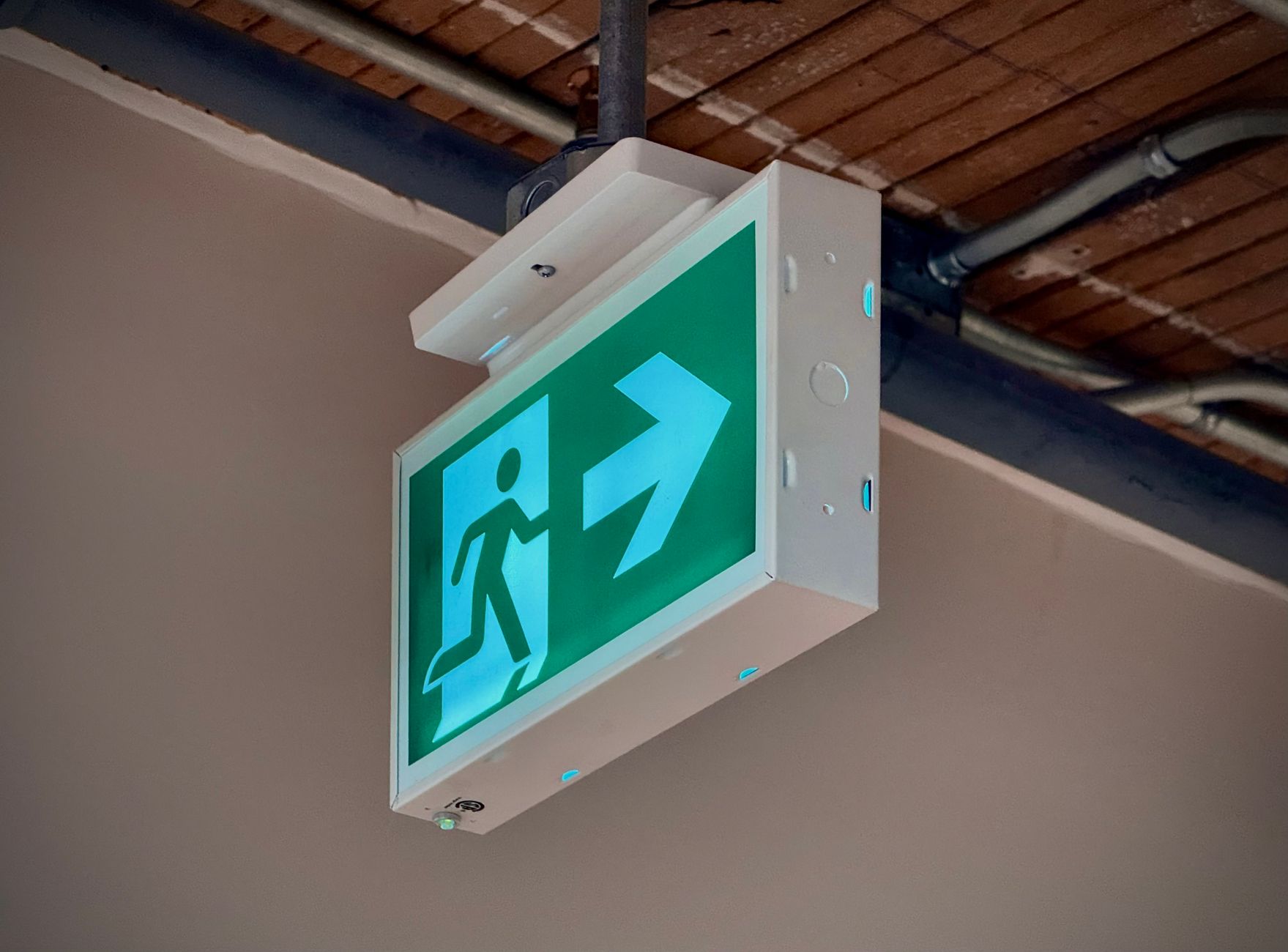
Creating a Safe Escape Route and Exit Plan
The first escape route should always be through a regular door, but bedroom windows should also be part of the plan as a backup exit. Egress windows—windows large enough to climb through—are required in bedrooms by building code for this reason. If mobility is severely limited, the escape plan might involve getting to a safe room and calling 911 rather than attempting to leave the house. For someone in a wheelchair, this means ensuring the room has a phone, that someone knows the plan, and that the door can be opened from inside in an emergency.
Practice the escape plan at least twice a year, and involve family members or caregivers so they understand where the person will go. A critical warning: never assume you have time to retrieve medications, pets, or valuables. Fire spreads fast—a small fire can become dangerous in two to three minutes. In a real fire, seconds matter. Establish a clear meeting place outside the home where family members will reunite, and ensure neighbors or family know about this plan so someone can account for the person and alert firefighters if needed.
Preventing Common Home Fire Causes
Unattended cooking is responsible for most home cooking fires, and for older adults, using the oven or stovetop while distracted—perhaps by conversation, medication, or another task—happens easily. The solution is establishing a strict rule: never leave cooking unattended. A timer helps, but staying in the kitchen is the only reliable method. Use the back burners when possible so pots are less likely to be bumped, and wear fitted sleeves rather than loose, flowing fabric that could catch fire. Smoking safety requires discipline.
Smoking while lying in bed or on a couch dramatically increases fire risk because a person may fall asleep while smoking. Establish a smoking rule: only in a designated, well-supervised space, and completely extinguish cigarettes before leaving the area. Electrical hazards—cracked cords, overloaded outlets, portable heaters placed too close to combustibles—should be eliminated. A space heater, for example, should be at least three feet away from anything flammable (curtains, bedding, furniture). Keep cords out of high-traffic areas where someone might trip over them, which is especially important for people with mobility issues or balance problems.
Fire Extinguishers and When They’re Practical
Small fire extinguishers can be useful for contained, early-stage fires in the kitchen, but they’re only effective if someone can use them safely and if the fire remains small. The limitation is significant: using a fire extinguisher means staying near the fire to aim and spray, which exposes a person to heat and smoke. For an older adult with mobility issues or limited strength, attempting to use an extinguisher might be dangerous or impossible. A large fire will quickly become uncontrollable, and the safest response is to evacuate immediately and call 911 from outside. If fire extinguishers are kept in the home, label them clearly and place them in the kitchen only.
Know the PASS method (Pull, Aim, Squeeze, Sweep), but understand its limits. If the fire is spreading rapidly, if it blocks your exit, or if you’re unsure you can control it, leave immediately. Do not stay to fight a growing fire, and do not return inside once you’ve exited. A warning: some older adults attempt to extinguish fires rather than evacuate, which can lead to serious injury or death. Evacuation must always be the priority.
Special Considerations for People Living Alone
Living alone during a fire creates urgency because there’s no one to call for help and no one to check whether the person made it out. Some older adults benefit from medical alert systems or home monitoring services that can detect unusual activity and alert family members. These systems don’t prevent fire, but they can ensure that someone notices if a person hasn’t checked in after a fire or if they’re injured.
Having trusted neighbors or family members with a door key means they can check on the person quickly if needed. Post a list of emergency numbers, medications, and the escape plan outside the home or with neighbors so firefighters have important information if the person needs assistance. For someone with limited mobility or chronic conditions, working with local fire departments to share information about special needs—mobility aids, medications, communication challenges—can help firefighters locate and assist the person more quickly in a real emergency.
Home Safety Inspections and Long-Term Planning
Many fire departments offer free home safety inspections and can identify specific risks in a person’s home. This is a practical, low-cost resource that older adults should consider using. An inspector can identify blocked exits, inadequate alarms, electrical hazards, or clutter that could slow escape.
They can also assess whether an escape plan is realistic given the person’s mobility and suggest modifications. Looking forward, aging in place increasingly involves smart home technology that can support fire safety—interconnected alarms, automatic door unlocks in emergencies, and systems that alert family members and emergency services. While not a substitute for prevention and planning, these tools can reduce response times and improve outcomes. The goal is layers of protection: eliminate fire sources, detect fires early, have clear escape routes, and know how to reach safety quickly.
Conclusion
Fire safety for older adults aging in place requires honest assessment of personal risks—mobility limitations, hearing loss, living alone—and targeted solutions that address those specific challenges. The foundation is prevention: eliminate ignition sources through careful cooking practices and smoking discipline, maintain electrical safety, and install and test alarms appropriate for the individual’s hearing and mobility. The final step is planning and practice.
Establish a clear escape route, practice evacuation, and ensure family members or neighbors understand the plan. In a fire, seconds matter, and advance planning means the difference between safe evacuation and crisis. Taking time now to assess risks and prepare gives the best chance of staying safe and maintaining independence at home.
Frequently Asked Questions
What’s the best type of smoke alarm for someone with hearing loss?
Dual-sensor alarms that combine strobe lights and vibrating bed shakers are most effective. Some newer systems send alerts to a smartphone or smartwatch as well.
How often should I replace batteries in my smoke detectors?
Replace batteries twice per year, such as when changing clocks for daylight saving time. Don’t wait for the low-battery beep.
What should I do if a fire starts in my home?
Evacuate immediately. Do not attempt to extinguish the fire or retrieve belongings. Call 911 from outside the home or a neighbor’s home once you’re safe.
Should I install my escape ladder in a bedroom window even if I can’t use it?
Yes. If mobility is limited, having the ladder in place helps firefighters know where to enter and rescue if needed. Tell family members and firefighters about the ladder location.
Can I use a portable heater safely in my bedroom?
Yes, but only if kept at least three feet from bedding, curtains, and other flammables. Turn it off before sleeping, and check the cord for damage regularly.
Is it safe to use an extension cord for a space heater?
No. Space heaters should be plugged directly into an outlet. Extension cords can overheat and cause fire.