
Better home lighting reduces falls, improves safety, and helps older adults maintain independence longer. Good lighting directly addresses the most common cause of accidental injuries for people over 65—poor visibility in key areas like hallways, bathrooms, and stairs. When an older person can see clearly where they’re walking, navigate their space confidently, and avoid tripping hazards, they stay active longer and need less help from caregivers. Most homes aren’t lit well for aging.
A living room that feels bright enough during the day may be dangerously dim at night. Hallways that worked fine at age 40 become obstacle courses at age 75. The problem isn’t always the number of lights—it’s where they are, how bright they are, and whether they’re positioned to eliminate shadows and glare. A 70-year-old woman I knew had a fall in her kitchen not because she was unsteady, but because a single overhead light cast a harsh shadow across her countertop, hiding a spill.
Table of Contents
- Why Lighting Matters More as You Age
- Brightness Levels and Where Light Should Go
- Types of Lighting Fixtures and Limitations
- Strategic Improvements for Maximum Impact
- Glare and Color Temperature Issues
- Lighting for Specific Needs
- Future Smart Lighting and Evolving Technology
- Conclusion
- Frequently Asked Questions
Why Lighting Matters More as You Age
Vision changes significantly after 60. The lens of the eye becomes less flexible and less transparent, so older eyes need roughly three times more light than younger eyes to see the same thing clearly. Cataracts, which affect about half of people over 80, scatter light and make glare worse. Age-related macular degeneration and diabetic retinopathy reduce peripheral vision and color discrimination. These changes aren’t just inconveniences—they directly increase fall risk, reduce confidence in moving through your home, and can lead to isolation if someone stops going down stairs or venturing into certain rooms. Good lighting compensates for these changes.
A well-lit home with no dark corners, glare-free fixtures, and adequate task lighting in bathrooms and kitchens can restore the visual clarity that aging has taken away. The contrast between lit areas and shadows becomes critical: a senior who can’t see the edge of a step or the corner of a cabinet is far more likely to trip. Adding lighting to hallways, bathrooms, and staircases has been shown in multiple studies to reduce fall rates by 15 to 20 percent. Lighting also affects mood, sleep, and cognitive function. Bright light exposure during the day helps regulate circadian rhythms, which are often disrupted in older adults. Poor nighttime lighting contributes to confusion and disorientation—common in people with early dementia or delirium—making a trip to the bathroom feel dangerous and unfamiliar.

Brightness Levels and Where Light Should Go
There’s no universal rule for “how bright” a room should be, but research on aging and lighting suggests specific brightness levels for different spaces. A bedroom needs roughly 75 to 100 foot-candles of light, a kitchen 50 to 100, and a bathroom 30 to 50. These numbers sound abstract until you use a light meter or compare them to what’s already in your home. One practical way to gauge adequacy: if you can read fine print without glasses while standing in the middle of a room, the light is likely sufficient. If you have to hold text close to your face or move to a specific spot, it’s too dim. Placement matters as much as brightness.
Overhead lights alone are rarely enough and often create harsh shadows that make older eyes work harder. The ideal setup combines overhead lighting with task lighting (like a light over the bathroom sink or a lamp by a favorite reading chair) and ambient light (softer, indirect lighting that fills corners). In a bathroom, for example, a bright light directly above the mirror helps with grooming, but without additional light from the sides, it casts shadows under the eyes and makes it harder to see the edges of the sink and counter. A common mistake is putting a single light in the center of a hallway or staircase. This creates a bright circle of light with dark areas on either end, making the transition between lit and unlit zones disorienting. Better practice is to add lights at regular intervals—every 8 to 10 feet in hallways, at the top and bottom of stairs, and on landing areas. Motion sensors can be added to these lights so they turn on automatically, which is especially helpful at night when an older person needs to get up to use the bathroom and doesn’t want to fumble for a light switch.
Types of Lighting Fixtures and Limitations
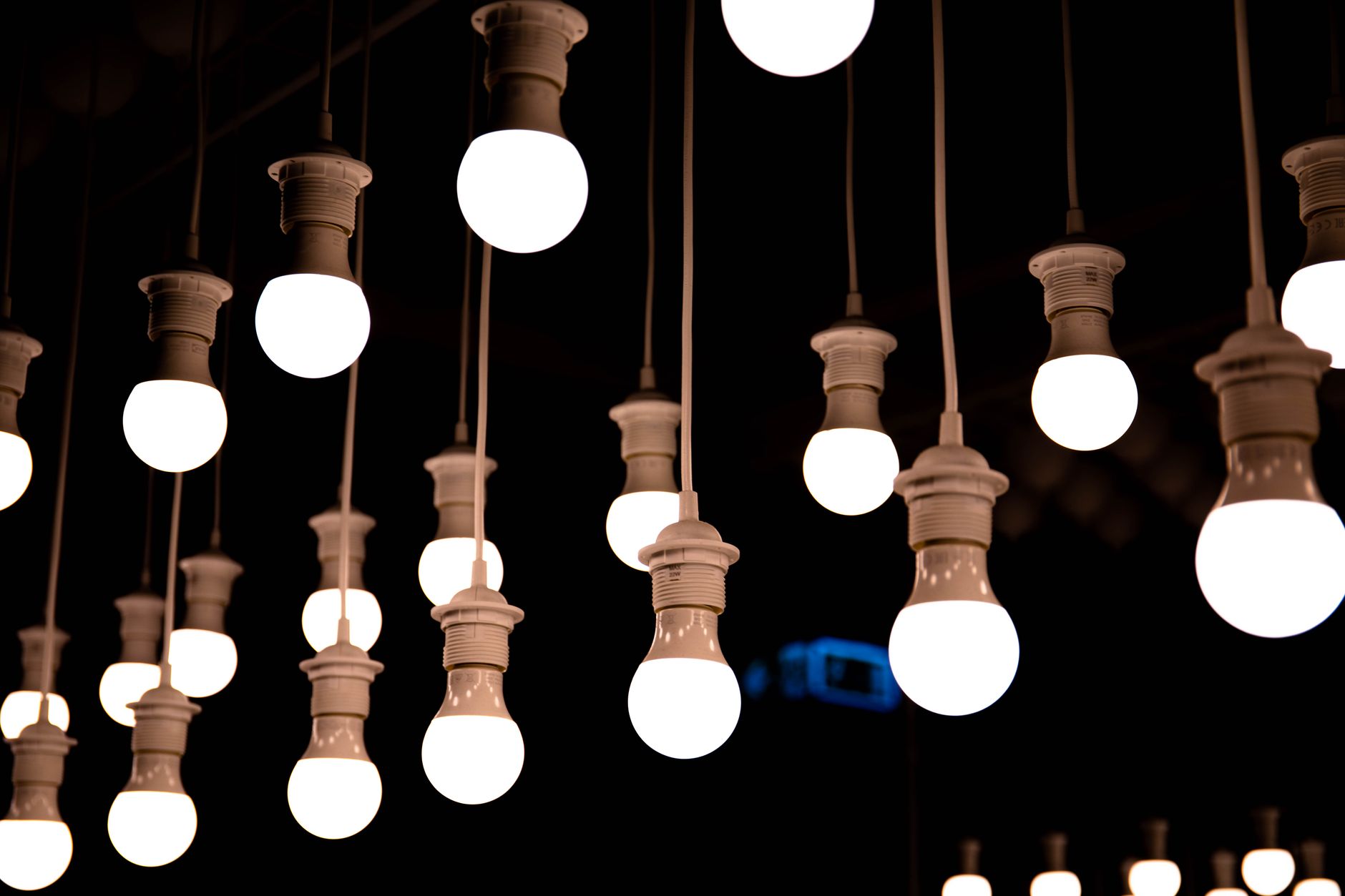
Incandescent bulbs, long the standard in homes, are warm and familiar but inefficient and increasingly unavailable. They produce heat along with light, they burn out frequently, and they’re dim enough that many older adults need multiple fixtures to achieve adequate brightness. LED bulbs have largely replaced them and offer major advantages: they last 15 to 25 times longer, produce far more light for less electricity, and generate little heat. However, not all LED bulbs are equal. “Cool white” LEDs (5000K color temperature) can feel harsh and clinical, while “warm white” LEDs (2700K) are more comfortable but may not provide enough brightness for functional tasks. Fluorescent fixtures, common in kitchens and bathrooms, provide bright light but can flicker at low levels, which some older adults find uncomfortable or even triggering for headaches. Dimmable LED bulbs solve this problem but cost more.
Recessed ceiling lights look modern and save space but often create dark patches along walls and corners—unhelpful for aging eyes. Pendant lights and sconces are more expensive to install but distribute light more evenly and can add to a room’s appearance. A limitation many people overlook is that new, bright lights reveal safety problems that dim lighting hid. Adding good lighting to a bathroom might make you notice that the floor is slippery near the tub, or that the toilet is placed in an awkward spot. This is actually valuable information—it forces you to address hazards you couldn’t see before. Smart lighting systems that adjust brightness throughout the day or respond to motion sensors can be helpful, but they’re also complex to set up and require comfort with technology. For many older adults, simple, reliable fixtures with multiple switches or pull cords are more practical.
Strategic Improvements for Maximum Impact
Start with the most critical areas: bathrooms, bedside tables, hallways, and staircases. A bathroom improvement might be as simple as upgrading a single overhead fixture to a bright LED with a diffuser that eliminates harsh shadows, then adding a small nightlight or low-brightness light for nighttime bathroom trips. Nightlights should be bright enough to find your way but not so bright that they disrupt sleep if you’re walking past someone’s bedroom. A 10 to 15 watt equivalent LED is usually sufficient. Bedside lighting is equally important. A small lamp with a 3-way bulb (so you can adjust brightness) is safer than a ceiling light you must get up to reach. Pathway lights along hallways—small wall-mounted or floor-level fixtures—create a visual guide without being harsh.
If falling asleep with even dim light is an issue, consider lights with motion sensors that activate when feet touch the floor. For stairs, recessed lights in the treads or on the wall at eye level create clear visual separation between steps. Wall-mounted handrails with integrated LED strips serve double duty: they provide light and a grip. The tradeoff in upgrading all at once versus gradually is worth considering. A complete overhaul can cost several hundred to several thousand dollars, depending on whether you hire an electrician. Starting with the bathroom and hallway often gives the most safety benefit for the least cost. LED bulbs themselves are inexpensive now—usually $5 to $15 each—so upgrading existing fixtures to brighter, more efficient bulbs is a low-cost first step. If budget is limited, focus on areas where falls are most common: bathrooms (where floors are wet), kitchens (where objects are on the ground), and stairs.
Glare and Color Temperature Issues
Glare—harsh light reflecting off surfaces—is underestimated as a hazard. Older eyes are more sensitive to it. Glossy countertops, polished floors, and smooth bathroom tiles all reflect bright light, creating painful glare that reduces visibility rather than improving it. High-gloss light fixtures overhead can also create a bright spot in your field of vision that makes it harder to see detail. Matte or frosted light diffusers, shades, and bulbs reduce glare significantly. In bathrooms and kitchens where reflective surfaces are common, choosing fixtures with diffusers is nearly essential. Color temperature also affects visibility and mood. LED bulbs range from 2700K (warm, yellowish light) to 5000K or higher (cool, bluish light).
Warm light is comfortable in bedrooms and living rooms but may not be bright enough for task work. Cool light improves clarity for reading and detail work but can feel cold and institutional in a bedroom. A practical middle ground is 3000K to 4000K “neutral white” for kitchens and bathrooms, and 2700K for living areas and bedrooms. Some people find that using warmer light in the evening (dimmed) and brighter, cooler light during the day helps maintain healthy sleep patterns. A warning: smart home lighting systems that adjust color temperature throughout the day can help, but they’re also a source of technical trouble. If the system fails or the internet connection drops, you lose control of your lights. For older adults, simplicity and reliability matter more than automation. A straightforward setup with multiple switches and separate fixtures is less elegant but far more dependable. If you do use smart lights, keep at least one traditional light switch and bulb in each room that works independently.

Lighting for Specific Needs
If you use mobility aids like a cane or walker, lighting takes on additional importance because you need good peripheral vision to manage your device and watch for obstacles. Walkway lighting at floor or ankle level—small LED strips or low sconces—helps you see where your feet and devices go without requiring you to look down constantly. In a kitchen where an older person stands to cook or prepare meals, lighting that’s too bright overhead and too dim at counter level creates the worst of both worlds. Adding an under-cabinet light strip makes cutting food safer and reduces the posture strain of leaning forward to see.
Bathroom lighting deserves extra attention if you have mobility issues or use grab bars. Lighting should not create shadows in the shower or tub area, where slipping is most likely. Waterproof LED strip lights running along the edge of a tub or along walls provide even illumination. A light bright enough to see your footing in the tub or shower—at least 50 foot-candles—is worth the installation effort and cost.
Future Smart Lighting and Evolving Technology
LED technology continues to improve and become more affordable. RGB (color-changing) and tunable LED systems that adjust color temperature can be programmed to provide energizing blue-white light during the day and warm, dim light in the evening, supporting natural circadian rhythms. For older adults with dementia or those prone to sundowning (increased confusion and agitation in the evening), this kind of lighting has shown promise in clinical settings. The technology is still expensive for residential use, but costs are dropping.
The future of home lighting for aging may also include integration with other smart home systems: lights that respond to motion sensors, turn on when a door opens, or brighten gradually if a fall is detected. These systems are fascinating but also introduce dependency on technology. For the next 5 to 10 years, the most practical approach remains a combination of well-placed, bright LED fixtures with warm color temperatures in living spaces and cooler, brighter light in functional areas. This strategy doesn’t require a smart home—just thoughtful planning and appropriate fixtures.
Conclusion
Better home lighting is one of the simplest, most cost-effective changes an older adult can make to reduce fall risk and maintain independence. It requires no medical equipment, no ongoing maintenance beyond occasional bulb replacement, and no lifestyle changes—just the right amount of light in the right places. Whether you’re aging in place in your own home or managing a parent’s living space, a room-by-room assessment and upgrade is worth the investment. Start with a flashlight and honest look at your home at night.
Walk from the bedroom to the bathroom, down the hallway, and through the kitchen as you would at 2 a.m., and note where you move slowly or cautiously because visibility is poor. Those areas are your priority. An electrician or lighting specialist can help design a solution, or you can start with inexpensive changes like new LED bulbs and small additional fixtures, testing what works before investing in permanent installations. The goal is not perfection but confidence—the ability to move through your home safely and independently at any hour.
Frequently Asked Questions
How do I know if my home’s lighting is adequate for aging in place?
A practical test: can you read small print comfortably while standing in the middle of a room? Can you see the edges of stairs and hallway corners clearly from any angle? If you hesitate or move slowly because visibility is poor, your lighting needs improvement. Consulting with a lighting designer or electrician who specializes in aging-in-place modifications can provide specific recommendations.
Are LED bulbs safe for people with eye conditions like cataracts or macular degeneration?
Yes, but with attention to glare. LEDs are bright and long-lasting, which helps older eyes. However, high-quality diffusers and matte fixtures are essential to prevent discomfort. If you have cataracts or macular degeneration, avoid direct light in your field of vision—use shades, diffusers, or indirect lighting instead.
Should I install motion-sensor lights throughout my home?
Motion sensors are helpful in bathrooms and hallways for nighttime safety, but using them everywhere can be frustrating. Many older adults prefer at least one reliable, traditional light switch in each room. A hybrid approach—motion sensors in high-traffic nighttime areas and traditional switches elsewhere—often works best.
What’s the difference between warm and cool LED lighting, and which should I use?
Warm LED light (2700K) feels comfortable in bedrooms and living rooms but may be too dim for tasks. Cool light (4000K to 5000K) is better for reading and detail work but can feel harsh and clinical. Use warm light in relaxation areas and cooler, brighter light in kitchens, bathrooms, and reading areas.
Can better lighting really prevent falls?
Yes. Studies show that adequate, well-placed lighting reduces falls by 15 to 20 percent. Lighting alone isn’t the answer—you also need grab bars, clear pathways, and mobility aid training—but it’s one of the most effective, inexpensive safety measures available.
Is it expensive to improve lighting in an older home?
No. LED bulbs are inexpensive ($5 to $15 each), so upgrading existing fixtures is low-cost. Adding new fixtures costs more but can often be done gradually. Starting with critical areas like the bathroom and hallway keeps costs manageable while providing significant safety benefits.