
The right cane doesn’t just provide physical support—it fundamentally shifts how older adults perceive themselves and their ability to move through the world independently. When you choose a cane that fits your body, your gait, and your lifestyle, you’re not simply leaning on a stick; you’re reclaiming the confidence to walk without fear of falling, to venture beyond your home, and to make decisions about your own mobility rather than having them made for you. A well-selected cane becomes a tool of empowerment, not a symbol of decline, because it meets you where you are physically while leaving room for the dignity and autonomy that matter just as much as balance. Many people resist using a cane because they associate it with weakness or frailty. Yet the opposite is true: studies show that older adults who use properly fitted mobility aids report higher confidence in daily activities, fewer falls, and greater willingness to go out—to visit friends, attend appointments, or run errands. Consider Margaret, a 74-year-old with mild arthritis who initially refused a cane despite her doctor’s suggestion.
After her first fall in her kitchen, she reluctantly tried one. Within weeks, she was walking to the mailbox again, had resumed volunteer work at her church, and told her daughter she felt like herself again. The cane hadn’t changed her body; it had given her permission to trust it. The transformation doesn’t happen because of the cane alone. It happens because the right cane addresses the specific barriers you face—whether that’s hip pain, weakness on one side from a stroke, balance issues from inner ear problems, or general unsteadiness that comes with age. The cane becomes a bridge between your current abilities and the independence you want to maintain.
Table of Contents
- How Does a Cane Improve Balance and Reduce Fall Risk?
- Choosing the Right Cane for Your Body and Lifestyle
- Building Confidence Through Consistent Use and Adaptation
- Navigating Social Perception and Maintaining Dignity
- Warning Signs of Cane-Related Problems and When to Reassess
- Canes for Specific Health Conditions and Limitations
- The Long-Term Independence Factor and Future Mobility Planning
- Conclusion
- Frequently Asked Questions
How Does a Cane Improve Balance and Reduce Fall Risk?
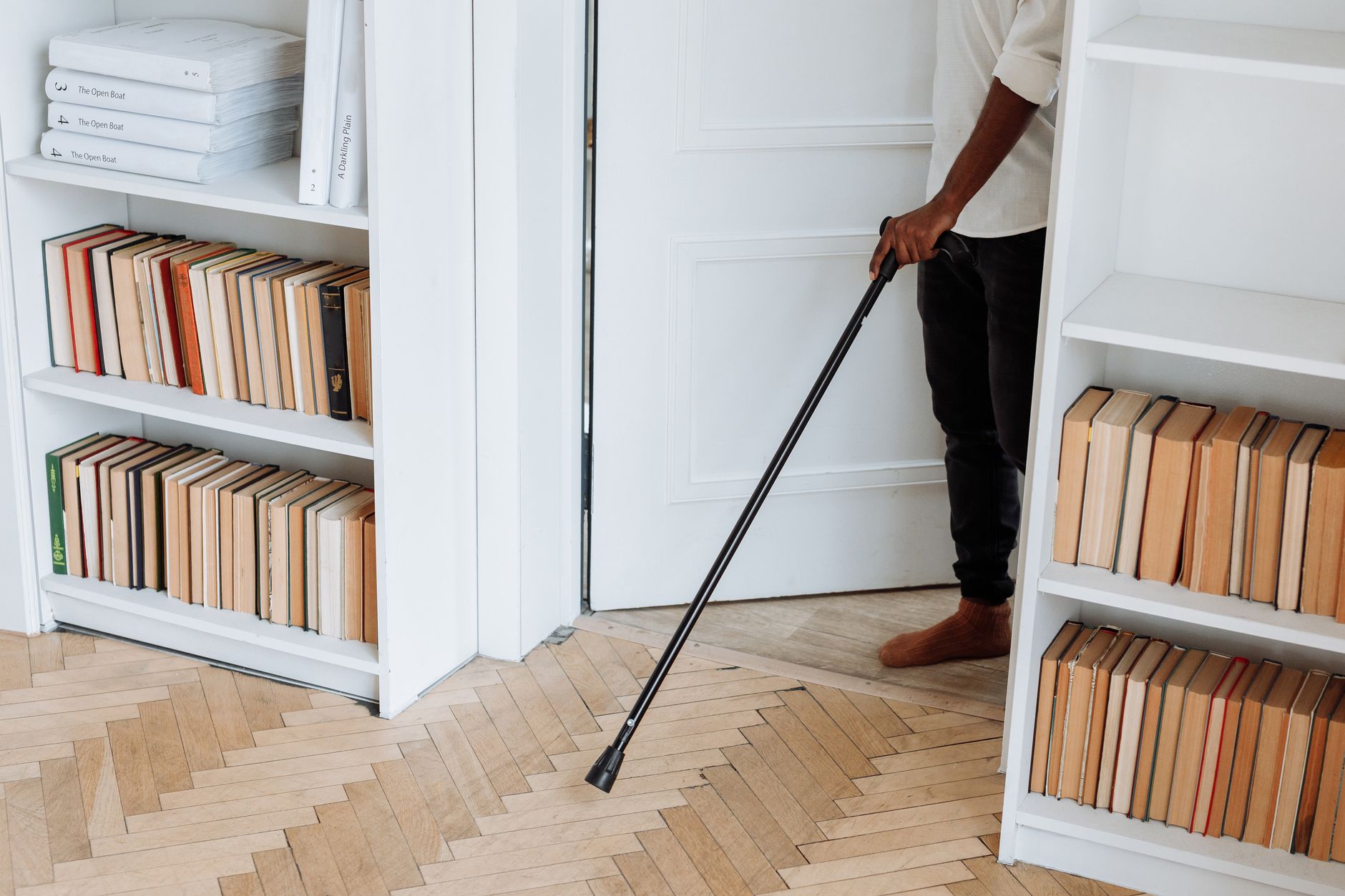
A cane works by shifting some of your body weight off your legs and onto your arms, reducing the load on joints and muscles that may be weakened, painful, or unstable. When you grip the cane firmly, it creates a three-point or four-point contact with the ground (depending on whether you’re using a single-point or quad cane), which significantly improves your base of support. This wider foundation makes it harder to lose your balance on uneven surfaces, around furniture, or when you’re tired. Research from the American Geriatrics Society shows that proper cane use can reduce fall risk by up to 20 percent in adults over 65, particularly in those with balance disorders or lower-body weakness. The physics of it is straightforward, but the real-world difference is profound. Without a cane, an 80-year-old with mild arthritis might shuffle slowly around their home, favoring one side, constantly gripping doorframes and countertops to feel safe.
With a cane, that same person can walk at a normal pace, use both hands for other tasks when they’re standing still, and move through their environment with a clear, confident rhythm. The cane stabilizes your stride and reduces the micro-corrections your body has to make to stay upright—corrections that tire you out, destabilize you further, and often precede falls. One limitation worth noting: a cane won’t help if it’s the wrong height, material, or style for your body. An ill-fitting cane can actually throw off your gait, tire your arm and shoulder, and create pain that makes you less likely to use it consistently. A cane that’s too tall forces you to hunch; one that’s too short forces you to bend, creating pressure on your hip. Someone using the wrong cane might actually fall more often, not less, because they’re fighting against the tool instead of working with it.
Choosing the Right Cane for Your Body and Lifestyle
The cane market is far larger than most people realize, with options ranging from classic wooden models to lightweight aluminum, carbon fiber, ergonomic designs, and canes with built-in seats, lights, or ice-picks for winter walking. The best choice depends on your strength, your primary reason for needing the cane, your living environment, and your lifestyle. A lightweight aluminum cane works well for someone with upper-body weakness who needs maximum support without muscle fatigue. An adjustable cane allows you to get the exact height that lets your arm hang naturally at a 15-degree bend when standing upright. An ergonomic grip cane redistributes pressure across your palm and fingers, protecting against hand fatigue and carpal tunnel issues that can develop from gripping a traditional straight handle for long periods. For someone living in a home with stairs, a cane with a narrow profile allows better grip on bannister railings. For someone who spends significant time outdoors in winter, a cane with an ice-pick tip can prevent slipping on snow and ice when a standard rubber tip won’t grip. For someone with arthritis in their hands, a bent-handle cane or a soft-grip handle reduces joint strain compared to holding a thin wooden dowel.
James, 68, has a tremor in his right hand from Parkinson’s disease. A standard cane felt unsteady because the tremor transmitted up the shaft. When he switched to a cane with a shock-absorbing handle and a weighted tip, the tremor was absorbed by the cane’s design rather than fighting against him. His stability improved not because the cane was fancier, but because it was designed for his specific problem. A practical limitation: customized or specialty canes often cost significantly more than standard models, ranging from 30 dollars for a basic straight cane to 200 dollars or more for ergonomic or technology-enhanced versions. Insurance may cover a basic cane if prescribed by a doctor, but fancier options often come out of pocket. Additionally, canes require maintenance. Rubber tips wear down and need replacement every six months to a year depending on use. A cane that once gripped the floor like glue will slip dangerously on tile or linoleum if the tip has worn smooth—and the wear is easy to miss until you’re already losing your footing.
Building Confidence Through Consistent Use and Adaptation
Using a cane is a skill, not just a tool deployment. It takes time—typically two to four weeks—to develop a natural gait with a cane rather than an awkward, unbalanced shuffle. Your brain has to learn where the cane is in space, how much force to apply when you grip it, how to shift your weight, and how to time your steps. During this adaptation period, many people feel more unstable, not less, which is exactly when they’re most likely to stop using it. Physical therapists can cut this period in half through just a few sessions of instruction on proper technique: where to hold the cane (slightly ahead and to the side of your foot, not beside your body), how to step (moving the cane and the weaker leg forward together), and how to navigate specific obstacles like curbs or stairs. Once the learning period passes, something shifts emotionally. Using a cane stops feeling like a concession and starts feeling like freedom. People report walking farther, taking fewer breaks, and no longer planning their day around fatigue or fall fear.
A woman who hasn’t been to the grocery store alone in two years because she was terrified of collapsing in an aisle finds she can now do her own shopping. An older man who gave up golfing because he couldn’t trust his balance on uneven terrain starts playing again with his grandson. The cane removes the invisible walls that fear builds. The adaptation is faster and more complete when people use the cane consistently, not just when they feel particularly shaky. Some people save their cane for “bad days,” but this approach actually slows progress because your body and mind never fully adapt. Consistent use reinforces the neural pathways that control balance and gait. It normalizes the tool so it feels like an extension of your body rather than a foreign object. And psychologically, it sends a message to yourself: I am not waiting for my legs to feel good enough. I am taking action now to be safe and independent.

Navigating Social Perception and Maintaining Dignity
Using a mobility aid in a culture that associates independence with moving without help creates a real psychological hurdle that has nothing to do with the cane’s effectiveness. Many older adults worry they’ll be perceived as frail, that people will try to do things for them, or that using a cane signals a downward trajectory toward more mobility aids and more dependence. These concerns are valid but often overblown. Most people notice a cane for about three seconds, then never think about it again. Younger people, in particular, may not even register that you’re using one—they’re too absorbed in their own movement through space. Some people find that using a cane actually improves how they’re perceived.
A person walking slowly but confidently with a cane, moving with a clear rhythm, looks safer and more capable than someone shuffling uncertainly and gripping walls. A cane signals, “I have a plan for my safety” rather than “I’m struggling.” It gives you permission to move at your own pace without seeming hesitant or tentative. The research backs this up: older adults using canes report being asked for help less often and report higher confidence in their abilities, not lower. That said, there is a real tradeoff. A cane does occupy one hand, which means you can’t carry grocery bags, hold a child’s hand, or grip a railing with both hands when navigating stairs. Learning to work within these constraints—using a cane in one hand and a small backpack or cross-body bag instead of trying to juggle bags—is part of the practical adaptation. Some older adults find that the freedom and confidence a cane provides far outweighs the minor inconvenience of carrying less at once.
Warning Signs of Cane-Related Problems and When to Reassess
Because people adapt to canes, they sometimes don’t notice when something is wrong until a problem is well-established. Shoulder and neck pain are surprisingly common in cane users—a sign that the cane is too long or that you’re gripping too tightly in anticipation of falling. Hand numbness or tingling suggests the handle is too thin, causing pressure on nerves, or that you’re death-gripping the cane rather than resting your weight on it. If you start leaning heavily to one side when walking with the cane, it often means the cane needs to be shorter, or it could signal a new problem—a new muscle strain, a shift in your balance, or weakness that’s developing on the opposite side. Some people with balance problems use a cane for years and then “outgrow” it—their balance improves, their strength returns, and they no longer need it. Others reach a point where a single cane no longer provides enough stability, and they need to move to a walker.
Neither situation is failure. A cane is not a permanent identity; it’s a tool that addresses your current situation. The danger comes when someone has been using a cane for so long that they don’t notice it’s no longer meeting their needs. They continue shuffling along with it instead of upgrading to a walker that would serve them better, or they stop using it when it could still help them maintain safety. Regular check-ins with a physical therapist or your doctor—even once a year—can catch these changes. A simple assessment of your gait, your grip strength, and your balance can determine whether your current cane is still the right choice or whether something has changed.
Canes for Specific Health Conditions and Limitations
Different conditions require different cane approaches. Someone recovering from knee surgery might need a cane for six months while healing, then graduate to independent walking—a very different use case than someone with permanent arthritis who will use a cane for life. Someone with balance issues from Parkinson’s disease needs a cane that’s lightweight and won’t increase tremor; someone with a stroke affecting one side might need a cane on the unaffected side to shift weight away from the weak side, but that’s counterintuitive and requires proper instruction from a therapist.
Arthritis, the most common reason people use canes, often improves with a cane that reduces impact. An arthritic knee that causes sharp pain with every step might feel nearly pain-free when a cane absorbs even 20 percent of your body weight. This improvement itself becomes motivating—the pain decreases, activity increases, and mobility expands. A senior who couldn’t walk to the end of her driveway because knee pain made every step unbearable finds she can walk around the block after two weeks of cane use.
The Long-Term Independence Factor and Future Mobility Planning
Using a cane well is one part of a larger independence picture. Canes work best in combination with other fall-prevention strategies: removing tripping hazards at home, wearing proper footwear, staying physically active, managing medications that cause dizziness, and maintaining good lighting. A cane plus a home free of clutter and throw rugs is far more protective than a cane in a cluttered house with poor lighting.
This means that choosing a cane is also an opportunity to think about your broader living situation and safety, not just the tool itself. Looking forward, mobility aids are becoming more integrated with technology—GPS-enabled canes for people with cognitive decline, canes that alert caregivers when they’re dropped, canes with pressure sensors that track gait changes and alert you when your pattern shifts in ways that suggest increasing fall risk. These innovations don’t change the fundamental principle: the right tool, chosen thoughtfully and used consistently, extends your independence. Whether that tool is a traditional cane today and a walker five years from now is not a failure—it’s adaptation, which is how people age successfully.
Conclusion
The right cane restores confidence and independence because it addresses the specific gap between what your body can do safely and what you want to be able to do. It’s not about being dependent on the cane; it’s about being independent enough to do the things that matter—seeing friends, living in your own home, maintaining the routines that give life meaning. The emotional shift often matters as much as the physical one: the difference between being afraid to move and trusting your body enough to move freely.
Starting the conversation with your doctor or a physical therapist is the next step. Bring questions about the specific situations where you feel unsteady or afraid, mention any pain that limits your movement, and ask for a referral to a therapist if you want guidance on proper cane selection and use. The right cane exists for your situation—it’s a matter of matching the tool to your needs and taking time to use it consistently until it feels natural.
Frequently Asked Questions
Can I use a regular walking stick instead of a medical cane?
Walking sticks and medical canes are not the same. Walking sticks are typically longer, thinner, lighter, and designed for seasonal or recreational use. Medical canes are shorter, sturdier, and built to distribute your weight safely. Using a walking stick for balance needs risks slipping, breaking, or not providing enough stability.
How do I know if a cane is the right height?
When standing upright with your arms at your sides, the top of the cane should reach your wrist. Your elbow should bend at about 15 degrees when you’re holding the cane. If you have to hunch or reach down, it’s the wrong height.
Will using a cane weaken my legs?
No. Studies show the opposite: people who use canes consistently tend to be more active because they feel safer moving around. Staying active is what keeps legs strong.
Can I use a cane on the same side as my weak leg?
It depends on the type of weakness. Generally, you use a cane on the opposite side of your body from the weak side. For example, if you have weakness on your left side, you hold the cane in your right hand. Ask your physical therapist for guidance specific to your situation.
How often do I need to replace my cane?
The rubber tip typically wears down every six to twelve months depending on how much you use it and the surfaces you walk on. The cane itself can last years, but inspect it regularly for cracks or damage.
Is it embarrassing to use a cane?
This is more about your perception than others’ reactions. Most people find that using a cane makes them feel more confident and capable, which often translates to how they carry themselves. Confidence is not embarrassing—it’s noticeable in a positive way.