
Age-friendly design is the future of independence because it directly removes the physical and cognitive barriers that force older adults into unnecessary dependence. Rather than accepting decline as inevitable, age-friendly design—from lever door handles to readable font sizes to predictable room layouts—treats the environment itself as a tool for maintaining autonomy. When a bathroom grab bar prevents a fall, when a kitchen with lower counters allows someone to cook without help, when curb-cut sidewalks enable a person using a wheelchair to move freely, that person keeps their independence intact. This isn’t about staying young; it’s about sustaining the ability to make choices and manage your own life.
The stakes are measurable and personal. According to research from the Centers for Disease Control and Prevention, one in four Americans age 65 and older experiences a fall each year. Many of these falls happen at home—in spaces never designed with older bodies in mind. Yet when homes, public spaces, and workplaces are intentionally designed with aging in mind, falls drop, independence extends, and people avoid the cascade of dependency that often begins with one accident or barrier they can’t overcome.
Table of Contents
- How Does Age-Friendly Design Actually Support Independence?
- The Physical and Cognitive Demands That Age-Friendly Design Addresses
- Real-World Examples of Age-Friendly Design in Homes and Communities
- Retrofitting vs. Building New: The Cost-Benefit Reality
- Hidden Barriers: When Age-Friendly Design Falls Short or Is Overlooked
- Technology and Age-Friendly Design: When Digital and Physical Intersect
- The Future: How Age-Friendly Design Will Shape Housing and Urban Planning
- Conclusion
How Does Age-Friendly Design Actually Support Independence?
age-friendly design works by addressing the specific physical, sensory, and cognitive changes that come with aging, without assuming anyone needs to be warehoused or constantly supervised. It’s based on a simple principle: make the environment work for the person, not the reverse. This includes improved lighting to compensate for declining vision, handrails and non-slip surfaces to prevent falls, doors and hallways wide enough for mobility devices, and clear signage with readable fonts. It also includes things less visible but equally important: thermostats that regulate temperature automatically, lever-style handles instead of knobs that require grip strength, and kitchen layouts that don’t require bending or reaching above shoulder height.
A real example: A 74-year-old woman in Portland, Oregon remained living independently in her home of 40 years after her knees weakened, because the bathroom was renovated with grab bars, the toilet seat was raised, and the shower had a bench. She could dress herself, shower, and use the bathroom without asking for help. Without those changes, she would likely have needed to move to assisted living within months. Age-friendly design doesn’t require tearing down and rebuilding; it’s often about strategic modifications and thoughtful layout that multiply what someone can do alone.

The Physical and Cognitive Demands That Age-Friendly Design Addresses
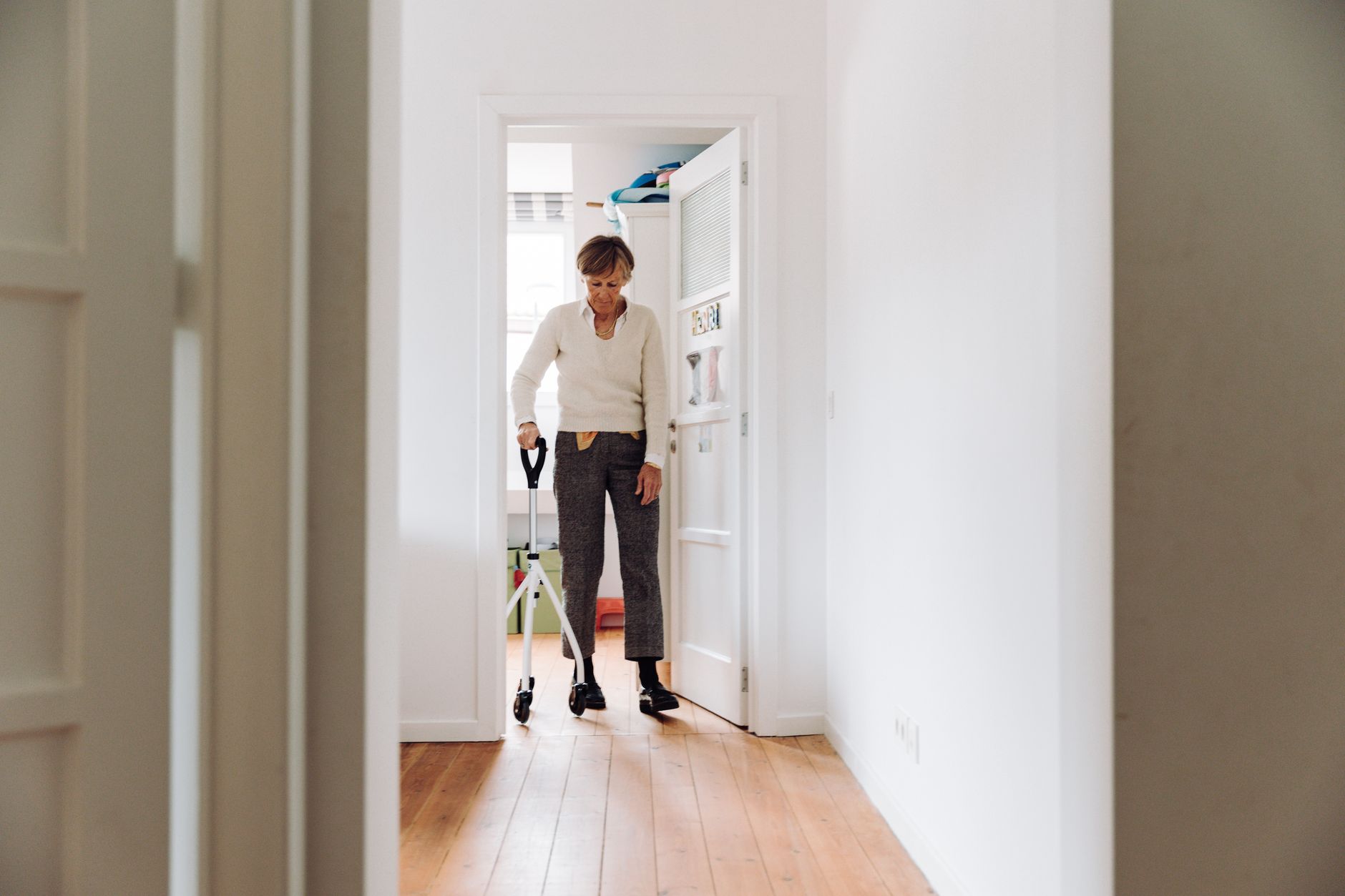
As bodies age, strength declines, balance becomes less reliable, joints stiffen, and vision and hearing shift. Age-friendly design acknowledges these changes as normal—not as personal failures to be overcome through willpower alone. The environment can be made to work *with* the aging body instead of against it. Lighting increases to compensate for presbyopia, the age-related loss of visual acuity. Buttons and controls are positioned at waist height, not above the head or on the floor. Flooring is smooth and slip-resistant, not scattered with rugs and hazards. Rooms are organized logically so someone with mild memory changes can find the kitchen, bedroom, and bathroom without confusion.
The limitation that often goes unspoken: age-friendly design cannot prevent all decline, and it cannot solve every problem. A person with advanced dementia may still wander and become lost, even in a well-designed home. Someone with severe arthritis may struggle even with lever handles. Age-friendly design extends independence and dignity, but it’s not a cure for illness or a stopper on aging. It’s a practical floor—a baseline below which unnecessary dependence begins. Some people, eventually, will need hands-on care. Age-friendly design delays that moment and makes the experience less jarring when it arrives.
Real-World Examples of Age-Friendly Design in Homes and Communities
In Copenhagen and other Scandinavian cities, age-friendly housing has been built as a policy priority for decades. These neighborhoods include apartments with step-free entrances, wider hallways that allow two people or a walker to pass, kitchens designed for someone sitting or standing, and community spaces where older adults can gather without feeling isolated. Residents of these communities report higher satisfaction with their lives and spend far fewer years in institutional care than their peers in less thoughtfully designed environments. In Japan, where the population is aging faster than almost anywhere else on Earth, age-friendly design has become embedded in building codes and urban planning. Trains have priority seating and clear, readable station announcements in large font.
Bathrooms in public buildings and trains include grab bars as standard. Curb cuts are ubiquitous, not an afterthought. The result: older Japanese adults remain active and independent longer, and the economic cost of elder care—while still significant—is lower than it would be if everyone ended up in residential facilities earlier than necessary. This is not a coincidence. Design choices drive outcomes.

Retrofitting vs. Building New: The Cost-Benefit Reality
When age-friendly design is built into a home or building from the start, the cost is often small—sometimes just a few percentage points above standard construction. Wider hallways, accessible bathrooms, and good lighting are not expensive when they’re planned upfront. But retrofitting an existing home—adding grab bars, widening doorways, lowering cabinets, improving lighting—costs money and often requires construction. The tradeoff is real: retrofitting a bathroom with accessibility in mind might cost $10,000 to $25,000. Not retrofitting might lead to a fall, hospitalization, and a move to assisted living that costs $50,000 to $100,000 per year. The financial calculus usually favors adaptation.
One fall can end independence. The question is not whether age-friendly design is affordable, but whether the alternative—crisis care, institutional living, or ongoing dependence on family—is more affordable. Most families find that investing in home modifications or choosing housing designed with aging in mind costs far less over time than the alternatives. The limitation: access to resources varies enormously. A wealthy person can retrofit a home easily; a person on a fixed income in a rental property often cannot. Public policy and housing subsidies play a role in whether this design approach is available to everyone or only to the privileged.
Hidden Barriers: When Age-Friendly Design Falls Short or Is Overlooked
Many public spaces remain hostile to aging bodies and minds, even in wealthy countries. Doctors’ offices have small fonts on check-in forms. Pharmacies arrange medications on shelves that require reaching or bending. Public restrooms have doors that close too quickly for someone with limited mobility. Traffic signals change too fast for someone with a slower gait. Websites are designed with tiny fonts and complex navigation that confuse anyone with declining vision or processing speed. These are not inevitable; they’re oversights born from design that centered on younger bodies.
A critical warning: age-friendly design is often invisible to those who don’t need it yet. A 45-year-old person may roll their eyes at the mention of lever door handles or accessible parking. Then at 65, after an injury or the onset of arthritis, they suddenly notice that the world was not built for them. By then, they may have lost years of independence they could have kept. The argument for age-friendly design isn’t sentimental; it’s practical. Everyone ages. The environments we design today will either serve us well when we’re older, or they’ll trap us in dependence we didn’t have to accept.
Technology and Age-Friendly Design: When Digital and Physical Intersect
Age-friendly design now includes technology: voice-activated lights that turn on without fumbling for switches, medication reminders sent to a phone or watch, video doorbells so someone doesn’t have to approach an unknown visitor, and falls detection systems that alert family or emergency services automatically. These tools extend independence by removing small friction points that, accumulated over a day, can exhaust someone or make them hesitant to live alone. One example: A 79-year-old man in Seattle lives alone after his wife died. He uses a wearable device that detects falls and automatically calls his adult daughter and 911 if he doesn’t respond within a minute.
He’s had one fall since getting the device—and the automatic response meant he was treated within 20 minutes instead of lying on the kitchen floor for hours. He remained in his home and recovered at home. Without the technology, he likely would have moved to assisted living immediately after the fall. The technology, paired with a home designed for his safety, gives him both security and autonomy.
The Future: How Age-Friendly Design Will Shape Housing and Urban Planning
As populations age globally—Japan, South Korea, and much of Europe now have more people over 65 than under 25—age-friendly design is shifting from a niche idea to an economic necessity. Developers and governments are beginning to realize that housing designed only for young families creates a bottleneck later: millions of older adults who can’t stay in their homes and must move to institutional care, overwhelming the system. The alternative—building age-friendly communities from the start—is economically smarter. More older adults age in place, require less institutional care, remain economically active longer, and stay engaged with their communities.
The future will likely see age-friendly design woven into building codes, urban planning, and public health policy as routinely as fire safety is now. This shift won’t happen overnight; it requires changing assumptions about what “normal” architecture and design should be. But it’s already beginning, and the places that embrace it—Scandinavian countries, parts of Asia, forward-thinking cities in North America—are discovering that respecting aging doesn’t require building separate, segregated spaces. It requires designing better for everyone.
Conclusion
Age-friendly design is the future of independence because it recognizes a simple truth: the environment we live in shapes what we can do independently. Removing barriers—whether physical, sensory, or cognitive—keeps older adults capable, engaged, and in control of their own lives far longer than isolation and dependence require. This isn’t optional or sentimental.
It’s pragmatic economics and sound design. The pathway forward involves three steps: awareness that design matters and aging bodies deserve accommodation, retrofitting homes and public spaces where possible, and choosing to live in communities and buildings designed with aging in mind. For those caring for aging parents or partners, age-friendly design is one of the most powerful tools available to extend independence and quality of life. For those aging themselves, understanding these principles and building them into housing choices early—before crisis forces the issue—can determine whether the next 20 or 30 years of life are spent managing your own affairs or gradually asking others to manage them for you.