
Bodyweight exercises are movements that use your own body as resistance—no equipment, dumbbells, or machines required. For older adults trying to maintain independence, protect mobility, and stay capable of daily tasks like climbing stairs, getting up from a chair, or carrying groceries, bodyweight exercises are one of the most practical tools available. A 76-year-old can perform wall push-ups against a kitchen counter to strengthen arms without leaving home, or do sit-to-stands from a favorite chair to build leg strength for walking and balance.
These exercises directly translate to real-world function in ways that matter for living independently longer. The appeal is straightforward: bodyweight work builds strength, balance, and confidence without the cost, learning curve, or intimidation factor of a gym. For someone concerned about aging in place safely, bodyweight exercises address the specific physical demands of independence—stepping over obstacles, maintaining balance, lifting and lowering the body—in familiar, controllable settings.
Table of Contents
- What Makes Bodyweight Exercises Effective for Older Adults?
- Common Limitations and Why Progression Matters
- How Bodyweight Exercises Support Balance and Fall Prevention
- Starting a Bodyweight Program—Safety and Realistic Expectations
- Overuse Injuries and Recovery
- Combining Bodyweight Work with Daily Movement
- Building Confidence and Long-Term Consistency
- Conclusion
What Makes Bodyweight Exercises Effective for Older Adults?
Bodyweight exercises work because they challenge muscles against a load that is immediately familiar and adjustable. When you do a wall push-up, you’re pressing against the wall’s resistance. When you stand up from a chair, gravity and your body weight provide the resistance. Unlike machines that move in fixed patterns, bodyweight movements engage stabilizer muscles and demand balance and coordination, which is exactly what aging bodies need to prevent falls and maintain real-world capability.
The effectiveness also comes from specificity. Sit-to-stands train the exact muscles and movement pattern required to get out of a bed or car. Step-ups strengthen legs for stairs. Planks and wall walks build core stability that supports posture and balance. A 72-year-old who does three sets of sit-to-stands twice a week will see measurable improvements in daily function—noticing it gets easier to get up from the couch, stand for longer at the kitchen counter, or walk up the porch steps without holding the rail.
Common Limitations and Why Progression Matters
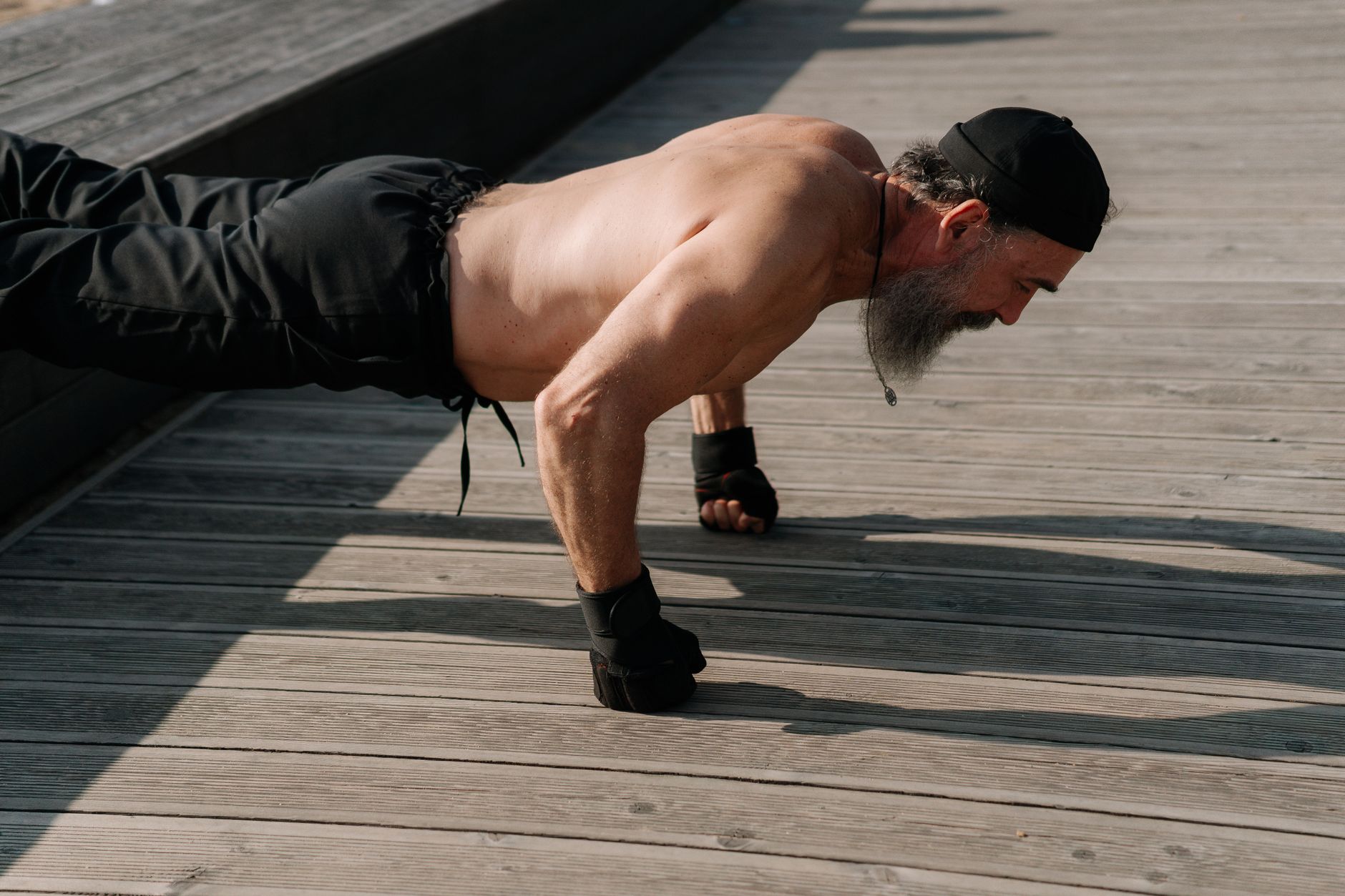
A real limitation of bodyweight exercises is that they have a ceiling. A very strong person may eventually find standard push-ups and pull-ups too easy, with no simple way to add load without external equipment. For older adults, though, this is rarely the limiting issue. The actual limitation is the opposite: standard bodyweight movements may be too hard to start, requiring modifications like wall push-ups, chair-assisted sit-to-stands, or incline push-ups on a countertop.
Starting at the right level and progressing slowly is essential to avoid overuse injury or discouragement. Progression also matters because muscles adapt. Doing the same movement at the same difficulty for months yields diminishing returns. Adding a few more repetitions, increasing the range of motion, slowing the tempo, or holding for longer challenges the muscle in new ways and continues building strength. A person doing wall push-ups for three months might progress to incline push-ups on a table, then standard push-ups from the knees, then full push-ups—each step taking weeks or months, with clear wins along the way.
How Bodyweight Exercises Support Balance and Fall Prevention
Balance is a learned skill, and bodyweight exercises build it directly. Single-leg stands (holding a counter for light support), tandem stance holds, step-ups, and lunges challenge the nervous system and stabilizer muscles that keep you upright. For someone aging in place, fall prevention is not academic—a fall can end independence and trigger a cascade of medical complications.
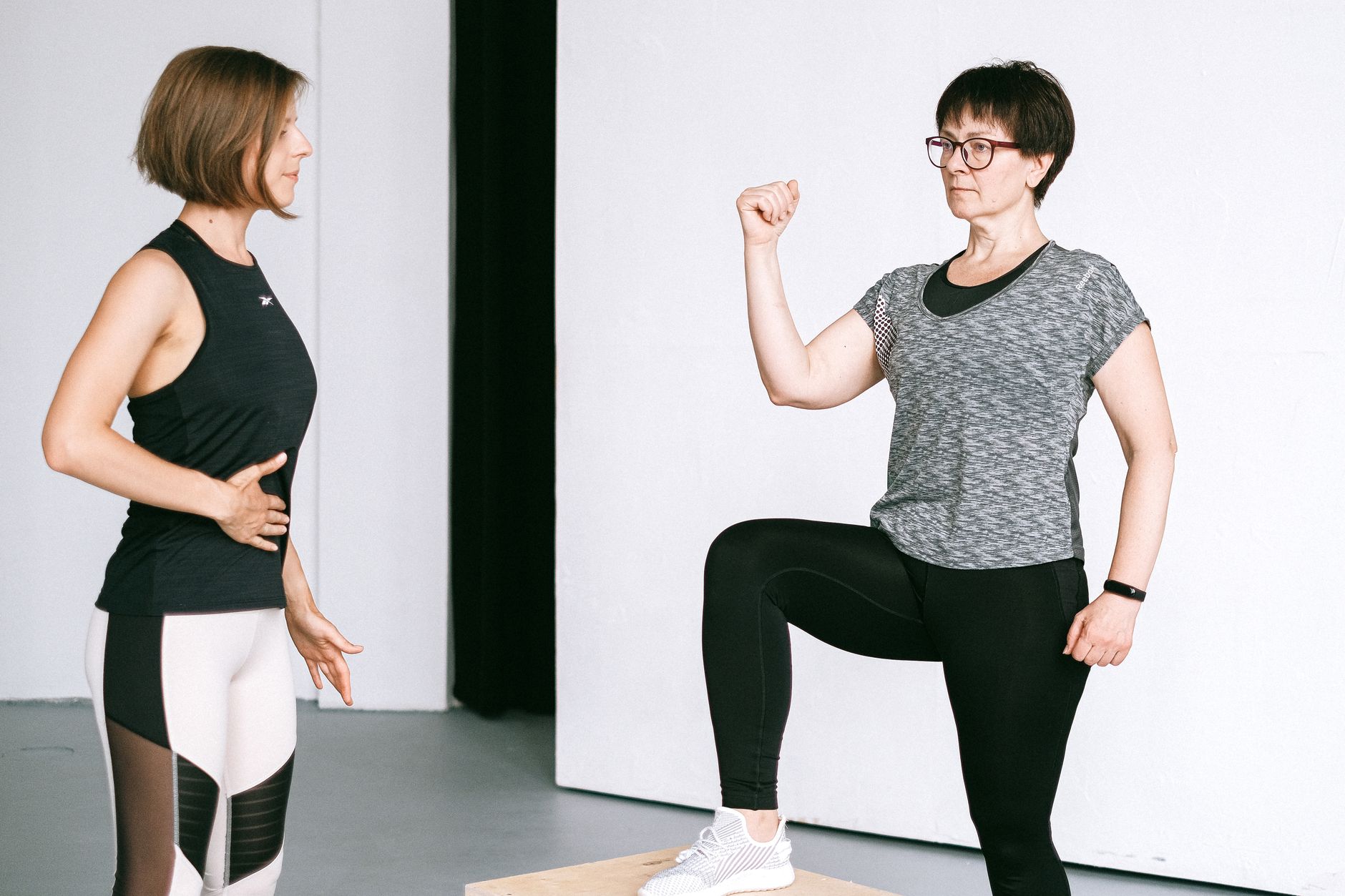
Bodyweight exercises that demand balance build the resilience and confidence needed to navigate uneven ground, turn without dizziness, or catch yourself if you stumble. A specific example: A 68-year-old who struggles with dizziness when turning in the kitchen can practice slow, controlled marching in place while maintaining balance, then progress to marching while turning the head left and right, then marching while reaching for items on imaginary shelves. Over weeks, the exercise becomes automatic, and the dizziness decreases because the nervous system has practiced and adapted. The same progression supports real kitchen work—turning to grab a pot, reaching for a cupboard—by training the exact movements that cause trouble.
Starting a Bodyweight Program—Safety and Realistic Expectations
Before starting any exercise program, especially if there’s a history of joint pain, balance issues, or medical conditions, a conversation with a doctor is essential. Some movements—deep knee bends, heavy overhead work, or high-impact exercises—may not be suitable for someone with arthritis or heart concerns. Once cleared, starting conservatively is crucial. Beginners should choose 4–6 movements they can do safely, perform them 2–3 times per week, and focus on perfect form over quantity.
Two sets of 8–10 good repetitions beats 20 sloppy ones. The tradeoff between convenience and progress is real. Home bodyweight work is cheap, private, and requires no travel, but it also offers less accountability and fewer cues from trainers than a class or gym would. Someone serious about building strength might do bodyweight work at home three times a week and add a water aerobics class or yoga session once weekly for variety and professional feedback. Others may find that twice-weekly bodyweight routines in the living room, combined with daily walks, are all the structure they need to maintain strength and independence.
Overuse Injuries and Recovery
A common mistake is training the same movements every day. Muscles need recovery time—at least one rest day between sessions targeting the same muscle group—to rebuild and grow stronger. Someone who does push-ups on Monday, then push-ups again on Tuesday and Wednesday, risks tendonitis or joint pain from overuse without the benefit of extra gains. Rest is where adaptation happens, which is why three focused sessions per week often yield better results than daily exercise.
Joint pain during or after bodyweight work is a warning to back off. Sharp pain in the knees, shoulders, or elbows is different from the mild muscle soreness that comes 24 hours after a workout. Sharp pain means the movement is too difficult or form is compromised—time to regress to an easier variation, reduce the range of motion, or skip that exercise temporarily. Aging bodies are less forgiving of form breakdown than younger ones, so quality over quantity is not just a slogan; it’s a practical rule for longevity.

Combining Bodyweight Work with Daily Movement
Bodyweight exercises are most powerful when combined with daily movement. A person who does 20 minutes of structured bodyweight work twice a week but sits for the remaining hours of the day will see less benefit than someone who structures the same bodyweight routine but also walks, stretches, or gardens throughout the day.
Movement variety—different patterns, speeds, and directions—prevents the adaptations that lead to stiffness and imbalance. A realistic example: A 74-year-old walks for 30 minutes most mornings, does 15 minutes of bodyweight work (sit-to-stands, wall push-ups, planks) on Monday and Thursday evenings, and does light gardening on weekends. This combination addresses cardio, strength, balance, and functional movement simultaneously, and it fits into a real life without requiring a gym membership or special equipment.
Building Confidence and Long-Term Consistency
The long-term value of bodyweight exercise is not just physical. Someone who sees measurable improvements—standing up with less effort, climbing stairs without resting, carrying groceries without back strain—develops confidence that extends beyond the gym. That confidence translates to willingness to walk farther, visit friends, or attempt tasks that fear of weakness once prevented. Consistency matters more than intensity.
A person who does a modest bodyweight routine twice a week for five years accumulates far more strength and resilience than someone who does intense work for three months and quits. Aging in place is as much about maintaining the belief that you are capable as it is about actual physical strength. Bodyweight exercises provide concrete evidence of capability—you did it today, you did it last week, you can do more now than you could a month ago. That evidence builds the confidence and motivation to stay active, engaged, and independent long term.
Conclusion
Bodyweight exercises offer older adults a practical, cost-free path to building and maintaining the strength, balance, and capability required for independence. They work directly on the movements and challenges of daily life—getting up, climbing stairs, maintaining balance, lifting—and they can be done anywhere, anytime, without special equipment or intimidation. Starting with movements matched to current ability, progressing gradually, and combining structured exercise with daily movement creates a foundation for aging in place safely.
The decision to commit to bodyweight work is an investment in independence. Results are not immediate or dramatic, but they are real and measurable over weeks and months. A person who starts today, exercises consistently, and pays attention to form and recovery will notice meaningful changes in daily capability—the ability to do things that matter, in the places and ways that feel like living independently.