
Walking every day is one of the most effective ways to maintain independence as you age. Unlike gym memberships or expensive fitness programs, walking requires only comfortable shoes and a safe route—making it accessible to nearly everyone, regardless of income or mobility limitations. Even modest daily walks of 20 to 30 minutes can preserve muscle strength, improve balance, maintain cardiovascular health, and keep your joints mobile. The difference between someone who walks regularly and someone sedentary becomes starkly apparent by age 75: walkers tend to live independently longer, have fewer falls, require less caregiver support, and maintain the confidence to run errands and visit friends without assistance.
A 72-year-old woman named Margaret walked the same neighborhood loop for 15 minutes every morning for a decade. When she slipped on ice at 82, her strong legs and quick reflexes prevented a serious fall—something her sedentary neighbor, who fell weeks later under similar conditions, was not able to avoid. Margaret continued living alone until 87; her neighbor needed a caregiver by 84. That gap often comes down to one habit: movement.
Table of Contents
- Why Daily Walking Maintains Strength and Balance?
- How Walking Protects Your Cardiovascular and Joint Health?
- How Does Daily Walking Affect Cognitive Function and Mental Health?
- How Should You Start and Maintain a Safe Walking Routine?
- What Are Common Obstacles to Daily Walking and How to Address Them?
- How Walking Compares to Other Forms of Exercise for Aging in Place?
- The Long-Term Impact: How Daily Walking Shapes Your Aging and Independence?
- Conclusion
- Frequently Asked Questions
Why Daily Walking Maintains Strength and Balance?
walking engages large muscle groups in your legs, hips, and core that atrophy quickly without use. After age 30, people lose roughly 3 to 8 percent of muscle mass per decade if they remain inactive—loss accelerates after 70. Walking slows this decline significantly. Your legs carry 65 percent of your body weight and are responsible for every independent movement: climbing stairs, getting out of a chair, standing at the kitchen counter to cook, walking to your car. When leg muscles weaken, these everyday activities become impossible, and you shift from independence to dependence. A daily 30-minute walk at moderate pace activates slow-twitch muscle fibers that support endurance and engages fast-twitch fibers during slight inclines or pace changes, maintaining both types.
Balance improves through repetitive walking because your body constantly adjusts to terrain, wind, and uneven ground. This proprioceptive feedback—your body’s sense of where it is in space—sharpens with practice and dulls without it. Compare a regular walker navigating a crowded grocery store with an inactive person of the same age: the walker moves fluidly around obstacles; the sedentary person grips the cart tightly and moves stiffly. The difference is not age; it is practice. Falls cause 25 percent of deaths in adults over 75, and half of fall-related injuries occur during simple activities like walking to the bathroom or going outside. Daily walking doesn’t eliminate fall risk, but it reduces it substantially by keeping muscles and balance reflexes sharp.

How Walking Protects Your Cardiovascular and Joint Health?
Your heart is a muscle. Walking strengthens it just as it strengthens leg muscles. Regular walkers have lower resting heart rates, lower blood pressure, and better circulation—all of which reduce the risk of heart attack, stroke, and cognitive decline. A study of older adults showed that those who walked at least 2.5 hours per week had a 35 percent lower mortality rate over seven years compared to those who remained sedentary. That is not trivial.
Your independence depends partly on being alive and healthy enough to live it. Cardiovascular disease is the leading killer of older Americans, and one of the few diseases you can actively prevent through a behavior as simple as walking. However, there is a limitation that matters: walking does not reverse existing cardiovascular damage, and it does not replace medical treatment for heart disease, high blood pressure, or diabetes. A person with severe arthritis in the knees may experience pain while walking, even though walking is exactly what would improve that arthritis over months. Many older adults in this situation need guidance from a physical therapist to modify their walking routine—shorter distances, softer surfaces, or different times of day—so they gain benefit without aggravating pain. This is why starting gradually and listening to your body matters more than forcing yourself to match someone else’s walking routine.
How Does Daily Walking Affect Cognitive Function and Mental Health?
Walking increases blood flow to the brain, delivering more oxygen and nutrients to the regions responsible for memory, planning, and mood. Older adults who walk regularly perform better on cognitive tests, especially in areas of processing speed and executive function—the ability to plan, organize, and solve problems. The mental health benefit is equally important: regular walkers report lower rates of depression and anxiety. A 75-year-old who walks regularly maintains the mental clarity to manage medications, finances, and household tasks; one who sits most days may become confused or depressed more easily. The social aspect of walking amplifies these benefits.
Walking with a friend, in a group, or even just seeing neighbors during a daily walk provides human connection, which is independently protective against cognitive decline. Isolation is linked to faster mental decline and higher mortality in older adults—a risk factor comparable to smoking. One woman who began walking in her neighborhood at 68 reported that she started a informal walking group, met neighbors she had lived near for five years, and felt less alone. Her daughter, a caregiver for her own children, worried less because her mother had built a social safety net. Walking was the entry point.
How Should You Start and Maintain a Safe Walking Routine?
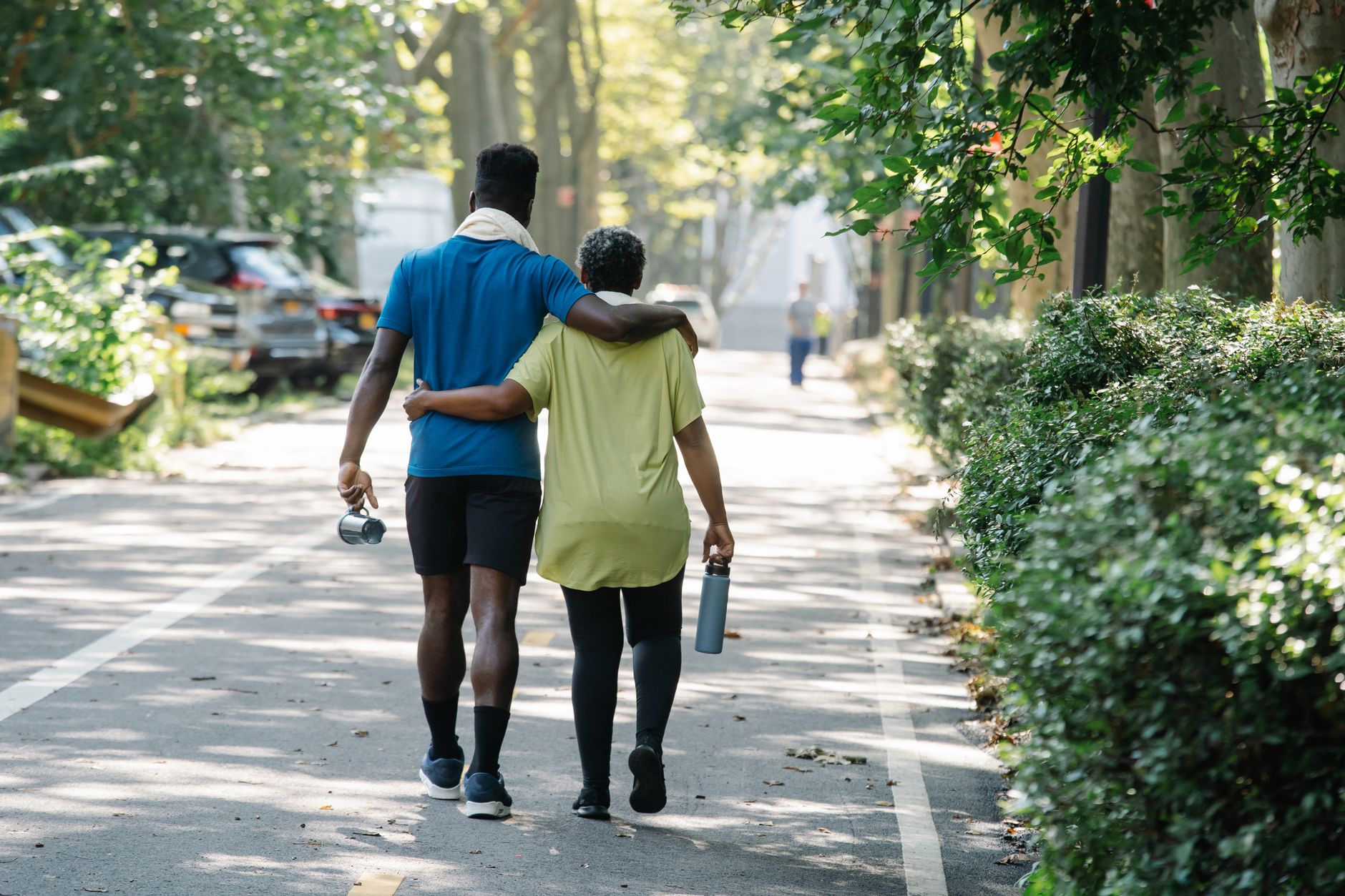
Begin where you are. If you have not walked regularly, do not start with an hour-long hike. Thirty minutes is an often-cited goal, but 10 minutes is enough to start—and 10 minutes daily is far better than 60 minutes once a month. Consistency matters more than distance or speed. Find a route that is safe, well-lit, and relatively flat if you are new to walking. Many people find that walking at the same time each day—morning after breakfast, for example—builds the habit so that it becomes automatic rather than something you must motivate yourself to do. Footwear matters. A pair of supportive walking shoes costs between 80 and 150 dollars and lasts about a year before the cushioning degrades.
That is significantly cheaper than one fall-related hospitalization, which can cost tens of thousands of dollars and often triggers the beginning of caregiver dependence. Wear shoes with a firm heel, flexible forefoot, and some arch support. Thin soles or stiff shoes increase injury risk. One 78-year-old man switched from old sneakers to proper walking shoes and reported that knee pain he had accepted as permanent vanished within two weeks. Shoes are a leverage point for maintaining independence; do not skip them. Weather, pain, or fatigue will occasionally prevent walking, and that is normal. Do not let one missed day become a week of inactivity. The habit of returning to the routine is as important as the routine itself.
What Are Common Obstacles to Daily Walking and How to Address Them?
Pain is the most common barrier. Arthritis, neuropathy, or old injuries can make walking uncomfortable or seemingly dangerous. The temptation is to stop walking to avoid pain, but inactivity worsens arthritis, weakness, and function. A physical therapist can assess your specific pain, modify your walking technique, and suggest surfaces or distances that allow you to walk without harm. Some people benefit from walking on a treadmill with handrails when outdoor walking is risky. Others find that anti-inflammatory medication taken 30 minutes before a walk makes the activity possible and gradually reduces pain as walking strengthens muscles that support injured joints.
Weather is another barrier—cold, rain, and snow make outdoor walking less appealing or genuinely unsafe. Having an alternative is essential: a mall with a climate-controlled corridor, an indoor track, a treadmill, or even walking in place while watching television. These alternatives are not ideal, but they are infinitely better than sitting still for six months until weather improves. A 70-year-old in Minnesota walks outdoors most of the year but uses a mall hallway in January; she logs nearly 300 walking days annually because she planned for obstacles. Fear of falling is legitimate, particularly in those with balance problems or a history of falls. In these cases, a cane or walker is not a failure or a sign of decline—it is a tool that enables walking rather than preventing it. Many people who use a walking aid feel more confident and walk longer distances precisely because the aid reduces fear.

How Walking Compares to Other Forms of Exercise for Aging in Place?
Swimming is excellent for cardiovascular health and gentle on joints, but it requires a pool, transportation, and ability to change clothes—barriers that walking does not have. Strength training with weights is crucial for maintaining muscle, but requires equipment and often instruction. Yoga improves flexibility and balance but can be intimidating in a group class. Walking stands out not because it is superior in every measure but because it has the lowest barriers to starting and maintaining.
You can walk in your neighborhood, in a hallway, at a park, or on a treadmill. You need no membership, no instruction, no special clothing beyond shoes. This accessibility means more people sustain walking than sustain a gym membership or structured exercise program. For most older adults maintaining independence, walking is the foundation—other activities may build on it, but walking itself is the safest, most practical starting point.
The Long-Term Impact: How Daily Walking Shapes Your Aging and Independence?
The compounding effect of daily walking becomes visible over years, not weeks. A person who walks regularly at 70 is typically more mobile, more independent, and more resilient at 80 than someone who was inactive at 70. Falls are less likely, recoveries from falls are faster, hospitalizations are shorter, and the need for caregiver support arrives later—if at all. This is not about age; people over 95 who walk regularly and maintain strength are often more capable than sedentary people in their 70s.
The habits you build today determine your options tomorrow. Walking is preventive medicine you administer to yourself, and unlike medications, it improves multiple systems simultaneously: muscles, bones, heart, circulation, balance, mood, and cognition. As healthcare becomes more focused on managing existing disease rather than preventing it, walking is one of the few actions entirely in your control that can prevent disease progression, maintain independence, and improve quality of life. The goal is not to walk fast or far—it is simply to keep moving, keep strong, and keep living the life you choose for as long as possible.
Conclusion
Walking every day is a practical, accessible, and powerful tool for maintaining independence as you age. It requires only commitment and comfortable shoes, yet it protects your muscles, heart, balance, and mind in ways that no medication or intervention can fully replicate. Whether you walk 10 minutes or 60, on a neighborhood street or an indoor track, the act of walking regularly makes a measurable difference in how you function, how long you remain independent, and how much control you retain over your own life.
Start where you are—a short walk this week is more valuable than the intention to walk extensively next month. Address obstacles with practical solutions, not by quitting. Build the habit, maintain consistency, and you will likely find that the independence you preserve through walking is the greatest return on the smallest investment of effort.
Frequently Asked Questions
How much walking do I need to stay independent?
Research suggests 2.5 hours of moderate walking per week is optimal, but any daily movement is better than none. Even 10 to 15 minutes daily provides benefits. Consistency matters far more than duration.
What if I have arthritis or joint pain when I walk?
Start slowly and consider softer surfaces like tracks or treadmills. Anti-inflammatory medication taken before walking can help. A physical therapist can assess your gait and suggest modifications. Pain often decreases as supporting muscles strengthen.
Is it safe to walk outdoors alone if I am older?
With basic precautions—walking in daylight, on well-traveled routes, wearing visible clothing, and carrying a phone—outdoor walking is safe for most older adults. Walking with a friend adds social benefit and safety. Avoid poorly lit or isolated areas.
Can walking prevent falls?
Walking does not eliminate fall risk, but it significantly reduces it by maintaining balance, muscle strength, and proprioception. Regular walkers who do fall typically have fewer serious injuries because stronger muscles and reflexes protect against severe impact.
What shoes should I wear for daily walking?
Look for shoes with firm heel support, cushioning, and arch support. They should feel comfortable immediately—do not assume shoes will break in. Walking shoes typically cost 80 to 150 dollars and last about a year. Proper footwear reduces injury and increases comfort.
What should I do if weather prevents outdoor walking?
Indoor alternatives include mall hallways, indoor tracks, treadmills, or walking in place at home. These are fully valid options when outdoor walking is unsafe. Having a backup plan ensures you maintain consistency year-round.