
Universal design in real homes looks nothing like the sleek, empty spaces you see in builder brochures. A real lived-in home has clutter, memories, habits, and actual bodies moving through it—sometimes slowly, sometimes with pain, sometimes using mobility aids. The gap between what designers imagine and what works in a house where someone actually lives is where the real work of aging in place happens. A home that truly supports aging and independence isn’t built from scratch; it’s adapted from the messy, imperfect space you already inhabit, with modifications that accept the way you actually live rather than demanding you change to fit the design.
Universal design isn’t about creating a sterile, institutional look or filling your home with grab bars and warning labels. It’s about recognizing that the person moving through your kitchen at 6 a.m. might be stiff from arthritis, that the person navigating your bathroom might have poor balance or vision, and that the person managing your stairs might tire more easily than they used to. Real universal design solves these problems without announcing them. A well-designed lived-in home keeps the things you love—the photos on the walls, the worn-in chair by the window, the books stacked on every surface—while quietly making movement safer, reaching easier, and independence longer-lasting.
Table of Contents
- What Universal Design Actually Means When You’re Living in It Daily
- The Kitchen and Bathroom Reality That Builders Don’t Warn You About
- Lighting, Flooring, and the Everyday Obstacles That Make Movement Hard
- Practical Modifications That Actually Work Versus the Ones That Just Look Good
- The Hidden Problems No One Warns You About Until They Happen
- Budget-Friendly Universal Design That Doesn’t Require a Full Remodel
- The Shift Toward Living at Home Longer and What That Means for Design
- Conclusion
- Frequently Asked Questions
What Universal Design Actually Means When You’re Living in It Daily
Universal design gets thrown around as a phrase, but most people have never seen it applied to an actual home where someone cooks, sleeps, works, and relaxes. Builders often interpret it as installing one grab bar, widening a doorway, and calling the house “accessible.” Real universal design means thinking through the entire chain of actions: Can you open the front door while holding groceries? Can you reach the light switch without stepping on something? Can you see the thermostat without squinting? Can you sit down to put on shoes without feeling like you’re collapsing into a chair? In a real home, universal design starts with acknowledging the difference between capability at age 40 and capability at age 75—or at any age, with any condition. A younger person might not need a seated shower; an older person might appreciate the option without it looking clinical.
A home that works for multiple ages and abilities doesn’t scream “medical”; it just quietly accommodates. The kitchen counter that’s lower isn’t just for wheelchair users—it’s useful when you’re standing for long periods and your shoulders get tired, or when you’re recovering from surgery and bending hurts. Real universal design doesn’t separate “special” features from “normal” ones; it integrates them so seamlessly that they simply make life easier for everyone who lives there.

The Kitchen and Bathroom Reality That Builders Don’t Warn You About
Kitchens are where aging in place either works or falls apart, and this is where the gap between brochures and real life becomes impossible to ignore. A glossy brochure shows an island with a sink and someone standing at it. Real life is different: someone standing at the sink for 20 minutes preparing vegetables, someone reaching into upper cabinets with declining shoulder mobility, someone trying to get hot pans in and out of a standard-height oven while their knees are protesting. The kitchen in the builder’s rendering has empty countertops and adequate lighting. Your actual kitchen has a coffee maker, a toaster, a stand mixer, and a fruit bowl, and the lighting casts shadows in the exact place where you’re trying to chop something. Bathrooms present a different set of realities that hit people hard, often when they’re already recovering from an illness or fall.
A standard bathtub that worked fine at 45 becomes a genuine obstacle at 75, particularly if you have weak legs, balance problems, or arthritis. The “accessible bathroom” in the brochure has a walk-in shower with a bench, but it doesn’t show the reality: the bench is hard, the water pressure is often too weak when you’re sitting, and if you need to sit, you probably also need grab bars that actually support your full weight—which means they need to be installed into solid structure, not drywall. A wet floor is a wet floor no matter how it’s designed, and there’s a real difference between a theoretically “safe” shower and one where someone with vision or balance problems can actually move without fear. The warning here is straightforward: don’t assume that a remodeled kitchen or bathroom is truly designed for aging in place just because it’s newer. Ask specific questions about counter height, cabinet accessibility, faucet controls, lighting placement, and floor materials. Many “updated” bathrooms are updated for aesthetics, not for the lived experience of someone with reduced mobility, balance problems, or vision changes.
Lighting, Flooring, and the Everyday Obstacles That Make Movement Hard
Lighting is one of the most underestimated factors in aging in place, and it’s one of the clearest places where real homes differ from brochures. A brochure photo is taken at the exact moment when natural light is optimal. Your home at 7 a.m. in winter, or at 6 p.m. in the evening, or at 3 a.m. when someone gets up for the bathroom, has shadows and dim corners. Older eyes need more light to see clearly—someone at 75 might need three times as much light as someone at 25 to read the same text or navigate the same space. But harsh overhead lighting creates glare and shadows that can actually make it harder to see.
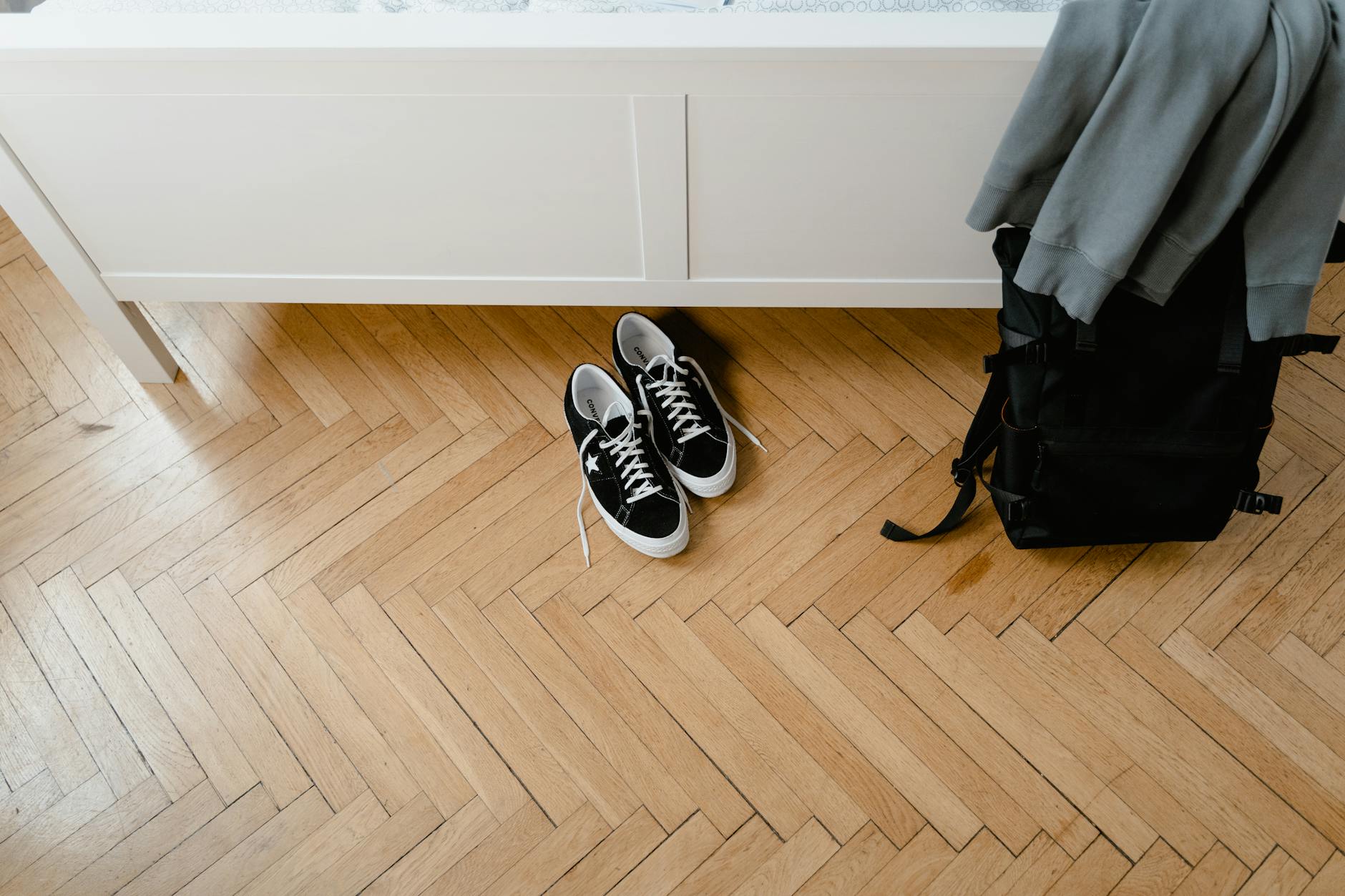
Real universal design in lighting means layered light: overhead fixtures that don’t create shadows, task lighting at the kitchen counter and bathroom sink, and nightlights in hallways that aren’t so bright they disorient you. Flooring is similarly invisible in brochures but crucial in real lived-in homes. Hardwood looks beautiful in a photo; it’s also slippery, especially in socks or with certain types of shoes. Thick carpet feels luxurious; it can catch a walker wheel or be harder to push a wheelchair across. Transitions between rooms—where one type of flooring meets another—are a genuine trip hazard if they’re not smooth. Someone with reduced balance or vision might not see a 3/4-inch height change, but their foot will catch on it. Real universal design in flooring means asking: Is it slip-resistant without being so textured it’s uncomfortable? Can you walk smoothly from one room to another? Is it easy to maintain, and does it show dirt or spills clearly? Real example: A lived-in home with aging parents might have a hallway that looks straightforward in a floor plan but functions poorly because a small table creates a narrow passage, the lighting is a single fixture that leaves the far end dim, and the transition from tile to wood is slightly raised. A visitor doesn’t notice these things. Someone with arthritis, vision loss, and reduced balance notices every one of them.
Practical Modifications That Actually Work Versus the Ones That Just Look Good
Not every modification that makes sense in theory actually improves daily life. Grab bars are essential, but where they’re installed and whether they’re truly sturdy determines whether someone actually uses them. A grab bar that’s in the wrong spot—too high, too low, too far from where you actually need to grip—won’t help you. A grab bar installed into drywall instead of studs might look fine until someone puts full weight on it, and then it fails catastrophically. Real grab bars are installed into solid structure, rated for the weight, and placed based on how the person actually moves, not where the code says they should be. Similarly, widening doorways is often sold as an accessibility improvement, but a doorway that’s 36 inches wide instead of 32 inches might feel slightly larger and offer genuine help to someone pushing a walker, while a doorway widened to 48 inches requires a significant remodel for a marginal improvement if the person using the space doesn’t actually need it.
The tradeoff is real: more open doorways can make the house feel less private and more institutional. The practical approach is modifying the spaces where the actual person living there needs to move—their bedroom, their bathroom, their kitchen—rather than opening up the entire home. Stairlifts and residential elevators appear in some universal design conversations as though they’re standard solutions. In reality, they’re expensive, require maintenance, take up significant space, and only solve the problem of getting up and down stairs. A home where the primary bedroom and bathroom are on the first floor solves that problem without any mechanical installation, and it’s a solution that requires no electricity or maintenance. The choice depends on your actual circumstances and what you’re willing to accept.
The Hidden Problems No One Warns You About Until They Happen
One of the most dangerous assumptions in aging in place is that if something looks safe, it is safe. A hallway with good lighting and clear pathways looks safe. But if you have neuropathy in your feet and can’t feel the ground properly, or if you have balance problems that aren’t obvious to a visitor, that same hallway can be dangerous. The lived-in reality is that you might not know what’s actually dangerous in your own home until something happens. Someone who’s lived in their house without problems for years might suddenly have a fall, and the cause might be something they never thought twice about. Transitions and edges are real hazards.
The place where the kitchen tile meets the living room hardwood, the threshold at the back door, the edge where the carpet meets the hallway—these are ordinary features in most homes, and they’re also places where someone can catch a foot, lose balance, or trip. A home remodeled for universal design should address these, but many homes don’t, and people learn about them the hard way. Storage and clutter create another class of problems that universal design guidelines don’t always address directly. A well-designed home might have plenty of accessible storage, but if the person living there is collecting items, has items everywhere, or can’t physically organize their belongings, the accessible storage doesn’t help. An occupied home is messier than a brochure photo. A home that truly works for aging in place needs to accommodate realistic levels of clutter and items that have emotional significance, not just theoretically perfect organization.
Budget-Friendly Universal Design That Doesn’t Require a Full Remodel
Real universal design doesn’t require spending $100,000 on kitchen and bathroom renovations. Many of the most important modifications are simple, inexpensive, or even free. Better lighting can be achieved by adding more lamps, repositioning furniture to eliminate shadows, or swapping out bulbs—often under $200 for a noticeable improvement. Reducing clutter and reorganizing so that frequently used items are at eye level and easy to reach costs nothing. Rearranging furniture so that the most common pathway through a room is clear takes an afternoon.
Grab bars, non-slip mats, and seat risers are affordable and can make a significant difference. Hand rails on stairs, particularly on both sides, are relatively inexpensive compared to widening doorways or moving walls. A nightlight in a hallway is $10 and can prevent a fall. The point is that meaningful aging-in-place modifications often don’t require professional remodeling. They require paying attention to how the person actually moves through the space and addressing the friction points, starting with the cheapest, simplest solutions.
The Shift Toward Living at Home Longer and What That Means for Design
The future of aging in place is increasingly about keeping people in their own homes, in communities they know, surrounded by the things that matter to them. This shift has already started, driven partly by preference and partly by the cost of care facilities. Design will continue to evolve in response, with more attention paid to small modifications that improve function without requiring a full renovation.
Technology will play a role—better sensors, easier-to-use controls, homes that can adapt to changes in mobility or vision—but the core principle remains: a home is where you live, not a medical facility where you happen to sleep. Real universal design is going to look more like your actual home and less like a institutional space. It’s going to accept clutter, accommodate personal taste, work within budgets, and prioritize the specific needs of the specific people living in it, rather than following a one-size-fits-all template from a builder’s playbook.
Conclusion
Universal design in a real lived-in home is about acceptance—accepting that bodies change, that homes are messy and personal, that modification happens gradually and responds to real problems rather than theoretical ones. It’s about the difference between a house that looks safe on a brochure and a house where someone actually moves safely, day after day, with confidence and independence. The best designed homes for aging in place don’t look designed at all; they look like homes, with the kind of small thoughtful details that make movement easier and independence possible.
The next step is honest assessment: Look at your own home not as it should theoretically function, but as it actually functions for you or the person who lives there. Where do you slow down? Where do you grip something for balance? Where is the lighting inadequate, the pathway blocked, or the reach difficult? Those observations, not a universal design checklist, should guide your modifications. Start with what matters most, budget what you can, and understand that aging in place is built through small, practical changes, not through a single renovation that claims to solve everything.
Frequently Asked Questions
What’s the difference between universal design and accessible design?
Accessible design solves problems for people with specific disabilities—a wheelchair ramp, for example. Universal design creates spaces that work well for people with a wide range of abilities, at different ages, with different physical changes. A zero-threshold shower works for someone in a wheelchair, someone with balance problems, someone recovering from surgery, or a young person who just prefers it. Universal design benefits everyone.
Do I need to hire a professional to make my home age-friendly?
Not for most modifications. Many of the most important changes—better lighting, grab bars, removing tripping hazards, rearranging furniture—you can do yourself. Larger changes like bathroom or kitchen remodels might need a professional, but you don’t need a specialized “universal design consultant” for basic improvements. Start with observation and simple fixes.
How much does it cost to modify a home for aging in place?
It varies enormously. A nightlight is $10. Grab bars are $20-60 each. A full bathroom remodel can be $10,000-30,000. Most people don’t do everything at once. Start with the modifications that address your actual problems and your budget, and add more as needed.
Will universal design modifications make my home look medical or institutional?
Not if they’re done thoughtfully. A modern grab bar doesn’t look much different from a towel bar. Good lighting just looks like good lighting. The home should look like your home, not like a rehabilitation facility. If a modification requires you to sacrifice style or comfort that matters to you, that’s worth acknowledging—sometimes the tradeoff isn’t worth it.
What’s the most important thing to prioritize in aging in place?
Depends on your circumstances, but lighting, clear pathways, and bathroom safety come up first for most people. Fall prevention is more important than comfort. A home where you can move confidently and safely matters more than a home that looks perfect.
Can I age in place if I use a wheelchair or walker?
Many people do, and with modifications, it’s often possible. The specific needs depend on the individual and the home. Doorway widths, hallway space, accessible bathrooms, and no-step entries are important. But again, it depends on your specific situation and what modifications are realistically possible in your home.