
Parkinson’s disease gradually changes how safely someone can move through their home, and what works in one room may not work in another. The tremor, stiffness, and balance problems that characterize Parkinson’s create different hazards in different spaces—the kitchen poses unique risks around hot surfaces and sharp objects, while stairs and hallways become problem zones because of gait changes and freezing episodes where someone suddenly can’t move their feet. A bathroom that felt fine a year ago may become dangerous as coordination declines, requiring grab bars in spots that weren’t necessary before, or changes to how furniture is arranged to create wider turning radiuses.
The progression of Parkinson’s is unpredictable from person to person, which means home modifications often need to happen in phases rather than all at once. What starts as removing throw rugs and improving lighting in the bedroom might evolve into installing a walk-in shower in the bathroom, or widening doorways for a walker that didn’t seem necessary six months earlier. Understanding these room-by-room changes ahead of time allows caregivers and the person with Parkinson’s to adapt proactively rather than reactively, avoiding the crisis moment when someone falls or gets stuck.
Table of Contents
- How Does Parkinson’s Gait and Balance Change Room Requirements?
- Kitchen Safety and Parkinson’s—Why This Room Demands Early Changes
- Bathroom Modifications and Parkinson’s-Specific Risks
- Lighting, Flooring, and Staircase Modifications for Parkinson’s Homes
- Bedroom Modifications and Nighttime Safety in Parkinson’s
- Living Areas and Furniture Arrangement Strategies
- Planning for Disease Progression and Adapting Over Time
- Conclusion
- Frequently Asked Questions
How Does Parkinson’s Gait and Balance Change Room Requirements?
Parkinson’s affects the nervous system’s ability to automatically control movement, which means walking becomes something that requires conscious thought and effort. Early on, many people notice their stride shortens or they start shuffling slightly. Later, freezing episodes—where the feet feel locked to the floor for seconds or minutes—become common, especially when turning corners or walking through doorways. This means rooms with narrow passages, tight corners, or unexpected obstacles become hazardous in ways they weren’t before. Hallways that were fine with standard furniture placement often need to be widened. If someone lives in a home with a hallway that’s 36 inches wide (standard), they can manage independently.
But if there’s a small table, side chair, or even just scattered books taking up floor space, that width shrinks below what’s needed for confident walking or for using a walker later on. A comparison: someone without mobility issues can navigate a cluttered hallway by stepping over objects or moving them mentally from their path. Someone with Parkinson’s may freeze mid-stride when they encounter something unexpected, or lose their balance while trying to step around it. The bedroom layout becomes critical because the path from bed to bathroom typically happens multiple times per night. If this path requires sharp turns, crosses thresholds with trips, or involves stepping over objects, nighttime falls become a realistic risk. Many people with Parkinson’s benefit from repositioning their bed to reduce the number of turns needed to reach the bathroom, or ensuring nightlights create a clear visual path.

Kitchen Safety and Parkinson’s—Why This Room Demands Early Changes
The kitchen combines several Parkinson’s challenges: the need for fine motor control, the presence of heat and sharp objects, and the balance demands of standing in one place for cooking. Tremor makes it harder to carry hot liquids safely, and cooking itself requires the kind of sustained standing that can become difficult as the disease progresses. Someone who could safely make coffee at age 60 may spill it regularly by 65 due to tremor, or may lose their balance while standing at the stove. The biggest safety issues in kitchens are wet floors from spills, heavy cookware that becomes hard to manage, and the need to reach high or low cabinets. An electric kettle is far safer than a stovetop kettle because it sits on the counter and doesn’t require carrying.
Pre-cut vegetables or using a food processor instead of a knife not only adapts to tremor but also reduces the knife-slip injury risk. The limitation here is that premade or adapted foods cost more and may not feel like real cooking to someone who values that part of their day. Some people accept this trade; others resist it until they’ve had a close call. Reorganizing the kitchen so that frequently used items (dishes, glasses, oils, salt, pepper) are between waist and eye level eliminates the balance challenge of reaching up or bending down. A stool that’s stable enough to sit on while cooking can help someone prepare meals longer, though the risk is that using a stool changes visibility of the stovetop and requires awareness of how to stand safely when done.
Bathroom Modifications and Parkinson’s-Specific Risks
The bathroom is where Parkinson’s creates some of the most common falls and near-misses. The combination of wet floors, the need to balance on one leg while dressing or using the toilet, and the enclosed space where recovery from a fall is harder all make bathrooms dangerous. Most people think of grab bars as necessary only in the shower, but research on falls in Parkinson’s shows that transitions—moving from standing to sitting on the toilet, or stepping into the tub—cause the most problems. Grab bars need to be installed at specific heights and in specific locations. A bar near the toilet should be positioned so someone can reach it both while standing (for lowering onto the seat) and while sitting (for pushing up to stand).
A bar in the shower needs to be genuinely secure, because a tremor-affected hand grabbing quickly for balance might slip on a poorly secured bar. Many bathrooms also lack adequate lighting near mirrors, which matters because balance issues worsen when vision is unclear. One example: someone getting ready for bed in low light, trying to find the sink to brush their teeth, may misjudge the distance or trip on the bath mat without realizing it’s there. Walk-in showers are often recommended over traditional tubs because they eliminate the step-over that can cause balance loss. However, walk-in showers need grab bars, a textured floor or mat to prevent slipping on soap-slicked surfaces, and ideally a seat inside for someone who can’t stand the whole time. The tradeoff is cost—a walk-in shower conversion is expensive and may not be an option for renters or people living in older homes where structural changes are difficult.
Lighting, Flooring, and Staircase Modifications for Parkinson’s Homes
Lighting is often overlooked but is one of the highest-impact, lowest-cost safety changes. Parkinson’s affects the visual system in ways that make dimly lit spaces disorienting—contrast and brightness help the brain process where the body is in space. A hallway lit by a single overhead fixture that creates shadows is more dangerous than the same hallway with additional wall sconces or floor lights. Motion-activated lights that turn on when someone gets up in the middle of the night prevent the disorientation that comes from walking in darkness even partially. Flooring choices matter because different surfaces affect stability. Smooth tile or wood floors are actually easier to walk on for people with Parkinson’s because the foot doesn’t catch. Thick carpet or area rugs can be hazardous because shuffling steps catch the nap, causing trips.
The common approach—removing all throw rugs—is good, but sometimes the whole room gets recarpeted as disease progresses, moving from standard carpet to low-pile or hard flooring. A limitation: older adults sometimes prefer soft carpet because it feels warmer and quieter. Moving to hard flooring means colder feet and more noise, a tradeoff that not everyone accepts willingly. Stairs are a major modification area because freezing episodes happen on stairs, and a person with Parkinson’s may be unable to recover from a loss of balance on steps. Installing handrails on both sides is standard; improving lighting on each step and adding a contrasting stripe to the edge of each step helps with depth perception. For some people, stairs become too risky, and home modifications include installing a stairlift or, in more advanced cases, arranging the home so the person stays on one floor. This is a significant change that many people resist until they’ve had a close call.
Bedroom Modifications and Nighttime Safety in Parkinson’s
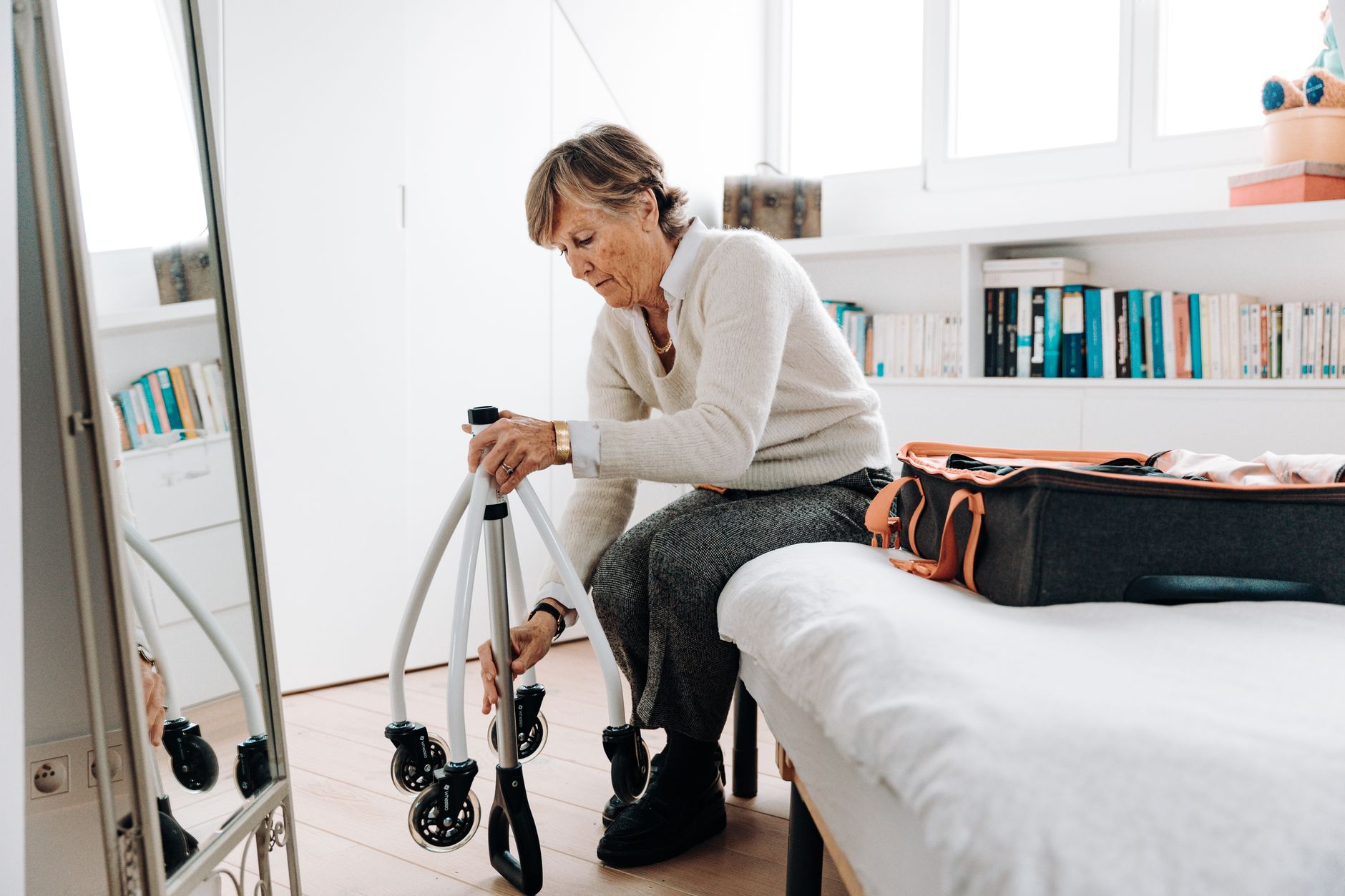
The bedroom becomes a risk zone not because of objects in it, but because of what happens at night. Many people with Parkinson’s wake multiple times needing the bathroom, and the transition from bed to floor, especially in darkness or grogginess, is when falls occur. Nighttime medications sometimes cause orthostatic hypotension—a sudden drop in blood pressure when standing—which can cause dizziness or brief fainting in the first 10-30 seconds after getting up. A person who feels fine lying down suddenly feels faint when upright. A bed that’s the right height is essential. If a bed is too low, someone with stiffness and reduced leg strength struggles to stand up.
If it’s too high, their feet dangle and can’t push off effectively. The ideal bed height allows someone to sit on the edge with knees at about 90 degrees and feet flat on the floor. Adding bed rails can help with rolling over and getting up, though some people find them confining. A significant warning: bed rails can trap limbs if someone falls partially, so they need to be installed correctly and used as intended. A clear path from bed to bathroom, with nightlights or motion-activated lights, prevents the confusion of navigating an unfamiliar room in semi-darkness. Some families place a commode or bedside urinal in the bedroom to avoid multiple trips per night, which reduces the fall risk significantly but requires acceptance of a medical device in the sleeping space.
Living Areas and Furniture Arrangement Strategies
Living rooms and shared spaces require different thinking. Heavy furniture that can’t be moved easily becomes a problem if someone needs to grab it to steady themselves during a freeze or balance loss. Light, stable furniture—end tables that won’t tip if leaned on, chairs with firm seats that don’t collapse when sat in quickly—works better. Recliners are often safer than sofas because they support the back, make standing easier, and reduce the fall risk that comes from sinking into a deep cushion.
The specific example: a person with Parkinson’s stands up from a soft sofa and loses their balance because the cushion absorbed their weight unevenly. They grab the armrest to catch themselves, but if it’s not firmly attached or is fragile, they fall anyway. A firm recliner with stable armrests allows them to push off from the seat and the arms simultaneously, creating a more stable standing transition. Remote controls, reading glasses, water bottles, and medications all need designated spots within easy reach, not scattered on side tables, because bending or searching becomes a balance hazard.
Planning for Disease Progression and Adapting Over Time
Parkinson’s progresses at different speeds for different people, but certain adaptations become predictable. The person who moves well at diagnosis will likely need mobility aids within a few years, and the person using a cane may need a walker later. Planning modifications that can be added incrementally—rather than waiting for a crisis—keeps someone safer and allows choices rather than forcing changes under pressure.
Starting with low-cost, high-impact changes (nightlights, remove rugs, improve lighting, install handrails) makes sense early. Moving toward more significant modifications (bathroom grab bars, stairlifts, rearranging rooms) happens as mobility actually declines, not in anticipation of a worst-case scenario. Many families work with an occupational therapist during the moderate stage of Parkinson’s to assess the home and recommend modifications tailored to that person’s actual needs rather than guessing. This professional input can be the difference between spending money on modifications that get used and spending it on ones that aren’t actually needed.
Conclusion
Parkinson’s doesn’t change home safety needs all at once. Instead, it creates a shifting landscape of risks that vary by room and stage of disease. The kitchen becomes riskier as tremor increases and standing balance declines. The bathroom transitions from being manageable with minor adjustments to needing grab bars, better lighting, and eventually structural changes. Bedrooms require rethinking nighttime navigation and bed height.
Hallways and doorways need widening. Each room presents its own puzzle to solve, and the solutions aren’t one-size-fits-all. The key is recognizing that safety modifications are not admissions of defeat but rather enablers of continued independence. A grab bar in the bathroom doesn’t signal the end of self-care; it extends the period someone can safely shower alone. Better lighting doesn’t limit someone to staying in one room; it allows them to move through the home with confidence. By understanding these room-by-room changes, families can plan ahead, prevent the falls and injuries that speed decline, and help someone with Parkinson’s stay in their home and maintain their independence for as long as possible.
Frequently Asked Questions
When should we start modifying our home if someone is newly diagnosed with Parkinson’s?
Start with the low-cost, high-impact changes immediately: improve lighting, remove throw rugs, ensure handrails are secure, and check that frequently used items are at waist height. More major modifications like bathroom renovations can wait until mobility actually declines, which may be months or years away depending on the person.
Are grab bars only necessary in the bathroom?
No. Grab bars in hallways, near the toilet, near the bed, and on stairs all reduce fall risk. The specific locations depend on where that person actually struggles with balance, so an occupational therapy assessment is valuable.
Can someone with Parkinson’s still cook safely?
Yes, with modifications. Use electric kettles, pre-cut vegetables, stable cookware, and arrange the kitchen so frequently used items are easily accessible. Some people cook longer with these adaptations; others transition to meal prep or prepared foods when tremor makes it difficult to hold hot pans safely.
What’s the biggest mistake families make when modifying homes for Parkinson’s?
Waiting too long. Families often wait for a fall to happen before installing grab bars or improving lighting, losing the opportunity to prevent injury. Starting modifications early, based on actual needs, is safer and less expensive than emergency changes.
Does a stairlift mean someone is losing independence?
A stairlift preserves the ability to move between floors safely, which enables more independence overall. Without it, someone might become confined to one floor or, worse, attempt stairs unsafely and fall. It’s an adaptation that extends usable home space, not a sign of decline.
How often should we reassess home safety needs?
Every 6 months if Parkinson’s is progressing quickly, or annually if it’s stable. Reassessments should be triggered by any change—a new medication, a fall, or simply noticing someone struggling with a task they used to manage.