
Overgrown toenails affect balance in older adults by creating micro-instabilities in how weight distributes across the foot—a seemingly small problem that compounds with age into a genuine fall risk. When toenails grow thick and deformed, they interfere with normal foot mechanics: they push into the skin, create uncomfortable pressure points, cause limping to avoid pain, and eventually weaken the muscles that stabilize each step. Maria, a 72-year-old living alone, began favoring her left side after a thickened toenail on her right foot became too painful to walk on normally. What started as an annoyance became a noticeable shuffle. Six months later, she caught her left heel on a threshold and fell, fracturing her wrist—an injury that nearly ended her independence and sent her into a temporary care facility.
The connection between foot problems and falls is well documented. Approximately 1 in 3 older adults over age 65 fall each year, and foot conditions are identified as a primary cause of injury-related death in older Americans. The problem is that overgrown toenails don’t announce themselves as a safety issue; they seem cosmetic, manageable at home, something to handle “when I get around to it.” Yet research shows that multifaceted podiatry interventions—including attention to foot care, exercises, and footwear—reduce fall rates by 36% in older people with foot pain and elevated fall risk. The toenail, in other words, is a lever that affects the whole system. This article examines how age-related changes to toenails compromise balance, why this matters more than most people realize, and what older adults and their caregivers can do to prevent this quiet threat to independence.
Table of Contents
- Why Do Aging Toenails Become a Balance Liability?
- The Hidden Mechanics Behind Toenail-Related Balance Loss
- How Foot Problems Compound Over Time in Aging Bodies
- Practical Steps to Prevent Toenail Problems From Becoming Balance Hazards
- When Toenail Problems Signal Larger Health Concerns
- The Role of Footwear in Protecting Balance
- The Future of Foot Health Assessment in Aging Care
- Conclusion
- Frequently Asked Questions
Why Do Aging Toenails Become a Balance Liability?
As we age, toenails change in ways that go beyond appearance. Nails thicken, become brittle, and often curve or deform—a natural consequence of slower cell growth, reduced blood circulation to the nail beds, and decades of minor trauma. These structural changes create immediate and cascading problems for balance. When a nail grows thick or ingrown, walking becomes uncomfortable enough that a person shifts their weight, shortens their stride, or favors one side of their body.
This compensation strategy might feel safe in the moment, but it trains the body into an asymmetrical gait pattern that weakens muscles on the favored side and increases reliance on an uneven foundation. The foot contains some of the body’s most sensitive proprioceptive sensors—the biological instruments that tell your brain where your body is in space. Overgrown or deformed toenails interfere with these sensors in multiple ways: they create pain signals that distract the nervous system, they alter how pressure distributes across the sole during walking, and they reduce ankle joint range of motion because people unconsciously avoid movements that irritate the nail area. Reduced toe plantar flexor muscle strength, documented in research as a fall risk factor, often follows weeks or months of limping or favoring one foot. The foot becomes weaker, the gait becomes more tentative, and the risk of misstep or loss of balance climbs.
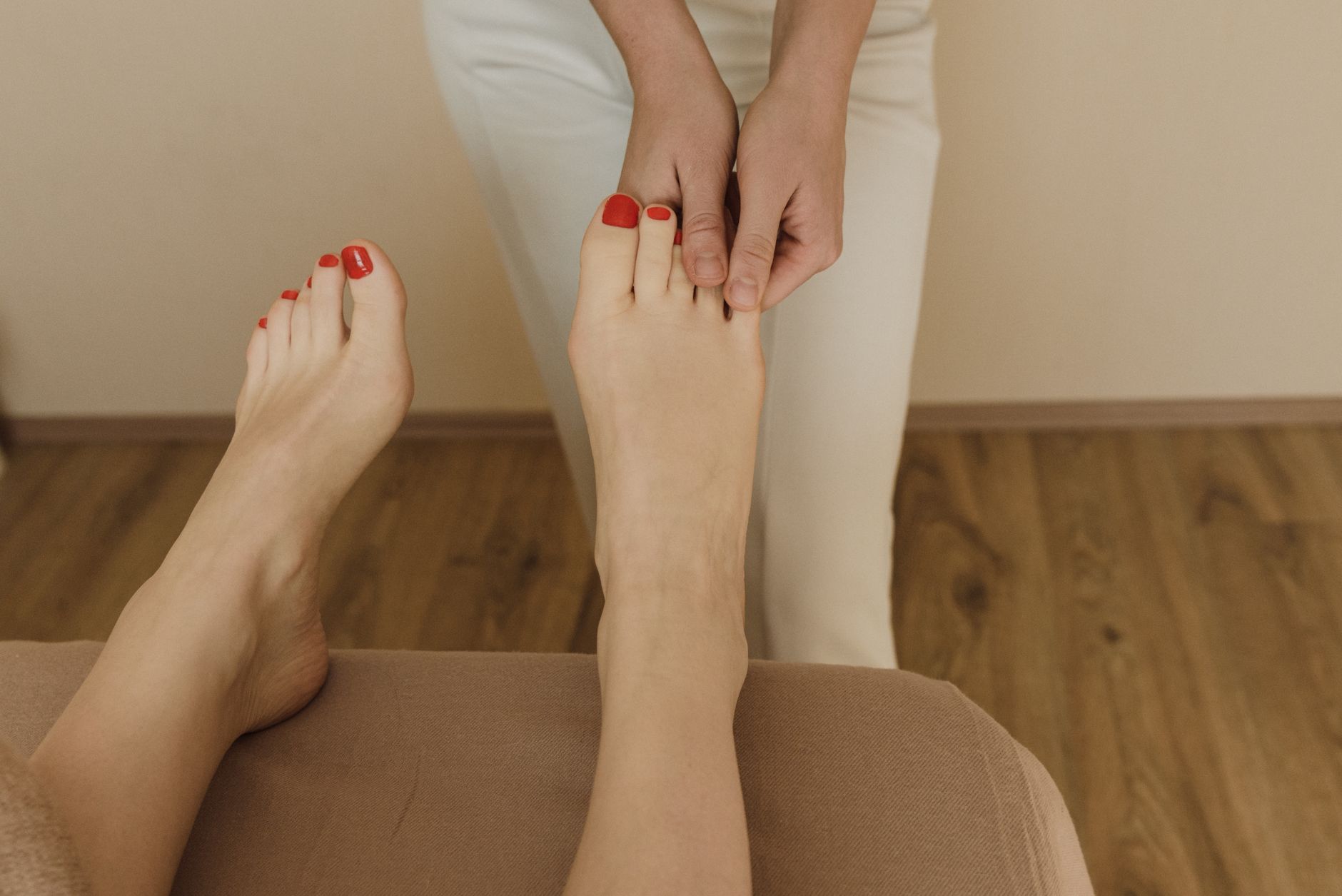
The Hidden Mechanics Behind Toenail-Related Balance Loss
Many people assume that balance comes primarily from the brain and inner ear, but the feet are the foundation that everything else depends on. A stable, pain-free foot allows full contact with the ground, muscle engagement, and proper proprioceptive feedback. An overgrown toenail disrupts this foundation in ways that cascade upward through the legs and spine. When toenails are thick or ingrown, people walk with a shortened stride and reduced ankle mobility—two changes that directly correlate with increased fall risk in older adults.
The pressure distribution across the sole changes, often concentrating more weight toward the outside edge of the foot, which shifts balance and makes the ankle work harder to stabilize the body. Here is an important limitation to acknowledge: while foot problems broadly are linked to balance issues and falls, the medical literature does not provide quantified data specifically isolating overgrown toenails alone as a distinct measured risk factor. Research addresses foot problems holistically—including foot pain, ankle range of motion, hallux valgus deformity (bunions), and overall foot strength—rather than separating toenail length as an independent variable. This means the risk from overgrown toenails is real and connected to documented fall mechanisms, but the exact magnitude of risk from toenails specifically remains unmeasured in published studies. What we know is that foot conditions are a leading contributor to falls, and toenails are part of foot health.
How Foot Problems Compound Over Time in Aging Bodies
The relationship between foot health and overall balance is cumulative. One overgrown toenail causes pain; that pain changes gait; changed gait weakens supporting muscles; weak muscles increase fall risk. An older adult with one foot problem often develops others: bunions, corns, plantar fasciitis, reduced ankle strength. Up to 80% of adults over age 65 experience foot-related issues, meaning most older adults are navigating not one but multiple foot challenges simultaneously. When these problems interact, the compounding effect on balance becomes severe.
A person with thick toenails, reduced ankle range of motion, and general foot pain faces a much steeper fall risk than someone with only one of these issues. Consider the difference between a 65-year-old with well-maintained feet and an 75-year-old with multiple neglected foot problems. The younger person can walk across a slippery floor with confidence because their feet are stable, their proprioceptors are firing correctly, and their muscle strength supports quick adjustments. The older person with toenail and foot problems walks more slowly, takes shorter steps, watches their feet rather than their path, and has less muscle available for a corrective step if they start to slip. This is not judgment—it is the biology of accumulated foot neglect. The good news is that it is also reversible or preventable with attention.

Practical Steps to Prevent Toenail Problems From Becoming Balance Hazards
The single most effective intervention is regular toenail maintenance, ideally performed by a podiatrist for older adults with difficulty reaching their own feet or with thick, difficult-to-cut nails. For those able to maintain their own nails, the approach is straightforward: keep nails trimmed short and straight across, avoid cutting into the sides of the nail (which encourages ingrown growth), and use proper nail clippers rather than scissors. A dimly lit bathroom and unsteady hands are a dangerous combination, so good lighting and sitting down while trimming are essential. Some older adults find electric nail grinders easier to control than clippers, especially if arthritis affects hand strength. Beyond maintenance, targeted foot exercises significantly improve balance.
Research from Indiana University is studying foot strengthening specifically to improve balance and gait in older adults, recognizing that stronger feet mean better proprioceptive feedback and more confident movement. Simple exercises like towel scrunches (curling toes to gather a hand towel), heel-to-toe walks, and standing on one foot for increasing durations strengthen the intrinsic foot muscles and improve overall stability. These take only 10-15 minutes daily and cost nothing. For comparison: ignoring foot health and experiencing a fall can cost thousands in medical care, months of rehabilitation, and permanent loss of independence. The tradeoff is clear.
When Toenail Problems Signal Larger Health Concerns
While overgrown toenails themselves are generally harmless cosmetically, they become medically significant when they cause pain, infection, or functional limitations. Ingrown toenails can become infected, and infection in an older person with diabetes or reduced immune function can escalate quickly into a serious condition. Thick, discolored nails may indicate fungal infection, which is difficult to treat and can spread to other nails. These complications compound the balance problem: pain worsens, mobility decreases, and fall risk climbs.
An older adult who develops a toenail problem should have it evaluated by a podiatrist rather than attempting to manage it alone, particularly if they have diabetes, poor circulation, or other conditions affecting their feet. Another warning: older adults sometimes delay toenail care because they cannot reach their feet comfortably, cannot see clearly due to vision changes, or cannot afford professional care. These barriers are real, but they often signal a broader need for caregiver support or assistance. If an older adult you care for is struggling to maintain their feet, that difficulty may indicate other functional limitations that also increase fall risk—mobility issues, vision loss, arthritis. Toenail maintenance can become an entry point for addressing multiple safety concerns at once.
The Role of Footwear in Protecting Balance
Shoes interact with foot health and toenail problems in ways that many people overlook. An overgrown toenail is painful in normal shoes and potentially more painful in tight shoes, heels, or shoes with a narrow toe box. When shoes cause discomfort from toenail pressure, people either wear uncomfortable shoes (worsening the problem) or switch to slippers that provide minimal ankle support and no protection if they stumble. Proper footwear—shoes with a roomy toe box, good arch support, and a low, stable heel—allows the foot to function more normally even when toenails are not perfect.
Supportive shoes also reduce the compensatory limping that weakens muscles and destabilizes gait. For older adults, the best shoe choice is often a combination: supportive athletic shoes or walking shoes for regular use, and easy-to-put-on shoes (slip-ons or shoes with velcro) for quick trips. Slippers should have a firm sole and back support, not soft, unsupportive styles that increase stumbling risk. The investment in good footwear often costs between $80-150 but can prevent a fall that costs $30,000 in medical care and permanent mobility loss.
The Future of Foot Health Assessment in Aging Care
Podiatric care is increasingly recognized as a primary fall-prevention strategy, with research showing that multifaceted foot interventions including professional foot care, exercise, and footwear assessment reduce fall rates by 36%. Ongoing research at universities across the United States is studying how foot strength and foot care connect to gait, balance, and quality of life in older adults.
This research suggests that foot health may eventually become part of routine fall-prevention screening for all older adults—just as vision and hearing are screened, foot function might be assessed as a standard part of aging-in-place safety. For now, the implication is clear: if you are an older adult concerned about balance or falls, or if you are a caregiver responsible for an older person’s safety, toenail and foot health deserves attention equal to medication management, home safety modifications, and exercise routines. Small, regular interventions prevent large, catastrophic problems.
Conclusion
Overgrown toenails steal balance quietly because the problem seems minor until it is not. What begins as a grooming task becomes a gait liability, then a documented fall risk, and potentially an injury that ends independence. The mechanism is simple: painful, deformed toenails change how a person walks, weaken the foot and leg muscles that support stability, and reduce the proprioceptive feedback that keeps balance steady. This progression is preventable through regular maintenance, professional podiatric care when needed, appropriate footwear, and targeted foot-strengthening exercises.
If you are an older adult, add toenail inspection and maintenance to your monthly health checklist. If you are a caregiver, regular foot care for the person you support is not optional—it is part of fall prevention. The research is clear: intervening on foot health, including toenails, reduces falls by more than a third. That is not a cosmetic benefit. That is independence, health, and the ability to safely age in place.
Frequently Asked Questions
How often should older adults have their toenails trimmed?
Most older adults benefit from trimming toenails every 4-6 weeks, or whenever nails become long enough to create pressure or pain. Those with thick nails, fungal infection, or difficulty reaching their feet should see a podiatrist every 8-12 weeks for professional maintenance.
Is it safe for older adults to trim their own toenails?
It depends on vision, hand strength, balance, and the nail’s thickness. If trimming requires bending far forward (risking a fall), poor visibility, or risk of cutting skin, professional care is safer. Many podiatrists recommend professional care for anyone over 75 or with nails that have become thick or ingrown.
Can overgrown toenails cause a serious infection?
Overgrown or ingrown toenails can become infected, particularly if there is a break in the skin. In older adults with diabetes or circulatory problems, even a minor foot infection can escalate. Any sign of redness, warmth, swelling, or discharge warrants a podiatrist evaluation.
How much does podiatric care cost, and will insurance cover it?
A routine podiatry visit typically costs $100-200 without insurance. Medicare covers podiatric care for certain conditions (particularly for people with diabetes), and many supplemental insurance plans include some coverage. Check with your insurance provider for your specific benefits.
Are there exercises I can do to improve foot strength and balance?
Yes. Towel scrunches, heel-to-toe walks, standing on one foot, and short balance exercises take 10-15 minutes daily and significantly improve foot strength and proprioception. Physical therapists or podiatrists can recommend exercises tailored to individual needs.
What is the connection between foot health and overall fall prevention?
Falls are multifactorial—involving vision, strength, balance, medications, home safety, and more—but foot health is a major modifiable risk factor. Since feet are the foundation of balance, addressing foot problems prevents falls more effectively than addressing vision or strength alone in some cases.