
Margaret Chen stayed in her three-bedroom home in Portland, Oregon for two decades after her husband died, without moving to assisted living or depending on family to move in with her. She accomplished this through a combination of practical home modifications, strategic financial planning, carefully chosen help, and the determination to maintain control over her own life. Her story isn’t about being superhuman or uniquely fortunate—it’s about making deliberate choices that prioritized independence while honestly acknowledging when professional help was necessary. When Margaret’s husband passed away at age 62, she was healthy and capable. But she was also realistic: she knew that aging alone meant planning differently than couples who could support each other.
She started small, making changes to her house before she felt desperate about them. She installed grab bars in the bathroom not after a fall, but before one could happen. She downsized her kitchen gadgets and reorganized cabinets so she didn’t need a step stool to reach everyday items. These weren’t dramatic renovations—they were quiet adjustments that removed friction from daily life. What made Margaret’s approach different from many aging adults was that she treated independence as a project, not a destination. She wasn’t trying to prove something to her adult children or prove she was “still young.” She was simply designing a life that worked for her body and circumstances as they changed.
Table of Contents
- What Does It Mean to Age in Place Successfully for Two Decades?
- The Unsexy Reality of Home Modifications and Daily Adaptations
- Building a Network of Help Without Losing Independence
- Planning Finances for 20+ Years of Independence
- Health Crises and the Limits of Aging in Place at Home
- Technology, Monitoring, and When to Accept Help
- Lessons for Others Considering Aging in Place
- Conclusion
What Does It Mean to Age in Place Successfully for Two Decades?
Aging in place means staying in your own home rather than moving to assisted living, a nursing facility, or moving in with family members. For Margaret, it meant more than just physically remaining in the house—it meant maintaining decision-making power, preserving privacy, and keeping the rhythms of her life intact. Research from AARP shows that over 75% of adults over 50 want to age in place, but only about 10% actually plan for it financially or structurally. Margaret achieved this by understanding a crucial distinction: aging in place doesn’t mean doing everything yourself. It means doing the things that matter most to you while outsourcing the rest. For Margaret, that meant hiring a housecleaner every two weeks starting at age 70, paying for a lawn service after her knees began bothering her, and eventually having a part-time caregiver help with bathing and dressing.
What she didn’t outsource: cooking, reading, gardening, paying her bills, deciding how to spend her time. This selective approach kept her life feeling like hers while removing tasks that were becoming genuinely difficult. The financial reality is that aging in place isn’t free, but it’s often cheaper than facility-based care in the long run. Margaret spent roughly $18,000 per year on in-home help and modifications combined by her late 80s. A modest assisted living facility in her area was running $4,500 to $6,000 per month—$54,000 to $72,000 annually. She also had Social Security, a modest pension from her husband’s job, and had paid off her mortgage years before. Without that financial cushion, her two decades of independence would have looked different.

The Unsexy Reality of Home Modifications and Daily Adaptations
Margaret’s home modifications weren’t Instagram-worthy. She installed non-slip mats in the shower, not marble tile. She had a local contractor add a second handrail to her staircase. She replaced her doorknobs with lever handles so her arthritic hands could operate them easily. She moved her bedroom downstairs when stairs became a concern around age 78. None of these changes cost tens of thousands of dollars, but they required thinking ahead instead of reacting to emergencies. The limitation Margaret discovered was that not all homes can accommodate aging in place cheaply. Her single-story addition for a main-floor bedroom cost $35,000, which was within her means but would have been impossible for many.
Homes with stairs, narrow bathrooms, and tight kitchens require extensive (and expensive) renovations. A woman in Margaret’s position with a multi-story rowhouse or a small apartment might not have been able to stay put, regardless of her determination. The assumption that everyone can age in place if they just try hard enough ignores the structural realities of where people actually live. Margaret also adapted her daily routines. She started using a shower chair at 75. She bought a good cordless phone and kept it charged and with her at all times. She switched to slip-on shoes because bending to tie laces became difficult. She moved her kitchen staples to mid-level shelves. These weren’t failures or signs of decline—they were practical solutions that prevented the injuries that might have forced her into a facility.
Building a Network of Help Without Losing Independence
One of Margaret’s smartest decisions was recognizing early that she needed people, not family members who might eventually pressure her to move. She built relationships with professionals: her primary care doctor (whom she saw for regular checkups, not just when sick), a physical therapist (who she saw for preventive exercise starting at age 72), a financial advisor, and a lawyer. She updated her will and established healthcare power of attorney before dementia was a possibility. She interviewed and hired a house cleaner, then a yard person, then eventually an aide. Margaret also maintained friendships and neighborhood connections. She was part of a book club. She knew the neighbors well enough that they noticed when something was wrong.
She attended church (not religiously, but regularly), which gave her social contact and community. When her mobility declined, some of these connections became maintenance relationships—the library volunteer who brought her books, the neighbor who picked up groceries, the physical therapist who eventually came to her home. None of this happened by accident. Margaret invested in these relationships when she was healthy enough to do so. The comparison matters here: Margaret’s approach to community was different from expecting adult children to be her sole support system. Her daughter lived two states away and had her own family and career. Rather than guilt or resentment, Margaret built a web of paid professionals and friendships that distributed her needs across many people, none of whom felt burdened. This is radically different from many widows who expect one adult child to be their primary support and often outlive their welcome as that child’s life gets busier.

Planning Finances for 20+ Years of Independence
Margaret’s financial planning wasn’t fancy, but it was honest. She knew she had a pension and Social Security, which together covered her basic housing costs and living expenses. She had savings from her earlier career (she’d worked as a librarian). She didn’t have the retirement savings that financial advisors typically recommend, but she had enough to pay for help. Most importantly, she started planning in her 60s, not her 80s. The tradeoff Margaret made was that she spent down her modest savings on in-home help and modifications rather than leaving money to her children. She was explicit about this with her daughter, saying something like, “I’m going to use this money to stay in my home while I can.
I’m not going to leave you a large inheritance.” Her daughter supported this decision, but not all families do. Some adult children resent a parent who “wastes inheritance” on caregiving, while others feel profound relief that their parent isn’t asking them to be the primary caregiver. Margaret also made the decision not to take on debt. She didn’t take out a home equity line of credit or a reverse mortgage. She paid for modifications and help from savings and monthly income. This worked because she didn’t need 24-hour care—if she had, the math would have been different. A widow with serious health challenges and minimal savings can’t always age in place the way Margaret did, even with determination. At some point, costs become unsustainable, and that’s not a personal failure.
Health Crises and the Limits of Aging in Place at Home
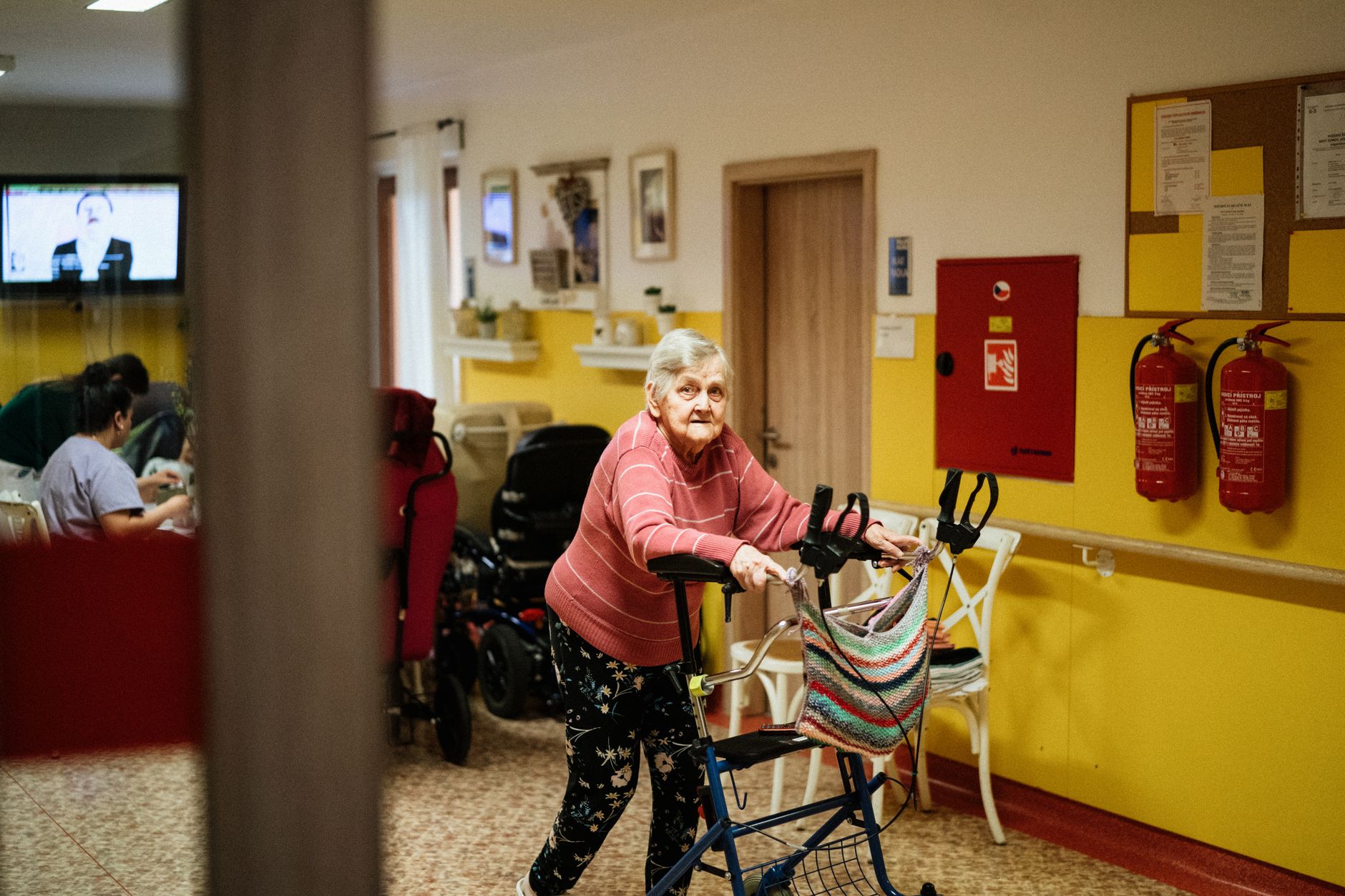
At age 85, Margaret had a stroke. It was mild—she recovered significant function—but it marked a turning point. She needed occupational therapy to relearn daily tasks. Her morning routine, which had taken 30 minutes, now took 90. She needed help bathing and dressing. She hired a full-time caregiver (which cost roughly $60,000 per year in her area). She also installed a medical alert system. The warning here is clear: aging in place is not a guarantee, and some health events change the math permanently. Margaret was fortunate that her stroke didn’t require her to leave her home, but a different stroke might have required rehab facility placement or intensive care she couldn’t manage at home.
Similarly, she never developed dementia, which often makes aging in place unsafe without 24-hour supervision. Margaret made a practical decision: if she developed dementia, she would move to a facility while she was still healthy enough to adapt to a new environment. This wasn’t defeat—it was planning. Another limitation: Margaret became increasingly isolated as she aged. By her 90s, most of her peers had either died or moved to senior communities. Her friendships, which had sustained her for decades, required more effort to maintain. Video calls helped, but they weren’t the same as in-person book club or church. She felt this loss acutely. Aging in place can mean aging alone, and that’s a real downside that motivation and home modifications can’t fully fix.
Technology, Monitoring, and When to Accept Help
Margaret adopted technology slowly. At 80, she got a smartphone (with large text and simplified settings). At 85, after her stroke, she used a medical alert button. She used a tablet to video call her daughter weekly. She never used monitoring systems that would alert adult children if she’d fallen, partly because she valued privacy and partly because she understood that some monitoring creates false alarms that waste time and erode independence.
Margaret’s example here is instructive: technology helped her age in place, but she resisted surveillance technology that would have required her to live under observation. She accepted that if she fell and couldn’t reach her alert button, she might lie on the floor for several hours. That was a risk she was willing to take. Other people in her position might choose differently—more monitoring, more cameras, more oversight. There’s no objectively right answer, but Margaret’s choice prioritized autonomy over safety optimization, which is a legitimate values decision that shouldn’t be overridden by adult children who worry.
Lessons for Others Considering Aging in Place
Margaret’s story works partly because she was healthy until quite late, partly because she had enough money to pay for help, and partly because she didn’t have family members demanding she move closer or move in with them. Not every widow has all three advantages. But some of her lessons transfer. Start planning in your 60s, not your 80s. Make modifications before you’re desperate. Build community early and maintain it as you age. Hire help before you’re exhausted.
Get clarity about your values—what independence actually means to you? Looking forward, aging in place is becoming more common and more discussed, but communities and systems haven’t fully caught up. Margaret aged in place in a relatively supportive neighborhood with good local services. Someone aging in place in a rural area with fewer options, or in a city where home care is prohibitively expensive, or without family support would face very different circumstances. The aging population is growing, housing costs are rising, and family structure is changing. The next generation of widows and single older adults will need different solutions—possibly subsidized home care, co-housing models, or community-based support systems. Margaret’s independence came through individual effort and money. Broader change will require structural solutions.
Conclusion
Margaret Chen stayed in her home for 20 years after her husband died by treating aging in place as an intentional project, not a default. She made early modifications, hired help when she needed it, maintained community connections, planned financially, and made peace with the limitations of her approach. She didn’t do this alone, and she didn’t do it without cost. What she did do was maintain autonomy and control over her daily life for two decades—which, for her, was what independence actually meant. If you’re considering aging in place, Margaret’s story suggests starting now.
Make modifications before they’re emergency repairs. Build relationships before you need them. Get honest about money. Understand that aging in place isn’t about never accepting help—it’s about choosing the right help, on your own terms, while you’re still well enough to direct it. And accept that there will be limits. Aging in place works until it doesn’t, and knowing when to stop is part of planning well.