
Home organization is the practice of arranging your living space so that you can find what you need, move safely, and maintain your independence without relying on others to locate items or navigate hazards. For older adults, effective home organization directly supports aging in place by reducing fall risks, improving daily function, and making it easier to manage medications, documents, and household tasks independently. A well-organized home where medications are in one labeled drawer, important papers are in a single accessible folder, and pathways are clear can mean the difference between thriving at home and needing to move to assisted living.
Consider the real experience of Margaret, 74, who had multiple prescriptions stored in various bathrooms and kitchen drawers. When her daughter visited, she found duplicate medications, expired supplements, and confusion about dosing—a common safety risk. After organizing medications into a labeled caddy near the kitchen where Margaret took her morning coffee, added a printed medication list on the refrigerator, and cleared pathways through her hallways, Margaret regained confidence managing her health and her daughter reduced her worry about preventable errors.
Table of Contents
- Why Does Home Organization Matter More as You Age?
- The Hidden Costs of Disorganization—And Why Quick Fixes Don’t Work
- Organizing for Safety and Accessibility
- Practical Steps to Organize for Independence
- Common Barriers to Maintaining Organization
- Technology and Organization Systems
- Sustaining Organization Long-Term
- Conclusion
Why Does Home Organization Matter More as You Age?
Physical changes that come with aging—reduced vision, slower movement, decreased strength, and balance challenges—make disorganized spaces more dangerous and more exhausting. A cluttered hallway that a 40-year-old can step over becomes a tripping hazard for someone with arthritis or neuropathy. An overstuffed closet that requires reaching, bending, or climbing becomes physically impossible for someone with limited range of motion. Organization isn’t about perfectionism; it’s about matching your environment to your actual physical abilities so you can function independently.
Studies on aging in place consistently show that environmental hazards—clutter, poor lighting, inaccessible storage—are among the leading contributors to falls and injuries in older adults. The National Council on Aging reports that one in four Americans aged 65 and older falls each year, and modifiable home hazards are implicated in many of these incidents. When items are organized logically and stored at waist or eye level, you avoid the bending, reaching, and balance challenges that create risk. This is especially critical if you live alone, because a fall in a cluttered space may go unnoticed longer than it would in a clear environment.
The Hidden Costs of Disorganization—And Why Quick Fixes Don’t Work
Many older adults and their families assume that disorganization is just an inconvenience—a quality-of-life issue rather than a safety issue. This underestimates the real burden. An disorganized home creates cognitive load (you have to remember where things are), physical risk (you navigate hazards daily), and emotional stress (searching for things feels frustrating and makes you doubt your competence). Over time, some older adults respond to disorganization by simply not doing tasks they’re physically capable of doing, which can accelerate functional decline.
A significant limitation of common organizing approaches—container systems, label makers, organizing apps—is that they assume you have the physical energy and cognitive capacity to maintain the system long-term. A perfectly organized closet with color-coded hangers and categorized storage boxes works only if you consistently return items to their places. For someone managing arthritis, cognitive changes, or executive function challenges, maintaining elaborate systems becomes another source of failure. The most durable organizing systems for aging adults are simple, obvious, and require minimal maintenance—a single drawer for medications, a basket for daily mail, one shelf for frequently used items.
Organizing for Safety and Accessibility
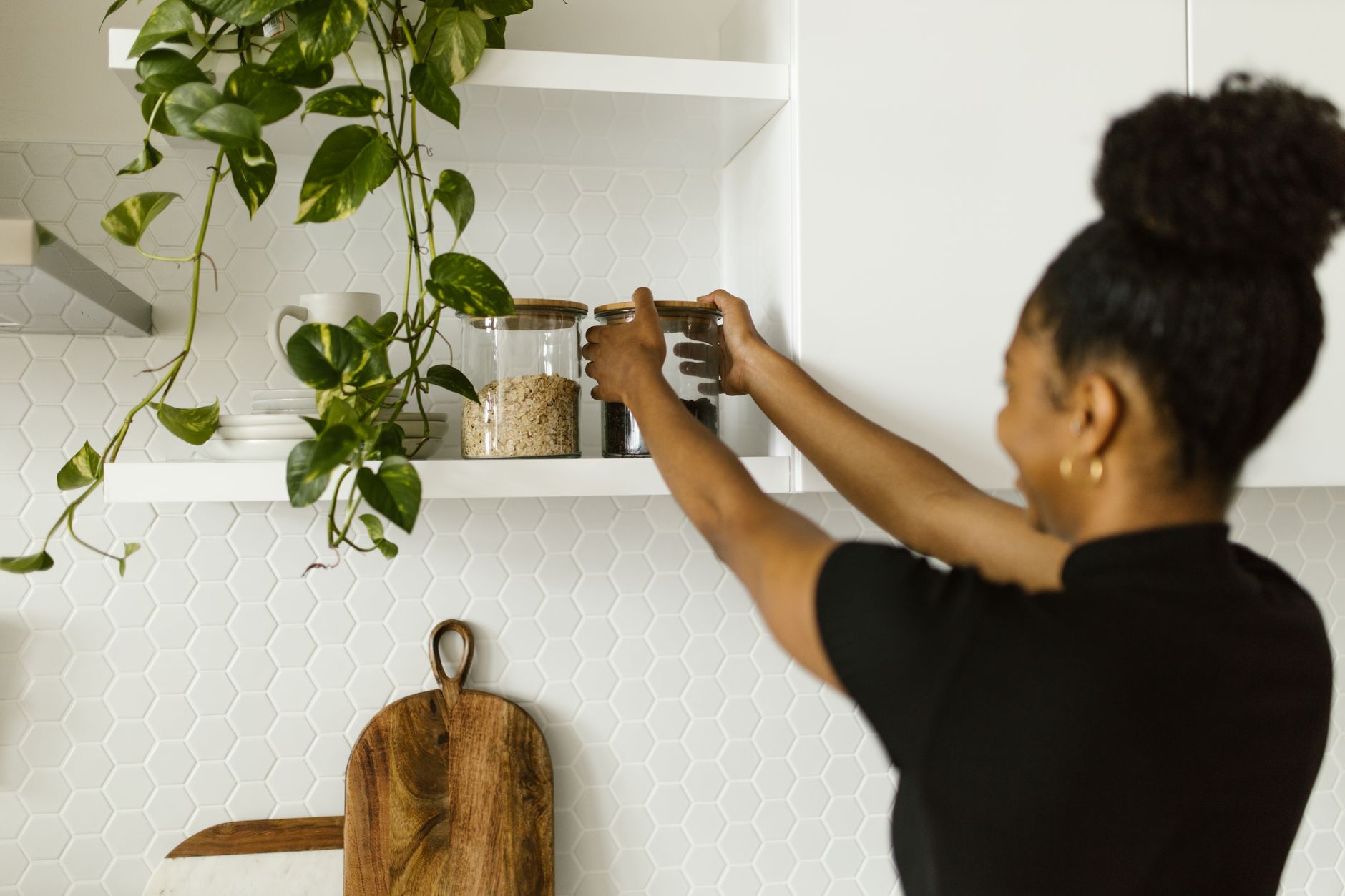
True home organization for aging in place prioritizes safety and accessibility above aesthetics. This means keeping frequently used items at waist or eye level, grouping related items together so you can find them without searching, and removing obstacles from walkways and stairs. Kitchen cabinets should store everyday dishes and glasses at shoulder height or below, not above your head where reaching creates balance risk. Bathroom medications should be in a small, labeled container on the counter—not in a medicine cabinet where you need to balance on one foot at the sink. Cleaning supplies should be grouped together in one low, labeled cabinet rather than scattered under the sink and in closets throughout the home.
An underappreciated aspect of accessibility is lighting. Poor organization often means items end up in dark corners, drawers, or cabinets. Adding task lighting—a small LED lamp in a bedroom closet, a clip-on light on a bookshelf, better overhead lighting in hallways—makes organization sustainable because you can actually see what you’re looking for. A 78-year-old man who organized his tools but then couldn’t see them in his garage drawers would become frustrated and stop organizing. Adding battery-operated LED strips under his workbench and inside drawers transformed the system from frustrating to functional.
Practical Steps to Organize for Independence
Begin with one room or one category—don’t attempt whole-home organization at once, which is overwhelming and unsustainable. Choose high-impact areas: medications and supplements, important documents (insurance, healthcare directives, financial records), daily items (glasses, keys, phone), and kitchen items you use regularly. For each category, apply the principle of frequency: items you use daily should be most accessible (counter or eye-level drawer), items you use weekly should be in easy-reach storage, and items you use rarely can be stored less accessibly. Use simple labeling and grouping rather than complex systems.
Clear plastic containers with large print labels work better than opaque boxes you must open to remember contents. A drawer divider with sections for medications, first aid, and pain relief is more useful than a large junk drawer. For documents, use a simple file box with hanging folders for categories: healthcare, finances, insurance, legal. The tradeoff is between investment of time upfront (30 minutes organizing a file box will save hours searching for documents over the next year) and maintenance burden (you must put things back in their places). Simpler systems have higher compliance, so resist the urge to create an elaborate filing system unless you’re certain you’ll maintain it.
Common Barriers to Maintaining Organization
A frequent problem is that organizing projects start with enthusiasm but fade when maintained by someone who didn’t design the system. If a family member organizes your home but doesn’t explain where things are or why they’re grouped that way, the system breaks down quickly. The solution is to involve the older adult in the organizing process, not just the outcome. Even if someone else does the physical sorting and arranging, the person living in the space should understand the logic: “We’re keeping your medications here because you take them with breakfast, so we put them near the coffee maker.” Another barrier is insufficient space. Some homes are genuinely too full. Organizing won’t help if you have 20 years of accumulated items and storage for only 10 years’ worth.
In these cases, organizing requires first decluttering, which is emotionally and physically difficult. Sentimental items, “just in case” supplies, and inherited goods create attachment that makes discarding hard. A practical approach is to identify the items you use or truly value, organize those, and make a deliberate choice about the remainder—donate, sell, or discard. This takes time and emotional work, but it’s the only way to create an organized home when space is genuinely limited. A warning: don’t let family members pressure you to throw away items you want to keep. The goal is your independence and safety, not their aesthetic preferences.

Technology and Organization Systems
Some organizing tools—medication reminder apps, digital photo storage for important documents, smart home reminders—can support independence. A medication app that sends reminders and tracks whether doses were taken can prevent skipped doses or dangerous double-dosing. A smartphone app that stores photos of important documents (insurance cards, prescriptions, medical histories) means you have access to critical information even if you can’t find the physical document. However, technology has limitations for older adults managing cognitive or vision changes.
An app that requires you to remember a password and navigate several screens isn’t more helpful than a labeled pill organizer you fill once weekly. A digital filing system you can’t figure out defeats the purpose. Use technology if it genuinely makes your life easier and you can maintain it; don’t use it because organizing advice says you should. A simple paper medication list posted on the refrigerator might be more useful than a phone app.
Sustaining Organization Long-Term
The most sustainable organizing systems are those that match how you actually live, not how you think you should live. If you rarely cook, organizing your kitchen with restaurant-chef precision is wasted effort. If you read multiple newspapers and magazines, pretending you’ll file them neatly isn’t realistic—consider a magazine basket instead. If you’re naturally forgetful, an elaborate filing system will fail; a simpler system with fewer steps is more likely to work. As you age, your organizational needs may shift.
What worked at 65 might not work at 80 if vision declines, mobility changes, or cognitive function shifts. Revisit your organizational systems periodically—at least annually, or when you notice you’re struggling to maintain them. This isn’t failure; it’s adaptation. An organization system is successful if it supports your independence, not if it matches some external standard. The goal is that you can find what you need, navigate your home safely, and maintain your health and daily functioning with minimal help.
Conclusion
Home organization is a practical tool for aging in place safely and maintaining independence. It reduces physical and cognitive burden, decreases fall risks, supports medication safety, and makes daily tasks manageable without constant help from family or caregivers.
Effective organization doesn’t require expensive systems or perfectionism; it requires matching your storage and arrangement to your actual physical abilities and how you truly live. Start by choosing one high-impact area—medications, documents, or kitchen items—and applying simple principles: keep frequently used items accessible, use clear labeling, group related items together, and maintain the system with minimal effort. Involve yourself in the process, adjust the system as your needs change, and remember that the goal is your independence and safety, not aesthetic perfection.