
COPD significantly limits a parent’s ability to engage in everyday activities—nearly 50% of COPD patients report limitations in tasks like walking or shopping, while 52% experience increased anxiety or emotional distress because of their condition. For a parent struggling with COPD, these aren’t abstract health statistics; they’re the difference between playing with grandchildren in the yard and watching from a chair, between managing household chores and needing to ask adult children for help, between eating a full meal with family and managing only small portions due to breathlessness.
The good news is that COPD’s impact on daily life is not fixed. Pulmonary rehabilitation, targeted exercise programs, oxygen therapy when appropriate, and structured caregiver support have strong medical evidence behind them—Level A evidence, the highest standard in medical research. These interventions can meaningfully improve how much a parent with COPD can do, how independent they remain, and how well they manage both the physical and emotional weight of the condition.
Table of Contents
- What Exactly Does COPD Take Away From a Parent’s Daily Life?
- The Physical and Emotional Toll Beyond Breathing Difficulties
- Common Lost Activities and Real-World Consequences
- Evidence-Based Treatments That Actually Work
- Oxygen Therapy: When, Why, and What It Actually Changes
- The Critical Role of Caregiver Education and Support
- Building a Path Forward With Pulmonary Rehabilitation and Ongoing Care
- Conclusion
- Frequently Asked Questions
What Exactly Does COPD Take Away From a Parent’s Daily Life?
COPD affects parents in ways that go far beyond shortness of breath during exertion. Ninety percent of patients on long-term oxygen therapy experience restricted mobility, compared to 50% of those not requiring supplemental oxygen. This means that the disease’s progression directly determines whether a parent can continue activities they’ve always done. A father who once led family hiking trips might now struggle to walk to the mailbox.
A mother who cooked large holiday dinners might find preparing three items in the kitchen leaves her exhausted for the rest of the day. The activities parents report losing are strikingly specific and personal: playing actively with grandchildren, eating normal-sized meals without becoming winded, walking to nearby places without stopping repeatedly to rest, and managing household chores that were once routine. Physical activity decline accelerates dramatically with frequent exacerbations—a parent experiencing multiple COPD flare-ups will lose about 708 steps per year in activity capacity, compared to 338 steps per year for those with fewer exacerbations. Over just three years, that difference amounts to more than 1,200 steps—the equivalent of nearly half a mile of lost daily walking capacity.

The Physical and Emotional Toll Beyond Breathing Difficulties
COPD is not just a respiratory disease in its impact; it creates a psychological and physical cascade that compounds the initial limitation. The anxiety about breathing, the fear of not being able to manage in public, and the grief of losing independence feed into each other. This is why 52% of COPD patients report anxiety or emotional distress—the disease itself triggers worry that becomes part of the disease itself. A parent might avoid going to a grandchild’s school event not just because of breathlessness, but because they’re anxious about becoming short of breath in public.
It’s important to understand that exacerbations—acute flare-ups of COPD symptoms—create a downward spiral. Each time a parent has a serious exacerbation requiring hospitalization, they not only recover physically, they often recover with less activity tolerance than before. Their confidence drops, their conditioning declines, and their anxiety increases. Without intervention, this cycle continues: less activity leads to worse conditioning, which leads to more exacerbations, which leads to even less activity. A parent can find themselves significantly more limited a year after a first major exacerbation than they were before it occurred.
Common Lost Activities and Real-World Consequences
The loss of specific activities reveals how thoroughly COPD can reshape a parent’s role in family life. Playing actively with grandchildren—running in the yard, getting down on the floor to play, taking them on outings—becomes impossible for many parents. One parent might find they can no longer shop for groceries without sitting down multiple times or needing their adult child to help carry items. Another might discover that eating a full meal with the family is no longer possible because the act of eating triggers breathing difficulty, so they eat smaller amounts before or after mealtimes.
Household chores that once provided a sense of purpose and independence become sources of frustration. Light yard work, vacuuming, doing laundry, preparing meals—these aren’t luxuries; they’re core to how many parents see their role and value in the family. When COPD steals these activities, it steals more than just the tasks. It takes pieces of identity, independence, and self-worth. The spouse or adult child who takes over these duties gains responsibility, but the parent loses agency—a painful trade that affects psychological well-being just as much as the breathlessness affects physical function.

Evidence-Based Treatments That Actually Work
Pulmonary rehabilitation stands at the top of the evidence-based treatment hierarchy, with Level A evidence—the same level of confidence used for life-saving medications. This is not an optional nice-to-have; it’s a core medical intervention that improves exercise capacity, reduces hospital admissions, and helps across all severity stages of COPD. The American Thoracic Society and international respiratory organizations recommend it as fundamental to COPD care. Yet many parents never receive it because they don’t know it exists, or their doctors don’t refer them to it. Structured exercise is the active ingredient in pulmonary rehabilitation. Research shows that at least 30 minutes of daily activity, five days per week, produces meaningful improvements in capacity.
The key is that these don’t need to be gym workouts or intense exercise—walking, swimming, and stationary cycling are all effective low-impact activities that keep the lungs and cardiovascular system working without overwhelming them. A parent who can’t walk to the mailbox might discover that with a carefully designed program, they can walk to their neighbor’s house in three months, and to the corner store in six months. The improvements are often surprising because the capacity was always there—it just needed retraining. Telerehabilitation has emerged as a major option, particularly after becoming a core recommendation in the 2026 GOLD guidelines. This means a parent no longer needs to drive to a clinic multiple times per week to access rehabilitation. They can participate from home, where they’re most comfortable and where they can pause for symptoms. For aging parents or those struggling with mobility, this flexibility often makes the difference between engaging in rehab and giving up before they start.
Oxygen Therapy: When, Why, and What It Actually Changes
Oxygen therapy doesn’t cure COPD, but it changes what a parent can do while living with it. Long-term oxygen therapy enables longer activity engagement by maintaining safer oxygen levels—keeping oxygen saturation above 88% during walking, climbing stairs, or household tasks. A parent who was limited to sitting at rest might find that portable oxygen tanks let them take a slow walk around the house with their grandchild, or work in the kitchen for longer periods. However, oxygen therapy comes with real limitations and considerations. Ambulatory oxygen—supplemental oxygen used during activity—is only recommended for patients with normal resting oxygen but who desaturate below 88% during activity.
For others, continuous oxygen at night or during exertion may be necessary. The equipment itself—tanks, tubing, the physical presence of an oxygen source—creates practical challenges. A parent on oxygen may feel self-conscious in public or find the equipment cumbersome. They may feel tethered to home when tanks run low. These aren’t reasons to avoid oxygen when it’s medically appropriate, but they’re important realities to acknowledge. The benefit of being able to do activities often outweighs these inconveniences, but the decision is personal and should be made together with family and medical team.
The Critical Role of Caregiver Education and Support
One of the most evidence-supported—but often overlooked—interventions is caregiver education. Research from the European Respiratory Society shows that when caregivers understand COPD, learn how to support activity safely, and have strategies for managing their own anxiety, hospital admissions decrease and both patients and caregivers experience less depression and anxiety. This means that an adult child learning how to encourage their parent to participate in pulmonary rehabilitation, or a spouse learning the signs of exacerbation, directly improves outcomes.
Caregiver burnout is real and affects a parent’s willingness to push themselves. If a caregiver is anxious every time a parent attempts activity, that anxiety transfers to the parent, who then avoids activity to “not worry” their family member. If a caregiver doesn’t understand why slow walking is actually therapeutic, they may discourage it. On the other hand, when a caregiver is educated and supportive—understanding that some breathlessness during exercise is expected and therapeutic, knowing what signs indicate actual danger, and celebrating incremental improvements—the parent has psychological permission to work toward greater capacity.
Building a Path Forward With Pulmonary Rehabilitation and Ongoing Care
The trajectory for a parent with COPD is not predetermined toward decline. With pulmonary rehabilitation and structured support, many parents stabilize and improve. What matters most is starting early—ideally right after diagnosis or at the first hospitalization—rather than waiting until disability is advanced.
A parent who begins pulmonary rehab early, maintains regular activity, and is monitored for exacerbations has a very different long-term outlook than one who retreats into inactivity after a bad flare-up. Modern COPD care has moved toward preventing exacerbations rather than just treating them. Better medications, clearer guidelines about when to seek care for early signs of exacerbation, and proactive monitoring mean that many parents can now go months or years between serious flare-ups. Combined with rehabilitation, this creates the chance for a parent to build and maintain function rather than experience the steady decline that used to be expected with COPD.
Conclusion
COPD limits a parent’s daily activities significantly—nearly half of patients report limitations in walking and shopping, and many lose the ability to engage in the specific activities that gave them role and identity within their families. Yet this limitation is not fixed or inevitable. Pulmonary rehabilitation with regular exercise, appropriate oxygen therapy when indicated, and family education all have strong medical evidence for improving function and independence. The key is recognizing that doing nothing leads to decline, while doing something—even modest, structured activity—leads to improvement or stabilization.
If you’re an adult child watching a parent struggle with COPD, or a spouse managing both your parent’s condition and your own needs, start by asking their doctor about pulmonary rehabilitation. If cost or access is a barrier, explore telerehabilitation options that let your parent participate from home. Encourage 30 minutes of daily activity, even if it’s just slow walking around the house. Learn what your parent’s normal baseline is, so you can spot exacerbations early. Above all, understand that supporting your parent’s independence means sometimes letting them do things that look harder than necessary—because difficulty now builds capacity for tomorrow.
Frequently Asked Questions
What’s the difference between pulmonary rehabilitation and just exercising at home?
Pulmonary rehabilitation is medically supervised and tailored to your parent’s exact limitations and needs. A physical therapist teaches the right pacing to challenge capacity without triggering severe symptoms, monitors oxygen levels during activity, and adjusts intensity as your parent improves. Home exercise alone often fails because people either don’t push hard enough to build capacity or push too hard and have a setback that discourages them from trying again. Supervised rehab gets the balance right.
If my parent gets winded walking, isn’t activity making COPD worse?
No. Some breathlessness during activity is expected and therapeutic—it’s the lungs and heart working. What matters is whether your parent can recover to normal breathing within a few minutes of resting. If breathlessness is lasting, or if your parent can’t recover, that’s a sign to stop and rest. Over time, with regular activity, that recovery gets faster and activity capacity increases.
Can my parent use a cane or walker during their rehabilitation walks?
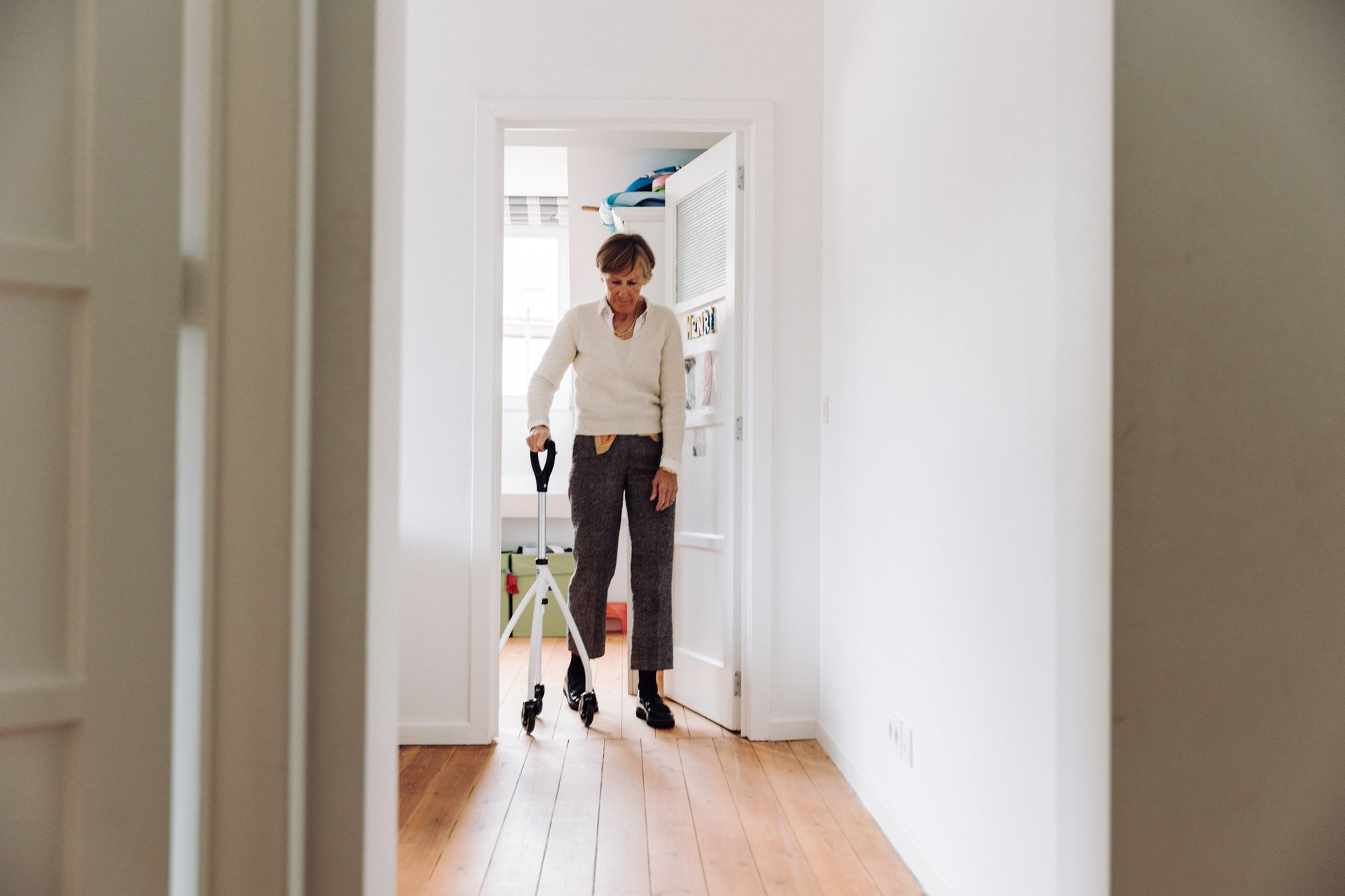
Yes. Assistive devices don’t defeat the purpose of rehabilitation—they make activity sustainable. A parent who can walk farther using a cane and will actually do it daily is getting more benefit than a parent who refuses to use one and walks very little. The goal is movement and activity, not proving strength.
When should my parent be on oxygen during activity?
That depends on their oxygen levels during activity. If oxygen drops below 88% during exertion, ambulatory oxygen is recommended. Some parents only need oxygen at night or during certain activities. A pulmonary specialist or respiratory therapist can measure oxygen levels during activity and determine what’s needed. Don’t wait for your parent to “look like they need it”—the measurement is what matters.
Is it normal for COPD to get worse after a hospitalization?
It’s common, but not inevitable. After hospitalization, a parent’s conditioning has declined from bed rest, and their anxiety may increase. Pulmonary rehabilitation specifically addresses this—it helps rebuild capacity after a setback. The key is starting it soon after discharge, not waiting months. Many hospitals now directly refer patients to rehab before discharge, which prevents that post-hospitalization decline.
What can I do if my parent refuses to try rehabilitation or activity?
Fear, grief, and depression are real barriers. Your parent may be grieving what they’ve lost, or may be catastrophizing about activity. A conversation with their doctor—and sometimes a therapist—can help. Sometimes showing a parent videos of people with similar COPD who are active, or connecting them with a support group, shifts their perspective. Frame it not as “you need to exercise” but as “this is medicine that works—the research shows it helps people like you do more of what matters.”