
Tai chi offers measurable benefits for balance, cardiovascular health, cognitive function, and fall prevention in older adults. Research shows that practicing tai chi can reduce your risk of falling by up to 55% compared to people who don’t practice it—a significant advantage for maintaining independence at any age. The practice combines slow, deliberate movements with deep breathing and mental focus, creating what many practitioners describe as “meditation in motion.” Unlike high-impact exercises that can stress your joints, tai chi is low-intensity and accessible regardless of your current fitness level, age, or physical limitations. The science backing tai chi is substantial.
Over the past 15 years, research publications on tai chi have tripled—from approximately 80 studies in 2010 to around 270 in 2025—reflecting growing clinical interest in this ancient practice. Major health organizations, including the CDC, Mayo Clinic, and the American College of Rheumatology, now officially endorse tai chi for specific health outcomes. Consider someone like Margaret, a 72-year-old who struggled with balance issues and chronic knee pain. After practicing tai chi twice weekly for three months, she noticed she could walk up stairs with confidence and her arthritis pain had noticeably decreased—changes that improved her daily life and reduced her anxiety about falling.
Table of Contents
- How Tai Chi Reduces Fall Risk and Improves Balance
- Cardiovascular, Sleep, and Cognitive Improvements from Regular Practice
- Joint Health, Arthritis Relief, and Chronic Pain Management
- The Effective Practice Schedule and Accessibility for All Abilities
- Safety Considerations and Who Should Get Medical Clearance First
- The Growing Scientific Evidence and Expert Recognition
- Integrating Tai Chi into a Sustainable Health Routine
- Conclusion
How Tai Chi Reduces Fall Risk and Improves Balance
falls are the leading injury cause for adults over 65, and preventing them is critical for maintaining independence. The CDC reviewed 10 randomized controlled trials and found that tai chi reduces overall fall rates by up to 50%, with some studies showing up to 55% reduction in the risk of multiple falls. The CDC-endorsed program called “Tai Ji Quan: Moving for Better Balance” (TJQMBB) is specifically designed for older adults and has become a community-delivered intervention proven effective at preventing falls. The practice works because it strengthens the stabilizer muscles in your legs and core while training your body to maintain equilibrium—something that becomes increasingly important as balance naturally declines with age. What makes tai chi unique for fall prevention is its focus on controlled, deliberate movement. Unlike walking on a treadmill or traditional balance exercises, tai chi teaches your body how to recover from an off-balance moment.
Each posture transition—from one stance to another—requires that you shift your weight gradually and mindfully. Research documents significant improvements across all functional balance measures, meaning participants showed better performance not just in formal tests but in real-world movements like getting up from a chair or walking on uneven surfaces. One limitation to understand: the fall-reduction benefit depends on consistency and proper instruction. A 12-week commitment of 60-minute sessions two to three times per week appears to be the minimum effective dose based on studies showing improvement. Starting with an instructor who can correct your form is important, because incorrect technique won’t build the same stabilizing strength. Someone who practices sporadically or with poor form may not see the same protective benefit.
Cardiovascular, Sleep, and Cognitive Improvements from Regular Practice
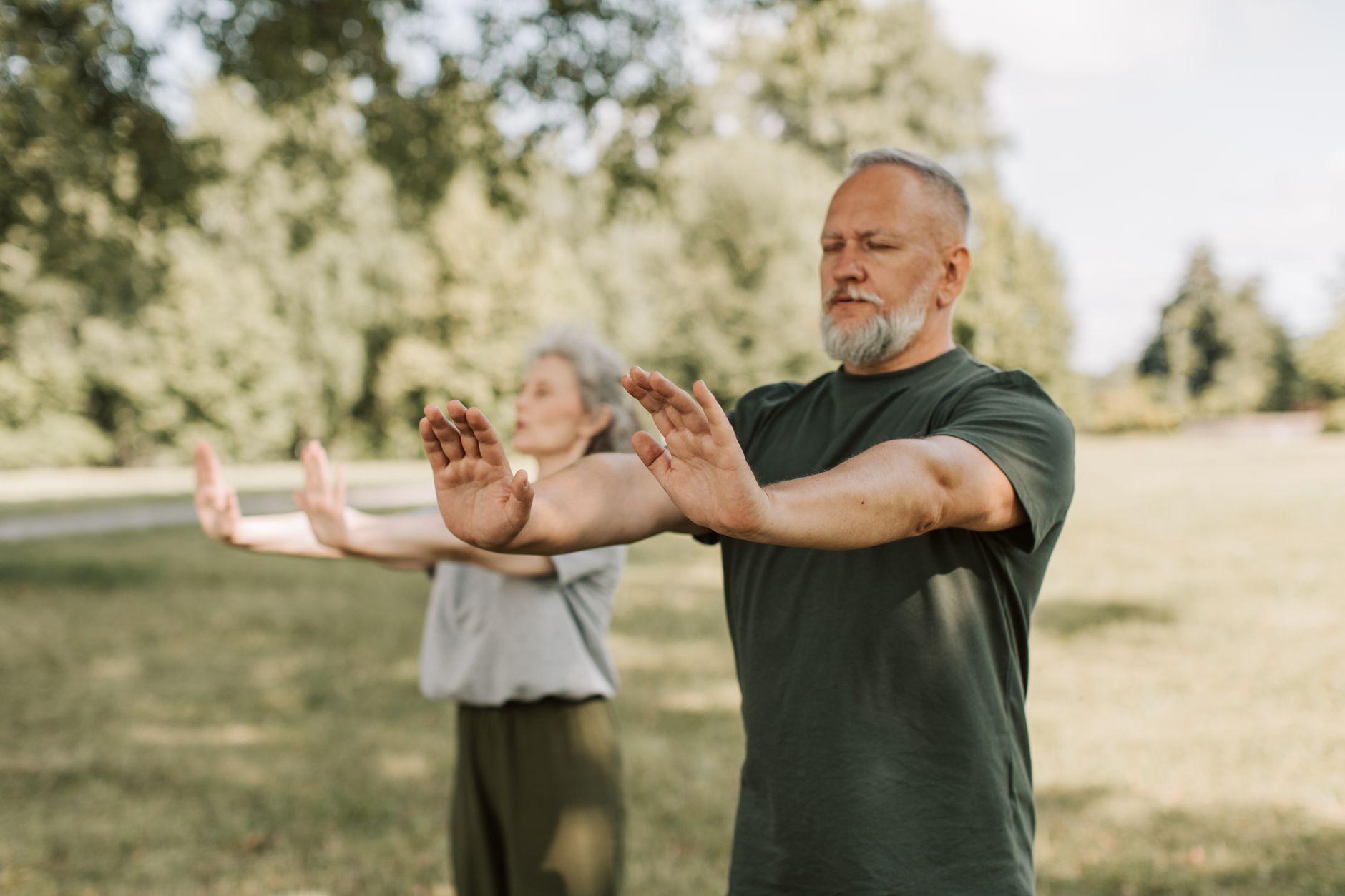
Beyond balance, tai chi has documented effects on your heart health and blood pressure. A meta-analysis of 24 clinical trials found that tai chi effectively reduces both systolic and diastolic blood pressure in people with essential hypertension. The low-impact nature of the practice makes it particularly suitable for cardiovascular rehabilitation—you’re strengthening your heart and circulatory system without the joint stress or rapid heartbeat spikes that come from running or high-intensity exercise. For someone recovering from a heart event or managing hypertension, this gentle approach can be a bridge between sedentary recovery and more intense exercise. Cognitive benefits are equally compelling. Tai chi improves executive function, working memory, attention, and mental flexibility—the brain skills you rely on for problem-solving, decision-making, and learning. Studies show practitioners experience delayed cognitive decline and enhanced global cognition.
Additionally, among elderly practitioners, tai chi correlates with a 33% improvement in sleep quality. The stress-reducing effect—measurable through lower cortisol levels—contributes to both better sleep and clearer thinking. The mind-body connection during tai chi, with its emphasis on breathing and present-moment awareness, acts similarly to meditation. The tradeoff here is that cognitive and sleep benefits take time to develop. While balance improvement can be noticeable within weeks, the deeper cognitive effects typically emerge over 8-12 weeks of consistent practice. Someone expecting immediate memory improvement may become discouraged before the benefit appears. Additionally, the sleep quality improvement seems to depend on the meditative aspect of the practice—rushing through movements or practicing in a distracted state (like watching a video without attention) won’t produce the same sleep benefits.
Joint Health, Arthritis Relief, and Chronic Pain Management
The American College of Rheumatology officially recommends tai chi as a treatment for osteoarthritis of the hand, hip, and knee. This is significant because there are limited safe, effective options for managing arthritis without medication or surgery. Tai chi’s slow, controlled movements gently work your joints through their full range of motion without the impact of running or jumping that can aggravate arthritis. People with rheumatoid arthritis, osteoporosis, and chronic pain conditions also show documented improvements from regular practice. How does this work biomechanically? Tai chi strengthens the muscles around your joints, which reduces the load on the joint cartilage itself.
For someone with knee arthritis, stronger quadriceps and hip muscles mean the knee is better supported and experiences less grinding or stress during daily activities. Unlike static stretching, which can temporarily ease tightness, tai chi’s dynamic movement and muscle strengthening provide longer-lasting relief. Many practitioners report decreased pain medication use after several months of practice. One important caveat: severe osteoporosis or a recent fracture is a contraindication that requires medical clearance. While tai chi is generally safe for bone health and can help prevent osteoporosis progression, someone with severe bone loss needs modified movements or physician approval before starting. The slow movement style is protective, but advanced practitioners sometimes include deeper squatting or faster transitions that could pose risk to severely compromised bones.
The Effective Practice Schedule and Accessibility for All Abilities
Research consistently shows that 60-minute sessions, two to three times per week for a minimum of 12 weeks, produces measurable health benefits. This is the evidence-based dose that appears in most clinical trials showing positive outcomes. The good news is that tai chi emphasizes technique over strength, meaning a 85-year-old with limited mobility and a 55-year-old in good condition can practice the same form, just at different depths and speeds. There’s no “too old” or “too weak” for tai chi—the practice adapts to your current ability. Compared to other fall-prevention programs like stepping classes or high-impact balance training, tai chi is gentler on joints and more culturally accessible to people across backgrounds. A Zumba class might be intimidating if you have arthritis; a tai chi class explicitly welcomes and accommodates all fitness levels.
The practice doesn’t require expensive equipment, special shoes, or a gym membership. A quiet space indoors or outdoors is all you need once you’ve learned the movements. The tradeoff is finding qualified instruction. Online videos can help, but learning proper form from a certified instructor—at least initially—significantly improves results. Many community centers, senior centers, and gyms now offer tai chi specifically designed for older adults. Classes are often affordable, and some are subsidized for seniors. Group practice also provides a social component, which itself is protective against isolation and depression in older adults.
Safety Considerations and Who Should Get Medical Clearance First
Tai chi is generally recognized as safe by major health institutions, but certain conditions require physician consultation beforehand. Mayo Clinic recommends checking with your doctor before starting, especially if you have joint or spine problems, heart conditions, or if you’re pregnant. Those with severe osteoporosis, a recent fracture, or active heart conditions should seek clearance specifically about which movements to modify or avoid. The good news is that tai chi instructors experienced with older populations know how to modify movements for common issues. If you have knee arthritis, the instructor can show you a shallower stance.
If you have balance impairment, you can practice holding onto a chair or wall. These modifications don’t reduce the benefit; they simply make the practice safe and sustainable. Someone starting tai chi should always communicate their medical history to their instructor. Most injuries from tai chi occur when people try advanced or rapid movements before they’ve built sufficient foundation, or when they practice with poor form from an untrained video. This is why the 12-week minimum with an instructor matters—it establishes correct technique that protects your joints and prevents injury.
The Growing Scientific Evidence and Expert Recognition
The volume of tai chi research has expanded dramatically. In 2010, approximately 80 peer-reviewed studies on tai chi existed. By 2025, that number had grown to around 270 publications, indicating intense scientific scrutiny and validation.
This growth reflects recognition that tai chi isn’t just anecdotal wellness practice—it’s a measurable intervention with reproducible results across multiple health domains. Mayo Clinic, the CDC, and organizations like McMaster Optimal Aging have all published endorsements based on clinical evidence. The CDC’s specific program recommendation for “Tai Ji Quan: Moving for Better Balance” has been implemented in hundreds of communities, making it accessible beyond individual classes. This institutional support means tai chi has moved from alternative medicine fringe into mainstream healthcare, particularly for aging populations.
Integrating Tai Chi into a Sustainable Health Routine
Tai chi works best when integrated into a broader health routine rather than approached as a standalone fix. Someone managing hypertension benefits from tai chi combined with appropriate diet and medication. Someone concerned about falls benefits from tai chi plus home safety modifications like adequate lighting and removing tripping hazards.
The practice is strongest when part of an intentional approach to aging in place and maintaining independence. Looking forward, tai chi is increasingly recognized as a cost-effective, scalable intervention for preventing common health problems in aging populations. As healthcare systems focus more on preventing falls, cognitive decline, and chronic disease rather than just treating them after they occur, tai chi fits naturally into preventive health strategies. The practice offers something many modern interventions don’t: a way to address multiple health domains—balance, heart health, mental clarity, pain management—through one consistent, enjoyable activity.
Conclusion
Tai chi benefits span balance and fall prevention, cardiovascular health, cognitive function, sleep quality, and arthritis management. The evidence is robust: up to 55% fall-risk reduction, significant blood pressure improvement, better sleep quality, and enhanced mental flexibility are all documented outcomes. Organizations from the CDC to the American College of Rheumatology endorse the practice based on clinical evidence, not tradition alone.
If you’re interested in trying tai chi, start by finding a class or instructor in your area—many community centers and senior programs offer them. Commit to at least 12 weeks of consistent practice at the recommended frequency of 2-3 sessions per week for 60 minutes. If you have joint, spine, or heart concerns, get medical clearance first. The investment of time is small compared to the potential return: improved independence, reduced fall risk, better sleep, and clearer thinking—all the foundations of aging well.