
Home strength workouts are exercise routines performed in your residence that build muscle, improve balance, and help you maintain the physical capacity to handle everyday tasks—like climbing stairs, standing from a chair, carrying groceries, or lifting a grandchild. These workouts don’t require a gym membership, special equipment, or leaving your house, which makes them accessible for older adults who want to stay independent, have limited mobility, live in remote areas, or cannot afford membership fees. A home strength workout might be as simple as doing wall push-ups and chair squats three times a week, or it could involve resistance bands, dumbbells, or water bottles you repurpose from your kitchen.
The reality is that strength naturally declines with age—you lose about 3–8% of muscle per decade after age 30, and the rate accelerates after 60. Without targeted resistance work, this loss weakens your ability to get out of bed, recover from falls, stand for grocery shopping, or live without help from a caregiver. Home-based strength training directly addresses this problem by challenging your muscles in your own space, on your own schedule, without travel time or the intimidation some feel in a gym.
Table of Contents
- Why Home Strength Workouts Matter for Aging in Place
- Common Barriers and Why Home Strength Works Around Them
- What You Actually Need to Get Started
- Programming Your Home Strength Routine—Frequency, Volume, and Progression
- Avoiding Injury and Recognizing When to Stop
- Combining Strength Work with Balance and Flexibility
- When to Progress, Track, and Reassess
- Conclusion
- Frequently Asked Questions
Why Home Strength Workouts Matter for Aging in Place
Strength training at home builds what researchers call “functional capacity”—the real-world ability to do things you actually need to do. A woman who does bodyweight squats against her kitchen counter can stand up from her toilet more easily, walk to her car with less fatigue, and carry a laundry basket to her bedroom without asking for help. A man who does wall push-ups or resistance-band rows can help himself get out of the bathtub, push a lawn mower, or carry firewood without the sharp shoulder pain he used to experience.
The comparison is instructive: many older adults can walk on a treadmill at the gym but struggle to stand from a low couch at home because they haven’t trained the exact muscles and movement patterns they use in daily life. Home strength work is functional because you train where you live and often use the same positions—standing from chairs, reaching into cabinets, bending to pick something up. This carryover effect means the strength you build actually shows up when you need it.
Common Barriers and Why Home Strength Works Around Them
The main barriers to strength training for older adults are cost (gym memberships), transportation (especially if you don’t drive), embarrassment (worry about how you look exercising), and time (commuting to a gym adds 20–40 minutes to a workout). Home strength training eliminates all of these at once. You don’t pay membership fees, you don’t drive anywhere, no one watches you if you need to rest between sets, and your workout starts the moment you stand up in your living room. One real limitation is motivation and accountability.
Without a trainer, a class schedule, or other people present, it’s easy to skip workouts or do them halfheartedly. Many older adults are more consistent with structured classes than self-directed home routines. If you fall into this group, consider following a video workout, scheduling a standing call with a friend who also exercises, or asking a caregiver or family member to check in on your routine weekly. Another limitation is that very complex exercises—or exercises with heavy weights—can be hard to do safely alone if you fall or get stuck, so home workouts should stick to bodyweight, light resistance bands, or light dumbbells where a fall or fumble won’t injure you.
What You Actually Need to Get Started
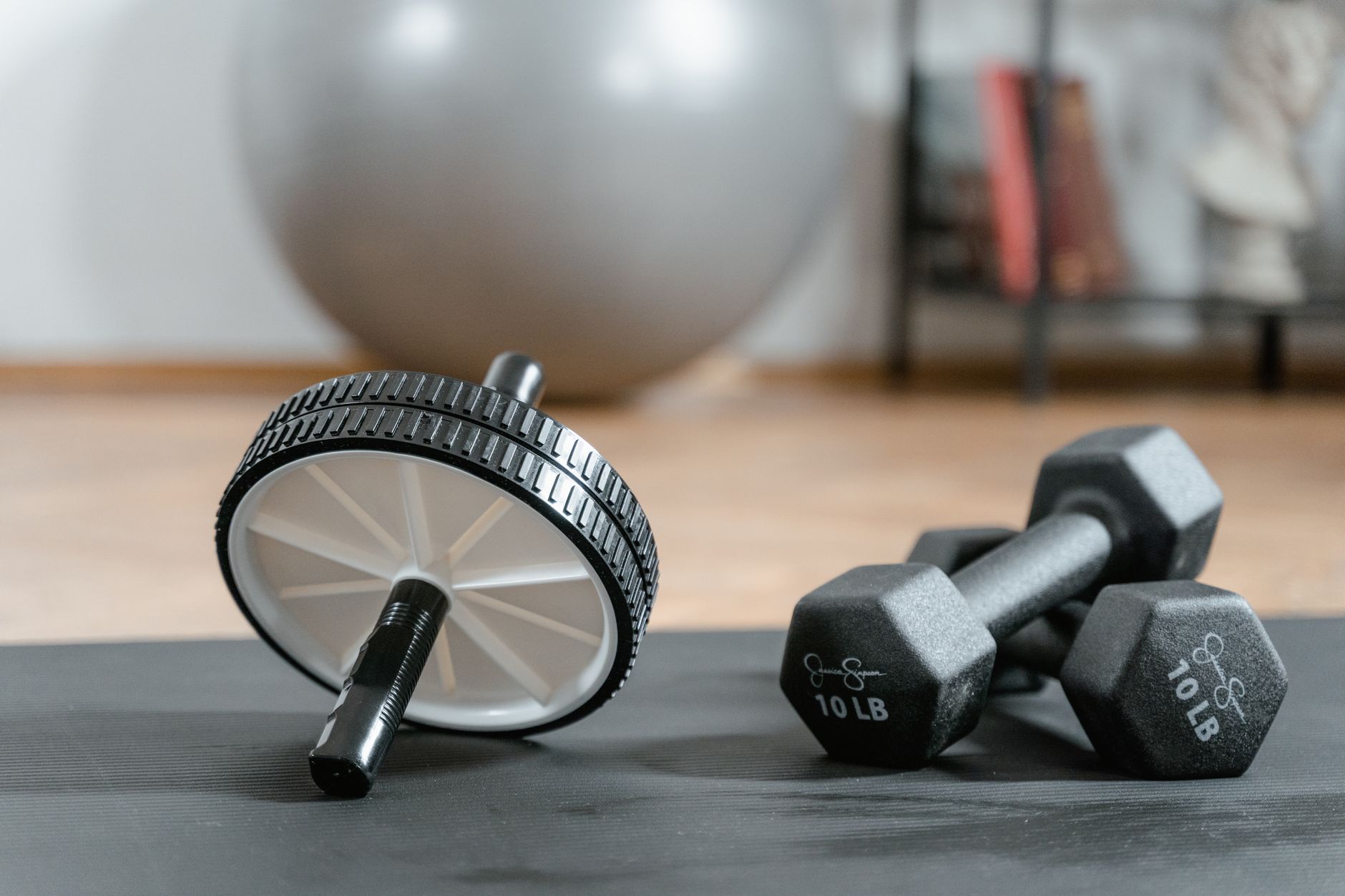
You don’t need equipment to start a home strength program. Your body weight is resistance: squats, wall push-ups, step-ups on a stair, standing on one leg, and glute bridges all challenge your muscles. If you want to add resistance, household items work perfectly—fill a backpack with books for weight, use water bottles as dumbbells, loop a resistance band around a doorknob or your own body, or sit in a chair and do lifts with your legs holding a pillow between your knees.
One specific example: Maria, 72 and living alone, started with chair squats (sitting and standing from a dining chair), wall push-ups (hands against her kitchen counter), and walking to her mailbox. after eight weeks, she noticed she could stand from her toilet without using the grab bar as heavily, and she could carry her laundry basket upstairs without stopping to rest. She never bought anything—just used her chair and her hallway for walking practice. The total time commitment was 15 minutes on three days a week.
Programming Your Home Strength Routine—Frequency, Volume, and Progression
For most older adults, 2–3 days per week of strength training produces real results without overtraining or soreness that discourages you from continuing. Each session should target major muscle groups: legs (squats, step-ups, lunges), pushing muscles (wall push-ups, resistance-band chest presses), pulling muscles (resistance-band rows), and core (planks, dead bugs, standing marches). A typical 20–30 minute session at home might include 2–3 sets of 8–15 repetitions per exercise, with a rest day in between strength sessions.
The tradeoff is between volume (how much work you do) and sustainability. A high-volume home program—five exercises, three sets each, every day—often leads to burnout or overuse injury in older adults, whereas a modest program done consistently for months builds real strength. Two days a week of simple, circuit-style workouts (one set of 10 repetitions each of 5–6 exercises, done back-to-back) is often more sustainable and still effective than a complicated routine you skip half the time.
Avoiding Injury and Recognizing When to Stop
The most common mistake is doing too much too soon or with poor form—especially with squats, where knees collapsing inward or not bending enough means your muscles don’t actually strengthen, and you stress your knees instead. Always start light (bodyweight or very light resistance) and practice form before adding difficulty. Another warning: sharp pain, especially in joints (knee, shoulder, lower back), is a signal to stop immediately. Mild muscle soreness (aching muscles for a day or two after a workout) is normal, but pain that lasts longer than a few days or worsens during exercise means you should stop and either modify the exercise or skip it until you can check with your doctor.
A limitation specific to home workouts is that you don’t have a trainer watching your form, so you can unknowingly develop bad habits. If possible, film yourself doing a few exercises on your phone and compare your form to a clear instructional video, or ask a caregiver or visiting nurse to watch one session and give feedback. One other consideration: if you have balance problems or fall risk, avoid one-legged exercises or moves near stairs without something stable to hold onto. Balance exercises (standing on one leg for 30 seconds, semi-tandem stance) should be done near a wall or counter you can grab if you stumble.

Combining Strength Work with Balance and Flexibility
True functional fitness isn’t just strength—it’s the combination of strength, balance, and mobility that keeps you independent. You can add balance work to your strength routine: hold onto a counter and practice standing on one leg for 30 seconds on each side, do heel-to-toe walks along a hallway, or stand from a chair without using your hands (which trains both strength and balance simultaneously). Flexibility work—gentle stretching of your hips, shoulders, and hamstrings—takes only 5 minutes after a workout and prevents the stiffness that makes daily movements harder.
One example: Robert, 68, started with home strength training but found he was much stronger but couldn’t reach items on high shelves because his shoulders were stiff. Adding 5 minutes of shoulder and hip stretches three days a week solved the problem within two weeks. The same principle applies to many older adults—strength is useless if stiffness or poor balance prevents you from moving.
When to Progress, Track, and Reassess
As your body adapts (usually after 4–6 weeks), your workouts become easier and your muscles stop improving. This is the signal to progress: add one more repetition, add light resistance (a 1-pound wrist weight or half-filled water bottle), or try a slightly harder version of the exercise (full push-ups instead of wall push-ups, deeper squats, or single-leg balance instead of two-legged). Tracking your workouts—even just a simple note like “did 3 sets of 12 chair squats on Monday”—keeps you honest and shows progress over time, which is motivating.
A forward-looking insight: home strength training isn’t a short-term project but a lifelong practice. The older adults who maintain independence into their 80s and 90s are usually those who’ve built strength regularly over many years. Starting now, even at 60 or 70 or 80, builds a foundation that protects you from future disability, fall risk, and dependence on others.
Conclusion
Home strength workouts are one of the most effective, affordable, and accessible ways to maintain muscle, improve functional capacity, and stay independent as you age. You don’t need equipment, a gym, or much time—just consistency, correct form, and realistic progression. The evidence is clear: older adults who do resistance training 2–3 times per week maintain more muscle, have better balance and mobility, recover faster from injury or illness, and report greater confidence in their daily lives.
Start small, build slowly, and focus on exercises that translate directly to your life—standing from chairs, walking up stairs, carrying things, and reaching. Track your progress, stay curious about how your body responds, and adjust your routine as needed. Talk with your doctor before starting if you have concerns, especially around joints, balance, or recent surgery. The investment of 20–30 minutes a few times a week now will protect your independence and quality of life for years to come.
Frequently Asked Questions
Am I too old to start a home strength program?
No. Research shows people in their 70s, 80s, and beyond still build muscle and gain functional strength with resistance training. The rule is to start light and progress gradually. If you’ve been sedentary, check with your doctor first, but age alone is never a barrier.
How long until I notice a difference?
Most people feel initial differences in energy and ease of movement within 3–4 weeks. Measurable strength gains (like standing from a chair with less effort) typically show up by 6–8 weeks. Consistency matters more than intensity.
Can I hurt myself doing home strength workouts?
Yes, if you do too much too soon or use poor form. Start with bodyweight, use light resistance, and stop immediately if you feel sharp pain (not soreness). Having someone watch your form on video is helpful.
Do I need protein powder or supplements for strength training?
No. Eating adequate protein (lean meat, eggs, beans, yogurt) with regular meals is enough. Expensive supplements are optional and usually unnecessary for basic home strength training.
What if I don’t like exercise?
Focus on functional movements (squats, pushing, carrying) rather than “workouts.” Many people enjoy the practical purpose more than the idea of exercise. You’re not training for aesthetics or performance—you’re training to live independently.
Should I strength train on days I’m tired or sore?
Mild soreness is fine and doesn’t mean you should skip workouts. Tired from daily life? A light session still counts. But sharp pain, illness, or extreme fatigue are signals to rest. Recovery is part of the process.