
Yes, you can build stair-climbing capacity after age 60 without ever stepping into a gym. Stairs are one of the most effective tools available in your own home, and they work because they demand exactly what your body needs most: strength in your legs, power in your muscles, and resilience in your cardiovascular system. Research from 2025 shows that climbing 5 or more flights of stairs daily reduces your risk of dying from cardiovascular disease by 39%—a benefit that rivals what many people spend thousands of dollars trying to achieve in expensive fitness facilities. The beauty of using stairs is that they’re always there, they’re free, and they make a direct difference in your ability to live independently.
Consider a 68-year-old woman who found herself avoiding the staircase in her own home, choosing to stay on one floor rather than face the huffing and fatigue of going up. After eight weeks of consistent stair work using the methods in this article, she was carrying laundry upstairs without stopping to rest, visiting her grandchildren’s bedrooms on the second floor without dread, and feeling capable again in her own living space. That’s not an outlier outcome—that’s typical. A meta-analysis examining nearly 480,000 people found that stair climbing reduced the overall risk of death from any cause by 24%, with the cardiovascular benefits being among the most dramatic improvements researchers have documented in older adults.
Table of Contents
- Why Stair-Climbing Becomes Critical After Age 60
- How Your Body Responds to Stair Training
- Starting Where You Are—No Gym Equipment Needed
- The Best Home-Based Stair Training Routine
- Joint Protection and Safety Considerations
- Tracking Progress Without a Gym
- Building a Sustainable Stair Habit for Life
- Conclusion
Why Stair-Climbing Becomes Critical After Age 60
The challenge starts around age 50, when sarcopenia—age-related muscle loss—begins accelerating. Your quadriceps, glutes, hamstrings, and calves all weaken gradually if they’re not regularly challenged. By age 60 or 70, many people have lost enough muscle that ordinary tasks feel difficult: climbing stairs leaves you breathless, carrying groceries upstairs becomes a two-trip ordeal, and the fear of missing a step grows. What makes this particularly urgent is that stairs demand multiple muscle groups at once and require your cardiovascular system to do real work, unlike many everyday activities.
Stairs are so effective precisely because they’re demanding in all the right ways. When you climb stairs, your body isn’t just lifting your leg—it’s lifting your entire body weight against gravity, repeatedly. This stimulation triggers the development of muscle power, not just muscle size. A 2024-2025 clinical trial showed that stair-climbing training improved lower-body muscle power in older adults just as effectively as using resistance machines in a gym. For people who can’t or won’t join a gym, stairs are the equivalent piece of equipment, and they come with no membership fee and no commute required.
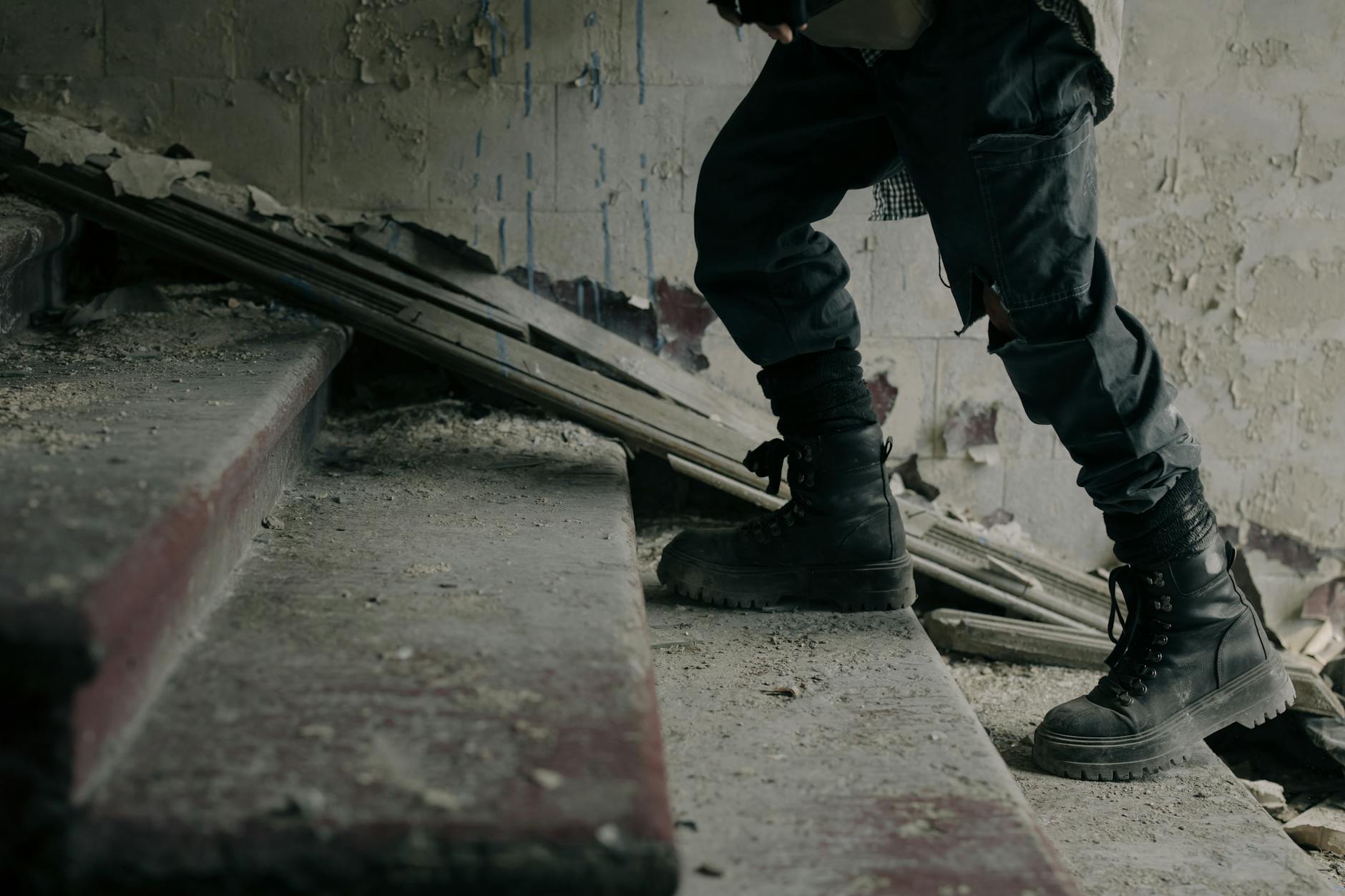
How Your Body Responds to Stair Training
Your muscles don’t care whether resistance comes from a fancy machine or from climbing your own staircase—they respond to the demand placed on them. Research published in the Journal of Strength & Conditioning Research tracked 46 healthy adults between ages 65 and 80 who climbed two flights of stairs twice per week for 12 weeks. By the end of three months, these participants showed measurable gains in muscle power and functional ability. That’s a small study, but the results align with what larger research consistently shows: consistency beats intensity, and modest, regular stair work produces real strength improvements in older bodies. The cardiovascular benefits happen almost immediately, even before muscle gains become obvious.
A meta-analysis of nine studies involving approximately 480,000 participants found a 39% reduction in cardiovascular disease mortality among people who regularly climbed stairs. One surprising finding from recent research is that even one minute of stair climbing improved how your body processed glucose and insulin after meals—a benefit that extends far beyond physical strength and into metabolic health. This means that using stairs isn’t just about building leg strength; it’s retraining how your body handles everyday fuels. One important limitation to understand: stair climbing is demanding on your knees and hips, particularly if you’re carrying extra weight or have existing joint issues. Starting too aggressively can trigger knee pain or overuse inflammation. This isn’t a reason to avoid stairs, but it’s a reason to approach them carefully, starting with small movements and building gradually.
Starting Where You Are—No Gym Equipment Needed
The beginning point depends entirely on your current ability. If climbing a full flight of stairs leaves you winded and your legs shaking, you don’t start by climbing five flights. You start smaller: perhaps with step-ups on a single stair or even a sturdy ottoman, where you lift one leg up, step up fully, then step back down. This controlled, repetitive movement builds strength with less cardiovascular demand, allowing your muscles to adapt before you tackle longer climbs.
A physiotherapist’s recommendation suggests starting with 8 to 10 step-ups per leg, performed twice daily if possible. As your strength improves over the first few weeks, you gradually increase to 12 or 15 repetitions. The progression is built into the movement itself: once basic step-ups feel manageable, you move to climbing one flight of stairs. Once that feels routine, you climb two flights. The advantage compared to gym training is that you control the exact progression; there’s no intimidation factor, no comparing yourself to others, and no equipment settings to figure out.
The Best Home-Based Stair Training Routine
A realistic routine for building real capacity looks like this: perform stair climbing or step-ups at least 2 to 3 times per week as a minimum, with daily practice producing better results. If you have stairs in your home, a session might be as simple as slowly climbing up and down your staircase three to five times, resting between rounds as needed. If you don’t have stairs, step-ups on a sturdy stair, bench, or even a low ottoman work just as effectively—research shows the training response is nearly identical. The key variable is consistency, not intensity. Studies show that after approximately eight weeks of regular stair work, the activity starts to feel routine and manageable.
This is the crucial threshold: by week eight, what felt impossible has become normal, and you’ve crossed into the phase where you’re actually building strength rather than just struggling through. By this point, many people find themselves taking stairs more often in daily life without thinking about it—they’ve genuinely rebuilt their capacity. A practical comparison: if you could climb half a flight before without stopping, and you’re aiming to climb a full flight comfortably, expect three to four weeks of focused work. If you’re starting from barely being able to climb a single flight, expect closer to eight to twelve weeks to feel genuinely comfortable with multiple flights. The timeline depends on where you’re starting, but the trajectory is predictable if you stay consistent.
Joint Protection and Safety Considerations
The most common obstacle isn’t motivation or time—it’s knee pain or joint soreness that develops when people push too hard too fast. Your knees aren’t small; they carry your body weight constantly and absorb impact with every step. If you start climbing too aggressively, microtrauma accumulates and inflammation sets in. The solution isn’t to avoid stairs but to respect the pace of adaptation. Your joints need two to three weeks just to begin adapting to new demands, so starting small isn’t wasting time; it’s respecting your body’s timeline.
Watch also for the pattern of doing too much on good days. You have a week where you feel strong and climb your stairs three extra times in enthusiasm, then your knees ache for the next week and you stop completely. This pattern teaches your body nothing except instability. Consistency at a moderate level, every single day or at minimum five days per week, builds adaptation far better than sporadic bursts of intensity. Think of it like learning an instrument: five minutes daily beats four intense sessions per week, every time.

Tracking Progress Without a Gym
Without a gym, you don’t have machines that tell you exactly how many pounds of force you’re producing or what your heart rate is. But you have something better: real-world function. Notice small changes: are you taking stairs faster? Can you carry something in your hands while climbing? Do you arrive at the top less winded? Can you climb multiple flights without needing to sit down and recover? These functional improvements are exactly what matter for independence and aging in place. A simple tracking method is to count flights climbed per session and note how you feel.
Week one, you manage one flight with significant effort and fatigue. Week four, two flights feel doable. Week eight, three flights feel normal. You’re watching yourself become capable in real time, using your home as the measuring device. This kind of progress often matters more psychologically than any gym metric because you’re measuring what actually enables independent living.
Building a Sustainable Stair Habit for Life
The long-term picture of stair training is genuinely sustainable because it integrates directly into living in a house. Unlike a gym membership that requires travel and motivation, stairs are simply there, part of your daily environment. Many people who successfully develop stair-climbing capacity find it becomes automatic—they naturally take stairs, use them multiple times per day, and maintain their strength without conscious effort. One realistic expectation: the initial eight-week phase where noticeable improvement happens is the challenging phase.
This is when you’re building the habit and the strength feels like genuine work. After that, maintaining the gains requires ongoing use, but it becomes lighter. This is the sustainable part—not heroic daily workouts, but regular use of stairs as part of normal living. The research shows these benefits persist as long as you maintain the activity, making stairs a genuinely long-term solution to aging-related strength loss rather than a temporary intervention.
Conclusion
Building stair-climbing capacity after age 60 without a gym is feasible, evidence-based, and increasingly essential as we live longer in our own homes. The science is clear: consistent stair work reduces your cardiovascular disease risk by 39%, improves muscle power comparably to expensive gym equipment, and helps stabilize blood sugar control. The timeline is predictable—approximately eight weeks to feel routine again—and the method is accessible to almost anyone with access to a single stair. Starting small, respecting your joints’ adaptation timeline, and staying consistent matter far more than the specific program you follow.
Your next step is deciding when to begin. Not when you feel more ready or stronger, but now. Identify your starting point—whether that’s a single step-up or climbing part of one flight—and commit to that movement for two to three weeks before progressing. The capacity you rebuild over the next few months isn’t just about exercise; it’s about remaining independent, capable, and present in your own home for whatever comes next.