
Functional strength is the ability to perform the movements and tasks your body encounters in everyday life—getting up from a chair, carrying groceries, climbing stairs, reaching for items in a cabinet, or steadying yourself when you stumble. It’s different from the strength you might see in a gym, where someone can lift a heavy weight in a controlled motion. Functional strength is about real-world capability: the power to do what you actually need to do to live independently.
For someone aging in place or managing mobility concerns, functional strength becomes increasingly central to maintaining independence. When your legs can’t push you up from a seated position without help, or when your core doesn’t stabilize your spine during daily bending and reaching, you become dependent on other people or assistive devices for tasks you’d rather handle yourself. Building and maintaining this kind of strength directly determines whether you can continue living without constant assistance, whether a bathroom fall becomes a minor stumble or a serious injury, and whether you can participate in the activities that give your life meaning.
Table of Contents
- How Does Functional Strength Differ From Traditional Strength Training?
- Why Functional Strength Determines Your Real Independence
- The Most Common Functional Strength Challenges As You Age
- Building Functional Strength Safely at Home and Beyond
- Common Mistakes That Undermine Functional Strength Progress
- The Role of Assessment and Professional Guidance
- Maintaining Functional Strength Over Time
- Conclusion
- Frequently Asked Questions
How Does Functional Strength Differ From Traditional Strength Training?
Gym-based strength training typically isolates individual muscles—bicep curls work the arm, leg presses work the quadriceps, bench presses work the chest. These movements happen in controlled environments with stabilized equipment. Functional strength, by contrast, trains movements that integrate multiple muscle groups working together, often in unstable or variable conditions, much like real life demands. When you stand from a chair, your legs push, your core stabilizes, your arms may assist, and your balance mechanisms constantly adjust.
This is what functional strength addresses. The practical difference becomes obvious when you compare outcomes. Someone who has spent years doing isolated weight training might have impressive bicep size but still struggle to lift a grandchild safely because they haven’t trained the coordinated pattern of movements required for that task. Functional strength training, by contrast, prioritizes the patterns and combinations your body needs. A 75-year-old doing functional strength work might never lift 100 pounds, but they might train the exact movement pattern needed to pick up a suitcase, twist and place it on a shelf, and step down from a small stool—all while maintaining balance and control.
Why Functional Strength Determines Your Real Independence
Functional strength is often the difference between independence and dependence, though this isn’t always obvious until it’s missing. When someone reaches a point where they can’t stand from a toilet without grab bars or help, or can’t lift themselves out of bed, functional strength has declined below the threshold needed for that task. The limitation isn’t usually about being weak in an absolute sense; it’s about lacking the specific strength patterns required. This matters because there’s no substitute for functional ability.
Mobility aids like walkers or grab bars help, but they can’t fully replace the capability your own strength provides. Someone with good functional strength in their legs and core can navigate a crowded grocery store, walk on uneven ground, and recover from a minor stumble. Someone without it faces constant instability, higher fall risk, and the psychological burden of knowing their body isn’t reliable. A warning here: waiting until function has declined significantly before working on strength makes recovery much harder. The earlier you build and maintain functional strength, the longer you can preserve your independence.
The Most Common Functional Strength Challenges As You Age
The pattern of strength loss as people age isn’t random. Leg strength typically declines more noticeably than upper body strength, which is why standing from a chair or climbing stairs often becomes difficult before other tasks. Core stability—the deep abdominal and back muscles that keep your spine steady—declines steadily and often goes unnoticed until balance problems appear. Balance itself is partly a strength issue: your ankles, hips, and core need to generate quick, small corrections to keep you upright.
Specific examples reveal this pattern clearly. Someone might notice they need both armrests to stand from the couch but have no trouble lifting a pot of soup; that’s a leg weakness problem, not a general issue. Someone else might find they can’t twist their torso to look over their shoulder as easily, or feel unstable when reaching up to a high shelf; that’s often a core stability problem. Grip strength declines too, making tasks like opening jars, turning door handles, or carrying shopping bags progressively harder. Each of these involves specific muscle groups, which means each can be addressed with targeted work.
Building Functional Strength Safely at Home and Beyond
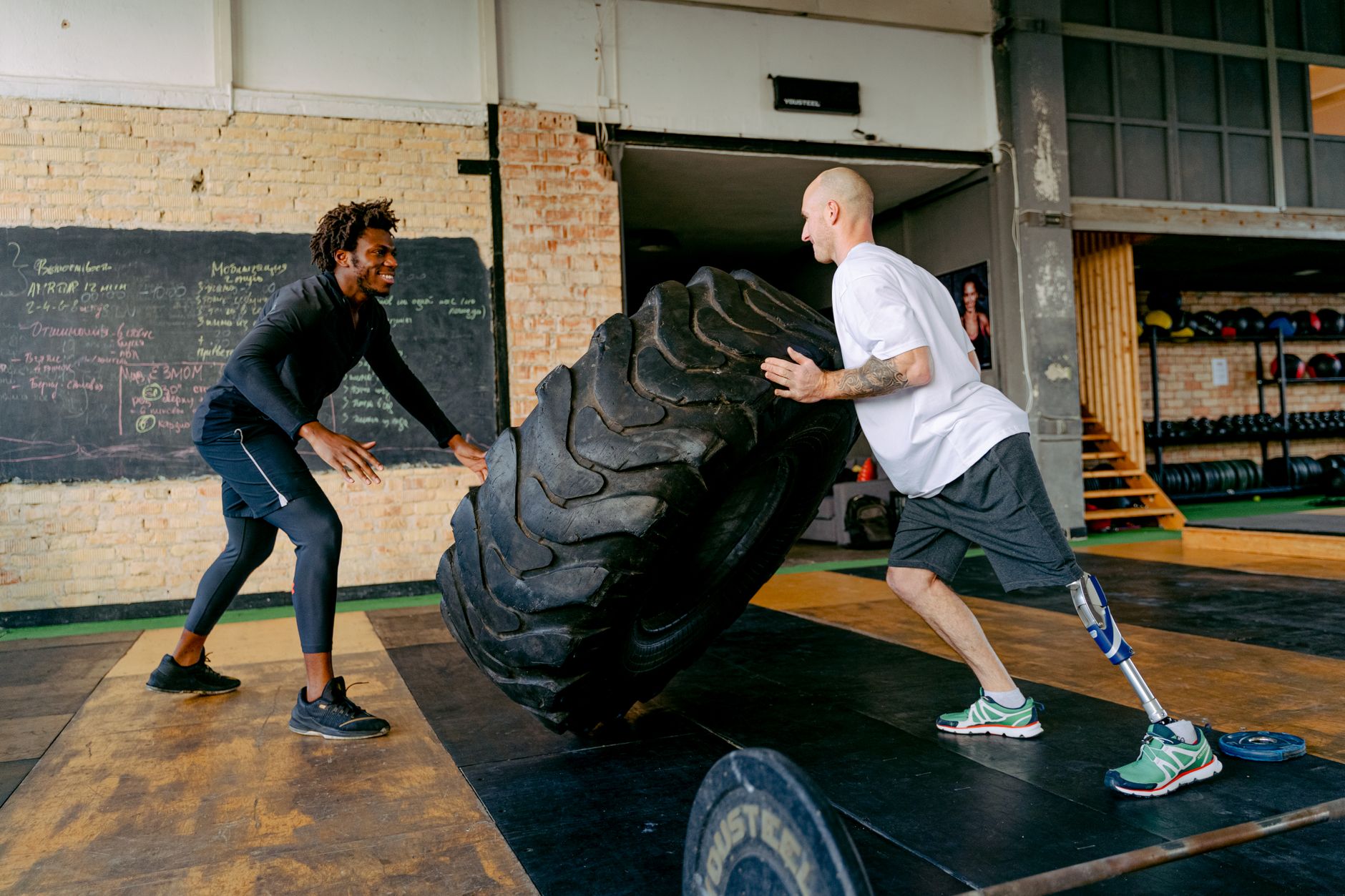
The good news is that functional strength can be built and rebuilt at almost any age through movements that mimic real tasks. Chair stands—practicing standing and sitting from a sturdy chair—directly build the leg strength you need for daily life. Carrying groceries with proper form strengthens multiple systems simultaneously. Walking on slightly uneven ground improves balance and stability. Reaching movements in different directions build shoulder and core stability.
These aren’t exotic; they’re just doing everyday tasks with intention. A practical approach starts with understanding your current ability. Can you stand from a chair without using your hands? Can you walk up a flight of stairs without holding the railing? Can you carry a moderate weight like a laundry basket? Can you bend and pick something off the floor? These are your baseline tasks. Building functional strength means practicing these tasks more intentionally—more repetitions, slightly more difficulty, better form—rather than doing random gym exercises that won’t transfer to real life. A tradeoff exists here: functional training is often less dramatic and takes longer to show results than isolated muscle training, but the results actually matter for how you live.
Common Mistakes That Undermine Functional Strength Progress
One frequent mistake is focusing on range of motion without building strength through that range. Someone might do flexibility stretches religiously but then lack the strength to actually use that flexibility in real life—they can sit in a deep squat if they’re supported, but can’t stand back up. Functional strength requires practicing the difficult parts of the movement, not just the comfortable ones. Building the ability to stand from a very low couch requires working on that specific challenge, not just doing gentle exercises. Another mistake is training only in perfect conditions.
This sounds counterintuitive, but gym-based functional training still happens in predictable, stable environments. Real life is messier. A useful limitation to understand: if you only train standing on flat, stable ground, you won’t build the reactive balance needed for uneven surfaces or mild destabilization. This is partly why people who rely exclusively on home exercise sometimes report losing confidence when they go out in the real world. The warning is important: if you have significant mobility limitations, balance problems, or health concerns, working with a physical therapist to design your functional strength program is wise. Doing the wrong movements can aggravate existing issues.

The Role of Assessment and Professional Guidance
Most people benefit from at least one assessment by a physical therapist or occupational therapist, even if they plan to do most work independently. These professionals can identify specific weak points, assess movement patterns, and create a targeted program. For example, someone experiencing frequent near-falls might have an assessment that reveals ankle weakness rather than poor balance, which completely changes what needs to be trained. This specificity matters: training what’s actually limited is far more efficient than general fitness work.
Insurance often covers physical therapy assessment if it’s recommended by a doctor, especially when there’s a specific fall risk or mobility concern. Even one or two sessions that identify your functional gaps and provide a clear starting program can dramatically improve results. Someone might learn that their particular stairs challenge comes from hip weakness rather than leg weakness, or that their reach problems are really about core stability rather than arm strength. These insights make self-directed training far more effective.
Maintaining Functional Strength Over Time
Building functional strength isn’t a destination; it’s ongoing maintenance. The encouraging part is that you don’t need to do more work to maintain than you did to build, and brief sessions several times weekly often sustain capability effectively. Someone who built functional strength through a structured program might maintain it with 15-20 minutes of practice three times a week, focusing on the tasks most central to their independence.
The long-term outlook with consistent functional strength maintenance is significant: people who stay engaged with movements that challenge their real-world capability delay the onset of dependence substantially. Someone might expect a certain decline in their 80s, but consistent work on functional strength can reduce that decline dramatically. This isn’t about staying young; it’s about staying capable at each stage of aging.
Conclusion
Building functional strength is fundamentally about maintaining your ability to do the things that allow you to live independently. It’s rooted in practical, real-world movements rather than gym-based isolation exercises, and it applies directly to everything from standing safely to walking confidently to handling the everyday tasks that define independent living. The movements are available to almost everyone, at almost any starting point, and the results are measurable in your actual daily life.
Starting functional strength work—whether through physical therapy, home-based practice, or community programs—is an investment in your independence and autonomy. The earlier you begin, the more strongly you establish the capability you’ll need. Even if you’re starting from a point of significant limitation, targeted functional work typically improves real-world ability. The next step is honest assessment: what tasks matter most to your independence, where do you feel weakness or instability, and where can you start practicing with intention?.
Frequently Asked Questions
At what age should someone start thinking about functional strength?
Functional strength work is valuable at any age, but people typically notice its importance around age 60-70 when decline becomes noticeable. However, building it earlier—even in your 40s and 50s—creates a larger reserve that buffers against later decline.
Can someone regain functional strength if they’ve lost it?
Yes, substantially. Even people in their 80s and 90s can rebuild functional capability through consistent work. Recovery takes longer than maintenance, and someone starting from significant loss should work with a therapist initially, but improvement is very possible.
Do you need equipment to build functional strength?
No. Your own body weight, a sturdy chair, and stairs or steps are often enough to build significant functional strength. Equipment like resistance bands or light weights can add progression, but isn’t necessary to start.
How often do you need to train to maintain functional strength?
Three sessions per week of 15-30 minutes is typically sufficient for maintenance once you’ve built your base. More frequent training builds capability faster initially.
What’s the difference between functional strength and balance training?
They overlap significantly. Balance training often involves stability challenges that engage multiple muscles, while functional strength training focuses on the power to move and control your body through real-world patterns. Both contribute to fall prevention and independence.
When should someone work with a professional versus training on their own?
A professional assessment is valuable if you have a specific limitation (stairs are difficult, standing from a chair is hard), a history of falls, or a medical condition. Otherwise, starting with clear functional tasks and practicing them consistently often works well, with professional guidance added if progress stalls.