
Strength training twice a week after age 60 isn’t optional—it’s one of the most evidence-backed interventions for living longer and maintaining independence. Research from Harvard Health shows that adults over 65 who lift weights twice weekly have a 46% lower mortality rate compared to those who don’t. This isn’t theoretical or marginal. A 63-year-old woman who could barely carry groceries ten years ago, who started simple twice-weekly weight training, now climbs stairs without holding the rail, plays with grandchildren on the floor, and gets up from chairs without using her hands. That transformation happens because strength training addresses the underlying biology of aging.
The American College of Sports Medicine, the gold standard for exercise guidance, updated its recommendations in April 2026 for the first time in 17 years—and the message was clear: muscle-strengthening activities at least twice per week are essential for adults of all ages. This isn’t advice for athletes or gym enthusiasts. It’s medical guidance for staying functional, independent, and alive longer. Why twice a week specifically? Because that frequency creates the stimulus your muscles need to resist sarcopenia—the age-related muscle loss that silently erodes your ability to stand, walk, lift, and live independently. Skip it, and your muscles atrophy about 1% per year after 60. But maintain it, and you can stay vibrant well into your 80s and beyond.
Table of Contents
- Why Strength Training Twice Weekly Matters More After 60
- The Bone Health Factor and Why Heavy Loads Matter
- How Strength Training Reshapes Your Daily Life
- Progressive Resistance Training vs. Sedentary Aging
- Common Mistakes That Undermine Results
- Starting Strength Training Later in Life
- The Future of Aging and the Role of Strength Training
- Conclusion
Why Strength Training Twice Weekly Matters More After 60
Your muscles don’t care about your age, but they do respond to the demands you place on them. After 60, twice-weekly resistance training becomes non-negotiable because the aging body loses muscle faster and requires consistent stimulus to maintain it. Studies on over 500 older women with sarcopenia—the clinical diagnosis of age-related muscle loss—showed that those who did resistance training at least twice weekly saw significant improvements in muscle strength, walking speed, and overall physical function. Without that stimulus, these markers decline, and mobility problems cascade. Grip strength is a powerful marker of overall health and longevity.
A 2026 study of more than 5,400 women ages 63 and older found that each 7-kilogram improvement in grip strength correlated with a 15% reduction in mortality risk. That’s not a small effect. That’s a measurable, reproducible change in lifespan linked directly to muscle strength. Twice-weekly strength training improves grip strength, which means it literally improves your odds of living longer. Compare this to someone who does occasional walking but no strength work: they’re not getting that mortality benefit, and their hands are getting weaker, making everyday tasks harder.
The Bone Health Factor and Why Heavy Loads Matter
Beyond muscle, strength training protects your bones—something many people overlook until they break a hip. Research on men with low bone mineral density showed that resistance training twice weekly improved their bone strength. For women past menopause, bone loss accelerates dramatically due to declining estrogen, making strength training even more critical. But not all strength training is equal. Recent 2025 peer-reviewed research emphasized that intensity matters. The research showed optimal benefits come from training at 80-84% of your one-rep max and very heavy loads (85% of 1RM or more). This doesn’t mean bodybuilding or Olympic lifting, but it does mean the weight needs to be challenging.
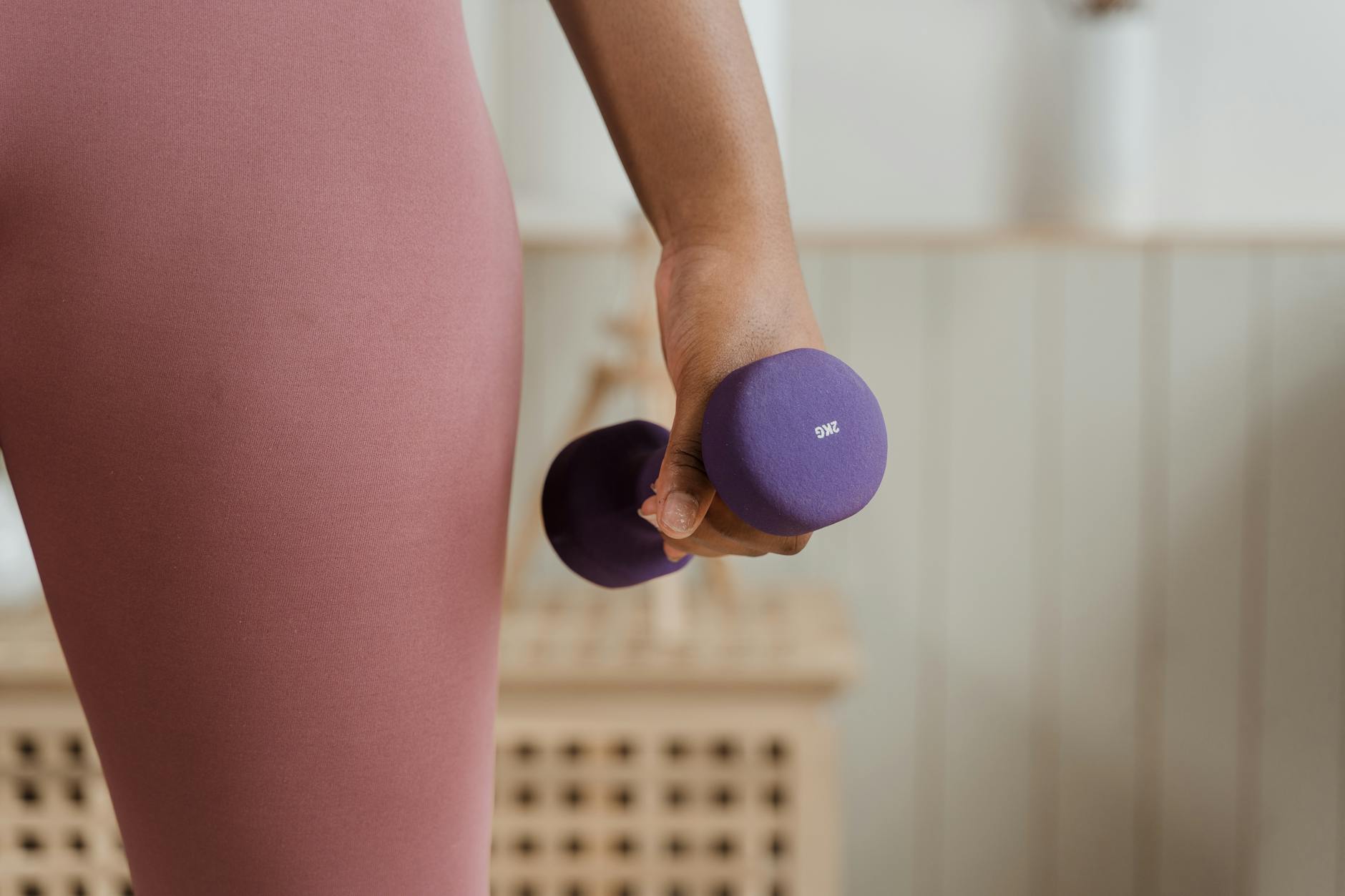
Light, easy repetitions with barely-noticeable resistance won’t cut it. This is where many older adults make a critical mistake. They do light resistance exercises—maybe with 2-pound weights or elastic bands—thinking that’s enough. For maintenance of basic function, it helps. But for real protection against fractures, for the mortality benefits, and for staying independent, you need progressive, challenging resistance. A woman lifting 2 pounds will not see the same bone improvements as one lifting 15 or 20 pounds on squats, or using a challenging resistance band. That said, starting where you are is crucial. If you’ve never trained, you begin light and progress gradually—but the goal is always to increase the challenge over weeks and months.
How Strength Training Reshapes Your Daily Life
Independence isn’t abstract. It’s whether you can rise from the toilet without holding onto something. It’s whether you can carry your own laundry down the stairs. It’s whether you can walk on uneven ground without fear of falling, pick up a grandchild, or reach items from high shelves. Systematic reviews of randomized controlled trials show that resistance training improves mobility, ability to perform usual activities, pain and discomfort, and mental health (anxiety and depression) in people 60 and older. These aren’t small quality-of-life gains. They’re the difference between aging in place independently and becoming dependent on caregivers.
Consider a 72-year-old man with mild arthritis who started twice-weekly strength training. After eight weeks, his walking speed increased measurably. After four months, he noticed he could walk up his driveway without stopping to rest. His knees hurt less because stronger muscles stabilized his joints better. His mood lifted because he was doing something for himself and seeing results. The World Health Organization now recommends progressive resistance training combined with aerobic activities and balance training for all older adults to reduce frailty and improve functional capacity. This recommendation exists because the evidence is overwhelming: strength training works.
Progressive Resistance Training vs. Sedentary Aging
The contrast between someone who maintains strength training and someone who doesn’t is stark. A person who does twice-weekly strength training preserves muscle mass, maintains bone density, stays mobile, has better blood sugar control, keeps their mind sharper, and lives longer. Someone who doesn’t do strength training loses muscle year after year, their bones become fragile, they gradually lose mobility, their risk for falls and fractures skyrockets, and their overall mortality risk increases by 46% compared to the strength trainers. The tradeoff is simple: two hours per week of strength training versus decades of declining independence. Most people, given that choice clearly, choose the strength training.
That said, there’s also a practical reality: jumping into heavy strength training without proper progression or technique increases injury risk. An older adult who’s never lifted before and suddenly tries to deadlift heavy will hurt themselves. The solution isn’t to avoid strength training—it’s to start appropriately, learn proper form, and progress gradually. Twice-weekly training means Monday and Thursday, or Tuesday and Saturday—two days separated by at least one rest day. This schedule allows for recovery while maintaining consistent stimulus. Some people worry that strength training is too time-consuming, but reality shows that 45-60 minutes twice per week—including warm-up and cool-down—is manageable for almost anyone.
Common Mistakes That Undermine Results
Many older adults do “strength training” but don’t see the benefits because they’re making critical mistakes. The first is using weights that are too light. If you can easily do 15 repetitions and the last few feel no harder than the first few, your weight is too light. Progressive resistance means the weight should feel challenging in the final repetitions—not painful, but notably difficult. The American College of Sports Medicine’s updated guidelines specify that challenge and progression are essential. The second mistake is inconsistency. Twice weekly means twice weekly, not “when you feel like it” or “when you’re not busy.” Muscle responds to consistent stimulus. One week of training, then two weeks off, then back again doesn’t produce the same adaptations as steady twice-weekly training.
A warning here: older adults sometimes develop a false sense of fitness after a few good weeks. They think they can skip sessions or reduce intensity. Then they get injured, take time off, and lose the progress they built. The consistency matters as much as the intensity. The third mistake is isolation. Some people focus only on their favorite exercises—usually upper body or easy movements—and neglect lower body and core work. This creates muscle imbalances and leaves you vulnerable. Strength training should be balanced: lower body (squats, lunges, leg presses), upper body (rows, presses, carries), and core work (planks, dead bugs, farmer’s carries). Twice-weekly frequency allows you to alternate focus or hit all areas each session, but comprehensive training is necessary.

Starting Strength Training Later in Life
It’s never too late to start. A 78-year-old who’s never lifted before can begin a strength training program, and research shows they’ll see significant improvements in strength, function, and quality of life. The key is finding a qualified trainer or following reputable programming designed for older beginners. Starting might mean bodyweight squats and wall pushes, or using lighter dumbbells and machines. Within a few weeks, most people can handle meaningful loads and feel their strength improving.
The satisfaction of getting stronger—of feeling your body become more capable—is profound, especially for people who’ve spent years feeling like they’re declining. One woman, 68 years old, had been sedentary for a decade. Her daughter worried about her living alone. After joining a small group strength training class that met twice weekly, within three months she was noticeably stronger, more energetic, and more confident. Her daughter’s worry eased because her mother’s newfound independence was visible. That’s what strength training delivers: not vanity or athletic performance, but real, lived independence.
The Future of Aging and the Role of Strength Training
As medicine advances, we’re learning more about what actually extends life and preserves function. The picture is becoming clear: regular movement, aerobic activity, balance training, and strength training are the pillars of healthy aging. Strength training twice weekly is emerging not as optional, but as foundational to aging well. The updated ACSM guidelines reflect a shift in medical thinking—recognizing that muscle is an organ that influences metabolism, longevity, and function. This isn’t a trend. It’s evidence-based medicine.
The trajectory of aging isn’t fixed. Some people decline rapidly after 60, losing function year after year. Others maintain vitality into their 80s and 90s. Genetics play a role, but behavior—particularly twice-weekly strength training—plays a major role too. Looking forward, gerontologists expect more older adults to adopt strength training as evidence spreads and awareness grows. The 46% mortality reduction, the improved bone health, the preserved mobility—these aren’t subtle benefits. They’re compelling reasons to make strength training part of your life.
Conclusion
Strength training twice a week after age 60 is non-negotiable because it addresses the fundamental biology of aging. It preserves muscle, strengthens bones, maintains mobility, improves quality of life, and measurably extends lifespan. The evidence from Harvard Health, the American College of Sports Medicine, the World Health Organization, and multiple research studies all point to the same conclusion: if you want to age well and stay independent, you need progressive resistance training twice weekly.
The good news is that this isn’t complicated or mysterious. It’s straightforward: find a way to do resistance training twice per week, progress the challenge over time, maintain consistency, and you’ll see results. Start where you are—with bodyweight, light weights, or machines—and progress from there. Your muscles, bones, joints, and years ahead will thank you.