
Space heaters cause more fires in American homes than any other appliance category, and seniors are disproportionately at risk. According to the U.S. Fire Administration, heating equipment is involved in roughly one of every four home structure fires and one of every three home fire deaths, with space heaters accounting for the largest share.
For adults over 65, the danger intensifies because they’re more likely to use space heaters to supplement inadequate central heating, live in older homes with electrical systems that can’t handle modern demand, have reduced mobility that makes escape harder, and may suffer from sensory impairments that delay their recognition of fire danger. A 2023 incident in Massachusetts involved an 82-year-old woman whose bedroom space heater caught a blanket on fire while she slept; she escaped with severe burns because her hearing aid wasn’t in place and she didn’t hear the fire alarm. The reason space heaters rank as the leading cause of heating fires among seniors comes down to three factors working together: the devices themselves have legitimate safety vulnerabilities, the environments where seniors use them create additional hazards, and aging changes the body’s ability to respond quickly to fire. Understanding these intersecting risks is essential for anyone managing a senior’s safety at home, whether you’re a family caregiver, a healthcare provider, or an aging adult trying to live independently while managing heating costs and comfort.
Table of Contents
- HOW SPACE HEATERS START FIRES IN SENIOR HOMES
- WHY AGING BODIES ARE MORE VULNERABLE TO SPACE HEATER FIRES
- THE ROLE OF HOME ENVIRONMENTS AND AGING INFRASTRUCTURE
- SAFER ALTERNATIVES AND THE TRADEOFFS OF DIFFERENT HEATING SOLUTIONS
- ELECTRICAL HAZARDS AND EQUIPMENT-SPECIFIC DANGERS
- FIRE SAFETY PLANNING AND ESCAPE CHALLENGES
- BUILDING BETTER SENIOR SAFETY CULTURE AROUND HEATING
- Conclusion
- Frequently Asked Questions
HOW SPACE HEATERS START FIRES IN SENIOR HOMES
Space heaters generate dangerous amounts of heat from remarkably simple mechanisms, and their operation creates multiple points of failure. A typical space heater concentrates heat into a confined area by passing electricity through a resistance element—essentially controlled resistance that creates warmth by fighting electrical current. This element reaches temperatures of 500 to 1,200 degrees Fahrenheit depending on the model. A space heater placed just 12 inches from curtains or bedding creates a fire risk because materials like cotton, polyester, and wool ignite at around 400 degrees.
For comparison, a traditional furnace vent is required to maintain clearance of at least 12 inches in most building codes, yet many seniors position space heaters against walls, under desks, or where they’re convenient rather than where they’re safe. Seniors often place space heaters in bedrooms, which accounts for a significant portion of heating-related deaths. The combination of a heater running through the night, flammable bedding, closed doors that prevent ventilation and trap heat, and a sleeping person who cannot quickly respond creates a worst-case scenario. The National Fire Protection Association reports that space heaters were involved in 43 percent of home heating fires and 85 percent of heating-related fire deaths in a recent 5-year period. Many of these incidents occur not because the heater malfunctioned catastrophically, but because it was positioned too close to something flammable—a placement decision made over months or years of use, normalizing what is actually a dangerous setup.
WHY AGING BODIES ARE MORE VULNERABLE TO SPACE HEATER FIRES
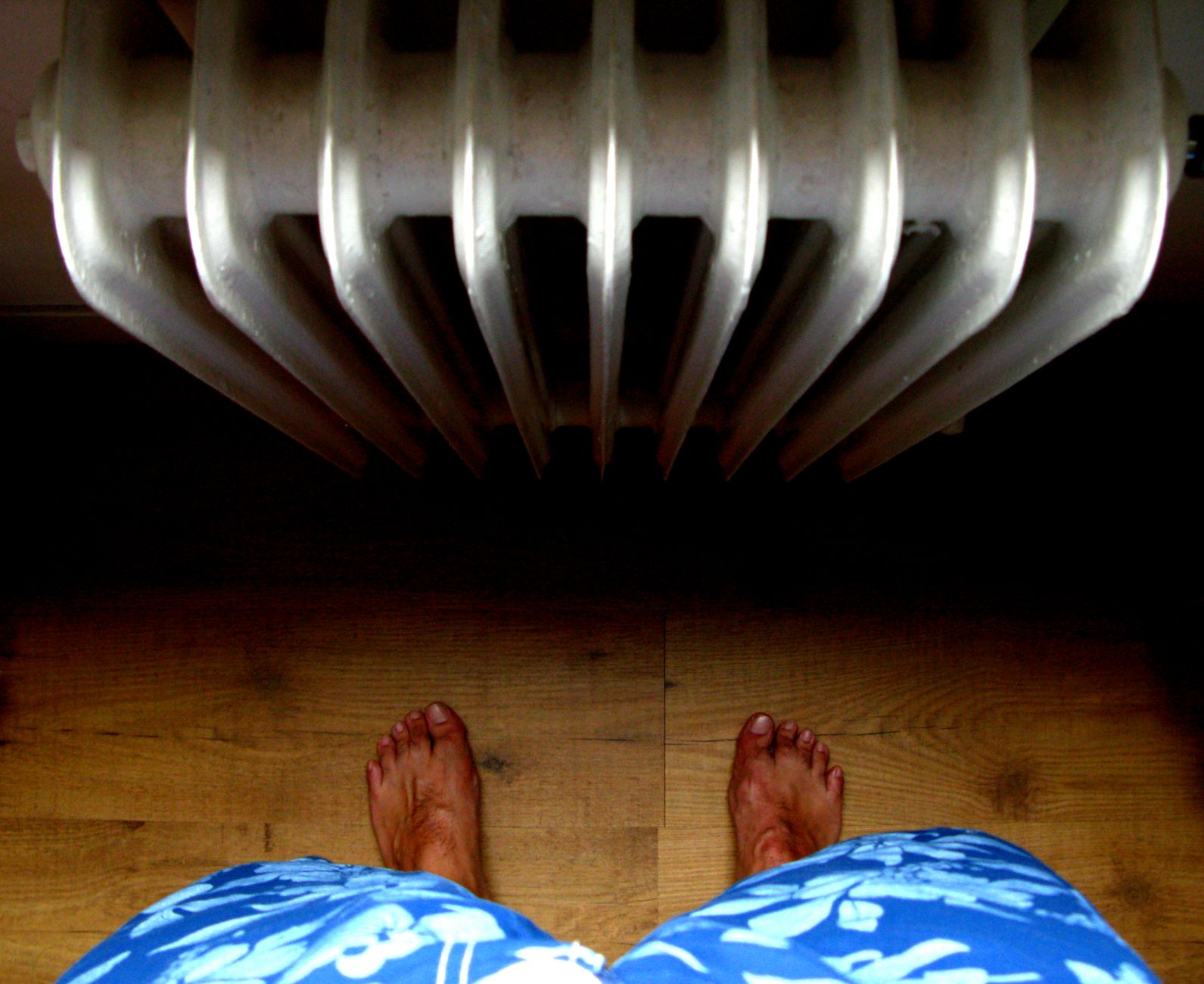
As people age, changes in circulation, body composition, and thermoregulation mean they often feel colder than younger adults, even in rooms that are objectively warm. This drives seniors to use space heaters more extensively and for longer periods than other age groups. A 70-year-old with reduced circulation and lower metabolic rate may keep a space heater running continuously in a bedroom during winter months, while a 40-year-old in the same home would feel the room was adequately heated by the central system. This extended usage directly increases the risk that a failure—a component wearing out, dust accumulation catching fire, or a pet or visitor bumping the heater—will occur during the months-long heating season. Additionally, sensory and mobility changes delay response time in an emergency.
Seniors with hearing loss may not hear a fire alarm, especially if they’ve removed hearing aids before bed or if they’re sleeping. Age-related vision loss makes it harder to see smoke or flames in dim bedroom lighting. Arthritis, balance disorders, and reduced leg strength mean that even aware seniors cannot evacuate as quickly as younger adults. A senior who experiences a minor stroke or cardiac event, common occurrences in this age group, may not be able to escape a fire that a younger, fully mobile person would easily exit. Fire response time—the period between when a fire starts and when a person is able to leave the building—is a critical determinant of survival, and aging extends this window of vulnerability.
THE ROLE OF HOME ENVIRONMENTS AND AGING INFRASTRUCTURE
Many seniors live in older homes where both the heating system and electrical infrastructure were installed decades ago. A home built in 1975 with its original furnace and wiring was designed for the electrical loads of that era—perhaps 60 to 100 amps of service total. Modern life requires significantly more electricity: a refrigerator, washer, dryer, computers, televisions, and now a space heater, all competing for power. When a senior plugs a space heater into an outlet on a circuit that’s already handling other loads, the cumulative demand can exceed the circuit’s capacity, creating conditions for overheating and electrical fire. Older homes often have plaster walls, hardwood floors, and wood-frame construction—all materials that burn more readily than the fire-resistant materials used in modern building codes.
A fire that starts in a 1975 home spreads faster and more completely than the same fire in a newly constructed home with fire-blocking in walls, fire-rated drywall, and modern insulation. Add to this the likelihood that an older home’s smoke detectors were installed years ago and may have dead batteries or covered vents, and the danger compounds. A specific example: an 84-year-old in a 1950s ranch home in Ohio placed a space heater near her bedroom window where it had convenient access to an outlet. The heater gradually warmed the drywall and insulation behind it over several weeks; one winter night, the wall ignited. She didn’t have a working smoke detector in her bedroom, and by the time fire spread to the hallway and set off a detector downstairs, she had lost her best exit route and suffered severe injuries before neighbors helped her escape.

SAFER ALTERNATIVES AND THE TRADEOFFS OF DIFFERENT HEATING SOLUTIONS
If a senior’s home doesn’t maintain adequate warmth, the solution is not simply “use a space heater carefully”—it’s to address the underlying heating deficiency, which often means investing in home repairs or modifications. A full HVAC system upgrade or repair can cost $5,000 to $15,000, a substantial amount for many seniors on fixed incomes. Sealing air leaks, adding insulation, and repairing existing ductwork might cost $1,000 to $5,000 and can improve efficiency dramatically without introducing fire risk. These upfront costs are why many seniors make the calculated decision to tolerate some cold areas of their home and use a space heater to stay warm—it’s a financial choice, not always a safety oversight.
Efficient electric baseboard heaters provide a lower-fire-risk alternative to space heaters, though they cost more to operate for heating entire rooms and create different dangers (burn risk from touching the hot surface, slower heat response). Programmable thermostats on central systems can reduce heating costs while maintaining whole-home warmth, but again, they require an existing functional central system. Oil-filled space heaters with thermostats and automatic shutoff features are marginally safer than older exposed-coil designs, but they still pose fire risk if placed too close to flammables. The reality is that seniors often lack the financial resources or physical ability to install permanent alternatives, making the “just don’t use a space heater” advice impractical without also solving the underlying problem of inadequate home heating.
ELECTRICAL HAZARDS AND EQUIPMENT-SPECIFIC DANGERS
Space heaters pull significant electrical current—most modern models draw between 750 and 1,500 watts, comparable to a large appliance. When plugged into an older home’s outlet on a circuit designed for 1,500 watts total, the space heater alone uses all available capacity. If the same circuit supplies a light, a television, or another device running simultaneously, the circuit overloads. Repeated cycling of a circuit breaker creates heat in the breaker itself, and if the breaker is faulty or old, it may stop tripping and allow dangerous current flow. Extension cords and power strips are common culprits: a senior plugs the heater into a power strip to reach an inconvenient outlet, the power strip overheats, and an electrical fire develops inside the plastic housing where no one can see it until flames emerge.
Many older space heaters lack the safety features now standard in newer models. Older heaters may not have automatic shutoff if tipped over, thermal cutoff switches if they overheat, or tip-over sensors. A heater without a tip-over sensor can continue running if knocked onto its side by a pet, a visitor, or even the senior themselves if they brush against it in the dark. Corded heaters pose a tripping hazard for seniors with balance issues, and the cord insulation can crack over time, exposing live wires. A particular warning: any space heater used in a bathroom or near water sources requires Ground Fault Circuit Interrupter (GFCI) protection to prevent electrocution, yet many seniors use standard space heaters in or near bathrooms where humidity is high, creating both fire and electrical shock risk.
FIRE SAFETY PLANNING AND ESCAPE CHALLENGES
A fire evacuation plan that works for a 35-year-old may not work for an 82-year-old with arthritis and reduced mobility. If a senior has hearing loss and uses hearing aids only during the day, they cannot hear a smoke alarm at night. If they take medications that cause drowsiness or cognitive changes, their arousal time from sleep is delayed. If they live alone, they may become disoriented in smoke and lose their way to the exit. A practical fire safety plan for seniors includes: identifying two potential exit routes from each room, ensuring smoke alarms are loud enough to wake the person (85+ decibels) and considering specialty deaf-alert alarm systems that flash lights and vibrate a bed shaker, creating a fire-safe setup in the bedroom (no space heater, no electrical cords where they can be tripped over), and having neighbors or family know to check on them if they don’t respond to phone calls.
One specific example demonstrates the stakes: An 79-year-old with COPD lived alone and used supplemental oxygen in her bedroom. She also used a space heater. A fire started in the heater’s electrical cord, and the oxygen accelerated the flames dramatically. Her neighbor noticed smoke but couldn’t reach her; the fire department found her in bed, unable to escape. Had she not been using oxygen, or had she not had the space heater, or had she slept with her bedroom door open to hear a smoke alarm, she might have escaped. The combination of multiple risk factors—limited mobility, supplemental oxygen, space heater, and closed door—created a cascade that her fire safety plan didn’t address.
BUILDING BETTER SENIOR SAFETY CULTURE AROUND HEATING
The conversation about senior home fires often focuses on individual behavior—telling seniors not to use space heaters, urging them to maintain clearances, asking them to unplug devices before sleep. This places responsibility on the person who is trying to solve a legitimate problem of being too cold on a fixed income, with a body that feels cold differently, in a home that was built before modern heating expectations. A more effective approach recognizes that seniors need warm homes and that the problem is how to provide warmth safely.
This means advocating for home repair programs that prioritize heating system improvements for low-income seniors, ensuring that fire safety technology (loud alarms, smart detectors, shutoff devices) is accessible and installed correctly, and building community awareness that space heater fires are not primarily a matter of individual carelessness—they’re a predictable consequence of inadequate housing, aging bodies, and systemic underinvestment in senior safety. Some communities now pair fire safety inspections with assistance installing working smoke alarms, carbon monoxide detectors, and escape-route planning. These programs recognize that telling a senior to remove their space heater without providing an alternative is not a viable solution.
Conclusion
Space heaters are a leading cause of senior home fires because they provide a convenient, low-cost solution to a real problem—inadequate home warmth—but they introduce concentrated fire risk in environments where aging bodies respond more slowly to danger. The combination of the heater’s inherent hazards (extreme heat, electrical demand, placement temptations), the aging person’s reduced sensory and mobility response, and older homes’ construction and electrical vulnerabilities creates a perfect storm. A single space heater positioned too close to bedding, running through the night in a room with a closed door and no working smoke alarm, in a home with old wiring and no clear escape route, represents the scenario where most heating-related fire deaths occur.
If you’re a caregiver, family member, or aging adult concerned about heating and safety, the path forward is not simply removing space heaters—it’s addressing why they feel necessary in the first place. This might mean working with an energy auditor to find air leaks, requesting a home repair program for low-income seniors in your area, installing safer alternatives like efficient electric baseboards or high-quality oil-filled heaters with automatic shutoff, ensuring every bedroom has a loud working smoke alarm and a clear exit route, and discussing with the senior or their physician how aging has changed their temperature perception and whether additional clothing layers or heated blankets might supplement central heating. The goal is a warm, safe home, not a choice between freezing and risking fire.
Frequently Asked Questions
Are newer space heaters safer than older ones?
Yes, newer models have better safety features—automatic shutoff if tipped, thermal cutoff switches, and tip-over sensors. However, no space heater is truly safe if placed near flammables or used negligently. Even quality new heaters require proper placement, clearance, and supervision.
Can I use a space heater safely in my bedroom?
Not really. If you must heat a bedroom, the safest approach is a wall-mounted electric baseboard heater that’s hardwired (not plugged in) and cannot tip over. If you use a portable space heater, it should never run while unattended or while you’re asleep, and it must be placed at least 3 feet from your bed and any flammable materials.
What’s the safest way to heat a cold room without a space heater?
Seal air leaks around windows and doors, add weatherstripping, insulate the space, improve window coverings with thermal curtains, and use a programmable thermostat to maintain consistent heating. For immediate comfort without a heater, wear layers, use an electric blanket (with automatic shutoff), or rely on a heated lap blanket while sitting.
Should I keep a space heater in my bedroom for emergencies?
No. Keep your bedroom free of space heaters entirely. If you need supplemental heat, address it during the day when you can supervise, or upgrade to a safer permanent solution. Your best emergency is a clear, quick exit—a blocked heater doesn’t help that.
What should I do if my central heating isn’t working and I can’t afford repairs?
Contact local senior services, area agencies on aging, or community action programs—many offer emergency heating assistance and repairs. Some utilities have programs to prevent shutoffs or provide repair vouchers. Contact 211 (dial 211 or visit 211.org) to find local resources in your area.
Can I use an extension cord or power strip with a space heater?
Avoid it. Space heaters draw heavy current and extension cords can overheat, especially if the cord is thin-gauge or coiled. If you must reach a distant outlet, use a heavy-duty (12-gauge) extension cord rated for at least 15 amps, keep it straight and uncovered, and never daisy-chain power strips. Better yet, relocate the heater to be near an outlet.