
Kitchen safety requires different solutions for different ages, but a well-designed kitchen can protect both children and seniors at the same time through thoughtful hazard elimination and strategic modifications. The key is understanding that childproofing and senior-proofing often work toward the same goal—reducing fall risks, preventing burns, and making it easier to access everyday items safely—even if the specific hazards differ. For example, storing heavy pots on lower shelves prevents a toddler from pulling them down on their head, while also making them reachable for a senior with limited shoulder mobility or arthritis in their hands.
The same cabinet locks that stop curious children from opening cleaning supplies also prevent accidental medication-chemical mixing by someone with cognitive decline. Creating a truly safe kitchen across age groups means starting with structural changes and safety barriers first, then layering in accessibility and independence features that prevent the kind of accidents that send both young children and older adults to the emergency room. According to injury data, falls are the leading cause of both unintentional injury deaths and nonfatal trauma-related hospital admissions for people over 65, and many of these falls happen in the kitchen while reaching, bending, or navigating between appliances.
Table of Contents
- What Are the Main Kitchen Hazards for Children and Seniors?
- Structural Kitchen Changes That Work for Both Age Groups
- Childproofing Hardware and Features That Become Aging-in-Place Assets
- Practical Modifications for Aging Hands and Bodies in the Kitchen
- Appliance Selection and Kitchen Equipment for Multi-Age Safety
- Organizing Kitchen Storage for Access and Safety Across Ages
- Monitoring Technology and Future Kitchen Safety Innovations
- Conclusion
- Frequently Asked Questions
What Are the Main Kitchen Hazards for Children and Seniors?
The hazards overlap more than many people realize. Falls caused by wet floors, cluttered pathways, and poor lighting are common danger points for both toddlers and seniors—children lose balance easily on slippery surfaces, and older adults with reduced proprioception and vision may not see a wet spot or navigate around obstacles in tight spaces. Hot water and steam from stoves and dishwashers are hazards for both age groups; a child can pull a pot handle down, while a senior with reduced sensation or tremors might accidentally touch a still-hot burner they thought had cooled. Poisoning is another overlap: young children are drawn to bright containers and may mistake cleaning supplies for juice, while seniors with confusion or poor eyesight might accidentally take medication instead of salt, or pour the wrong liquid into a meal.
However, the hazards diverge in important ways. Seniors are more vulnerable to burn injuries from lower-temperature exposures that wouldn’t injure a child—a person with thin, fragile skin and reduced sensation might develop a serious burn from water at a temperature that causes mild irritation on younger skin. Seniors also face unique risks around appliance operation: a person with declining cognition might leave a burner on, or someone with arthritis might use excessive force opening a drawer and injure their hand. For children, the danger is often about access and curiosity—they reach for things, put things in their mouths, and test boundaries. For seniors, the danger often comes from independence without full capability—they may try to do tasks their bodies can no longer safely perform.

Structural Kitchen Changes That Work for Both Age Groups
The foundation of a multi-age-safe kitchen is clear pathways, good lighting, and slip-resistant surfaces. Widening the main kitchen work triangle (the path between refrigerator, stove, and sink) to at least 36 inches makes it easier for a senior using a walker or cane to move without bumping into cabinet doors or corners, and it reduces the chance of a child being trapped or tripped in a congested space. Installing bright, layered lighting—both task lighting under cabinets and overhead ambient light—helps seniors with declining vision find what they need and spot hazards, while also making it easier to supervise children and catch spills before they become slip hazards.
Non-slip flooring is essential but comes with a trade-off: while textured tile or slip-resistant linoleum reduces falls, it can catch on walker feet or make pushing a rolling kitchen island harder. A better compromise is to use slip-resistant flooring in high-risk zones (near the sink, stove, and dishwasher) and save standard flooring for the main pathways. Removing clutter and storing frequently used items within reach (between waist and eye height) prevents the bending and reaching that causes falls in both populations. However, this means accepting that some items will be stored in less-than-ideal locations—a senior might need the most-used pots and pans at an easily accessible height, even if it means the kitchen looks less organized.
Childproofing Hardware and Features That Become Aging-in-Place Assets
Cabinet locks and stove guards are typically thought of as childproofing, but they serve seniors well too. A cabinet lock on the drawer holding sharp knives prevents a child from accessing them, but it also prevents a person with unsteady hands or tremors from accidentally cutting themselves while reaching for utensils. Stove knob covers and oven locks, which frustrate curious toddlers, can also protect a senior with cognitive decline who might turn on burners and forget about them—or, in some cases, try to heat things in ways that are unsafe.
One specific example: A home with an 8-year-old and a 78-year-old grandmother had installed childproof door latches on the lower cabinets and a stovetop guard that makes it difficult to accidentally turn burners on. The grandmother initially resisted these additions because she was independent and didn’t want to feel “childproofed,” but within a year she had a small stroke that affected her fine motor control on one side, making it hard to grip and turn stove knobs. The same hardware that was installed for her grandchild’s safety now prevented her from burning herself—without requiring any additional modifications after her health changed.

Practical Modifications for Aging Hands and Bodies in the Kitchen
Beyond childproofing hardware, seniors often need ergonomic changes that a young child doesn’t: handles that are easier to grip, appliances positioned to reduce bending, and storage solutions that don’t require reaching above shoulder height or twisting to access. Pull-out shelves in lower cabinets, lazy Susans for corner cabinets, and drawer dividers that organize items visibly make it easier for someone with arthritis or limited mobility to find and use what they need without painful reaching or fumbling. The trade-off here is that these modifications cost more than simple childproofing and often require professional installation.
A single pull-out shelf system for a cabinet can cost between $100 and $300, while a set of cabinet locks costs $15 to $30. An adjustable-height kitchen island with wheels can be useful—it brings counter space and storage down to a safe level and can be moved to clear pathways, but it also becomes a clutter magnet and can be a trip hazard if it’s rolled out of a consistent location. A better approach is to accept that perfection isn’t possible: install the most critical modifications first (handles, pull-out shelves in the cabinets where the most-used items are stored), then add others as needed.
Appliance Selection and Kitchen Equipment for Multi-Age Safety
Modern appliances often come with safety features that benefit both age groups: stoves with sensors that turn off burners if nothing is on them, refrigerators with door alarms if left open, and dishwashers with child locks and heated dry cycles that reduce manual handling of hot items. However, older or simpler appliances are sometimes safer for people with cognitive decline because there are fewer controls to confuse and fewer ways for something to go wrong. A basic dial-controlled oven is harder to accidentally reprogram than a touch-screen model, but it also doesn’t have safety features like automatic shutoff.
A limitation of many safety appliances is that they add cost and complexity. A stove with automatic burner shutoff might cost 20-30% more than a standard model, and if someone in the household doesn’t know about or understand the feature, it won’t protect them. Similarly, refrigerator water dispensers and ice makers, while convenient, add points where water can leak and create slip hazards. For households with both children and seniors, the safest choice is often the simplest: appliances with clear, large controls; visible indicators of whether something is on or hot; and minimal electronic features that could malfunction or confuse.
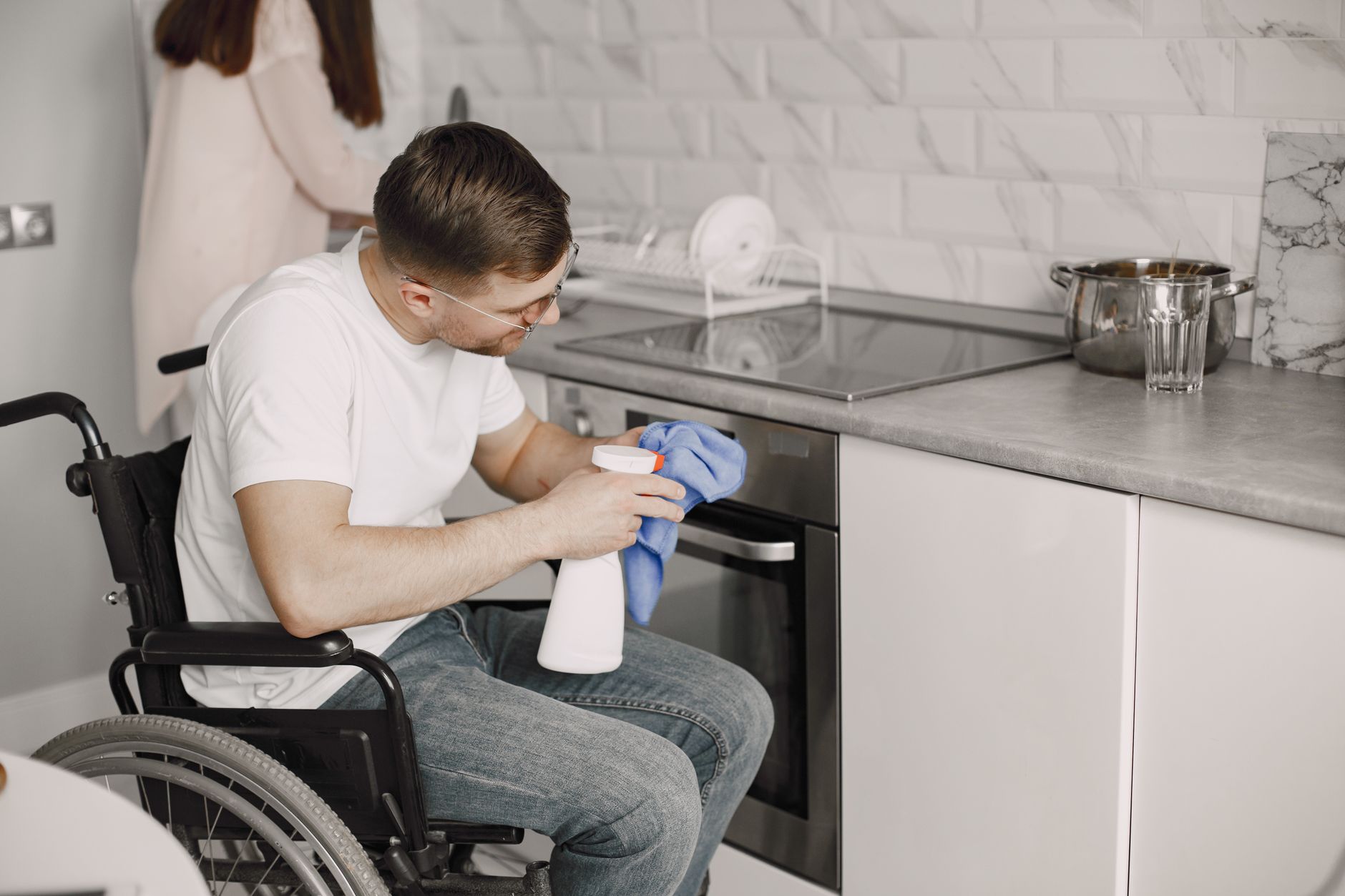
Organizing Kitchen Storage for Access and Safety Across Ages
The way you organize a kitchen either encourages safe habits or makes risky behavior easier. Items used daily should be stored at eye level and within easy reach (roughly between 32 and 48 inches from the ground), not in upper cabinets where reaching requires standing on a step stool or a lower cabinet where extensive bending is required. Heavy items like pots, pans, and bulk goods should be in lower cabinets, and lightweight items like dishes, glasses, and cereal should be higher up. This organization simultaneously protects a child from head injuries caused by falling heavy objects and prevents a senior from straining their back or losing their balance while reaching.
A specific example: One multi-generational kitchen organized medications, supplements, and vitamins in a locked drawer at counter height, clearly labeled with a color-coding system (red for “take with food,” blue for “take with water”). Below that drawer, in an unlocked but clearly marked cabinet, were the everyday dishes and glasses. Upper cabinets held baking supplies and specialty items used less frequently. This system allowed the senior in the home to find daily medications without searching, a young child couldn’t access them, and the most-used items were also the most accessible. The trade-off was that some less-used items had to be stored in less-convenient spots.
Monitoring Technology and Future Kitchen Safety Innovations
Modern kitchens are increasingly equipped with monitoring technology that can prevent accidents before they happen. Stove monitors that alert via phone if a burner is left on, smart water heaters that prevent scalding by automatically cooling water if it gets too hot, and motion-sensing lights that automatically illuminate when someone enters the kitchen at night all add layers of protection. For households with seniors experiencing cognitive decline, these technologies can extend independence and safety simultaneously.
However, technology is not a replacement for basic design and structure. A smart stove monitor is useful, but a stove with physical knob covers is more reliable because it doesn’t depend on power, internet connectivity, or someone checking their phone. As the population ages and multi-generational housing becomes more common, kitchen design is likely to shift toward universal accessibility—kitchens designed to be safe and usable for people of different heights, abilities, and ages simultaneously. This is better than the current approach of bolting on safety features after the fact, but it requires planning from the beginning.
Conclusion
Childproofing and senior-proofing a kitchen are not opposing goals but complementary ones. Many of the same barriers, organizational systems, and safety features that prevent a curious toddler from accessing hazards also protect a senior from making mistakes or falling. The most effective approach starts with structural changes—good lighting, clear pathways, and slip-resistant surfaces—and then layers in specific safety features like cabinet locks, stove guards, and accessible storage, with modifications added or adjusted as the household’s needs change.
The key is to plan for flexibility and accept that no kitchen will be perfect for everyone. Prioritize the changes that address the highest-risk activities in your household (cooking, cleaning, eating), then add others as budget and circumstances allow. Most importantly, involve everyone in the household in decisions about modifications; a senior who feels infantilized by childproofing may resist it, while a child who doesn’t understand why certain areas are off-limits may try harder to access them. A kitchen that feels safe, navigable, and respectful to everyone using it is one where people are most likely to follow safety practices consistently.
Frequently Asked Questions
Can I use the same cabinet locks for both childproofing and senior safety?
Yes, many cabinet locks work equally well for both. However, seniors who need frequent access may find traditional combination locks slower than magnetic locks, which release with a magnetic key that’s easier to carry and use quickly. The choice depends on the balance between safety and convenient access you want for your household.
Is it safe to use a step stool in a kitchen with both children and seniors?
Step stools are generally not recommended in a multi-age kitchen because they create fall risks for seniors, who may use them and lose their balance, and they can become clutter and trip hazards. If reaching upper cabinets is necessary, a better solution is to reorganize storage so the most-used items are at accessible heights.
What’s the best way to handle medication storage in a kitchen shared by children and seniors?
Keep medications in a locked, clearly labeled drawer at counter height where seniors can easily access them daily without bending or reaching. Ensure it’s locked against child access, and use color coding or picture labels if anyone in the household has vision or cognitive challenges.
Can I install senior-friendly features without making the kitchen look “medical” or institutional?
Yes. Many accessibility modifications look like normal design choices—pull-out drawers, lever-handle faucets, and non-slip flooring are standard in modern kitchens. Choose finishes and styles that match your kitchen’s aesthetic, and avoid obvious medical equipment unless it’s necessary and preferred by the senior in the home.
How much should I budget for making a kitchen safe for multiple ages?
Basic modifications (cabinet locks, lighting, decluttering) cost $100-$500. Mid-range improvements (slip-resistant flooring in key areas, pull-out shelves, lever handles) run $1,000-$3,000. Major renovations (new appliances, widened pathways, professional ergonomic redesign) can cost $10,000 or more. Start with high-impact, low-cost changes and scale up based on your household’s specific needs.
What’s the most common kitchen safety mistake in multi-generational homes?
Storing frequently used items in places that are convenient for the household’s primary cook but dangerous or difficult for others—heavy pots on upper shelves, medications in hard-to-reach spots, or cleaning supplies at child eye level. Take time to think about who uses what and who might be harmed by each storage choice.