
The best exercise for longevity isn’t any single activity—it’s a combination of walking, strength training, and balance work done consistently over time. While many people search for a magic solution, decades of longevity research point to this trio working together. A 70-year-old who walks regularly, does light resistance exercises twice weekly, and works on balance will maintain independence, mobility, and quality of life far better than someone who does only one type of movement or none at all. Walking forms the foundation because it’s sustainable, low-cost, and something most people can do throughout their entire lives.
What makes this combination work is that each type of exercise addresses different aging challenges. Walking maintains cardiovascular health and bone density. Strength training preserves muscle mass, which naturally declines by 3–8% per decade after age 30 and accelerates after 60. Balance work prevents falls, which are the leading cause of injury-related death in adults over 65. Together, these activities don’t just add years to your life—they add life to your years.
Table of Contents
- WALKING AS THE FOUNDATION FOR LONGEVITY
- WHY STRENGTH TRAINING IS CRITICAL—AND OFTEN OVERLOOKED
- BALANCE AND STABILITY—THE FALL PREVENTION CONNECTION
- HOW MUCH EXERCISE IS NEEDED FOR REAL LONGEVITY GAINS
- CHRONIC CONDITIONS, MEDICATIONS, AND EXERCISE SAFETY
- BUILDING AN EXERCISE ROUTINE THAT ACTUALLY LASTS
- STAYING ACTIVE LONG-TERM AS ABILITIES CHANGE
- Conclusion
- Frequently Asked Questions
WALKING AS THE FOUNDATION FOR LONGEVITY
Walking is the single most important habit you can develop for long-term health. A 2022 study published in JAMA found that people who walked at a brisk pace had significantly lower mortality rates, and the benefit applied whether someone was overweight or not. The consistency matters more than intensity—a 70-year-old who walks 30 minutes five days a week will see greater longevity gains than someone who occasionally runs marathons and then stops. Walking also has practical advantages that other exercises lack. It requires no equipment, no gym membership, and minimal injury risk. You can walk almost anywhere, in almost any weather, and continue doing it well into your 80s and 90s.
Unlike running, which stresses joints and often becomes difficult to sustain as people age, walking accommodates changing abilities. When someone becomes frail, they can still walk—just more slowly or for shorter distances—and still receive health benefits. The realistic challenge is consistency. Many people start a walking program and stop after a few weeks. The solution isn’t motivation or willpower—it’s building walking into your daily routine so it becomes non-negotiable. Walking to the store, parking farther away, taking a morning walk before breakfast, or walking with a friend creates accountability. A person who walks 45 minutes three times weekly because they meet a friend at the same time will sustain this far longer than someone trying to force themselves to walk out of discipline alone.

WHY STRENGTH TRAINING IS CRITICAL—AND OFTEN OVERLOOKED
Muscle loss accelerates dramatically after age 60, and strength training is the only effective way to slow or reverse it. A person loses approximately 3–8% of muscle mass per decade starting at 30, but that rate can double after 65 without resistance exercise. By age 80, many sedentary people have lost 30–40% of their peak muscle mass. This isn’t vanity—it directly determines whether someone can rise from a chair, carry groceries, live independently, or need assistance with basic activities. Strength training doesn’t require heavy weights or hours at a gym. Light resistance exercises using bodyweight, resistance bands, or light dumbbells for 20–30 minutes twice weekly produce significant results.
A study in the Journal of Applied Physiology showed that older adults who did resistance training twice weekly for 16 weeks gained meaningful strength and maintained muscle mass, while controls continued declining. The limitation is that many older adults avoid strength work because they fear injury or view it as something “for young people.” The reality is that controlled, modest strength training is one of the safest and most effective interventions available. One important warning: strength training requires proper form to prevent injury. Poor form can strain joints and cause lasting damage. This is why working with a physical therapist or trainer for even a few sessions to learn correct movement patterns is worth the investment. Someone who squats incorrectly or lifts with their back instead of their legs may feel fine immediately but risk injury that forces them to stop all activity.
BALANCE AND STABILITY—THE FALL PREVENTION CONNECTION
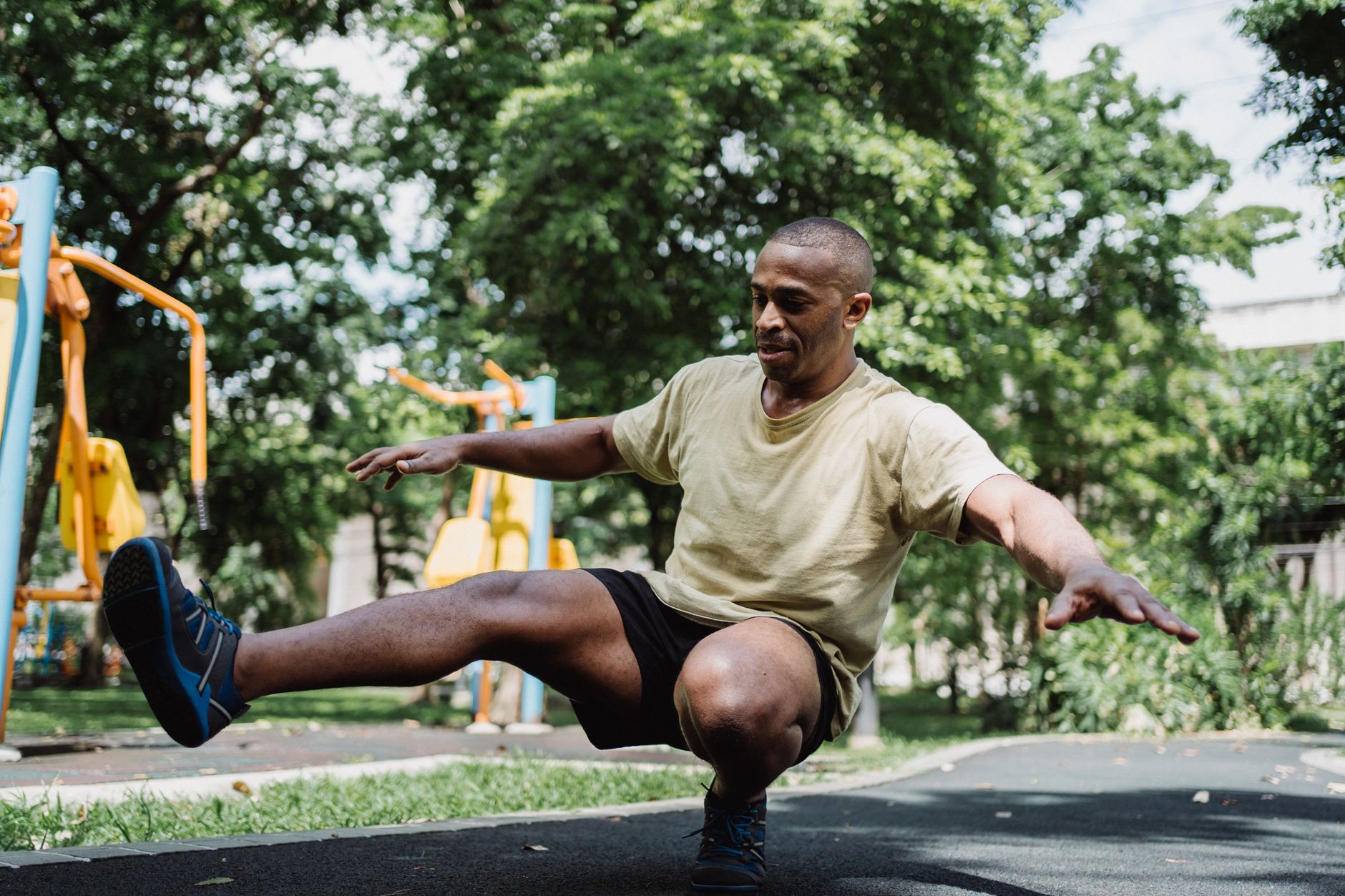
Falls kill more people over 65 than car accidents. A single fall can result in a hip fracture that ends independence, triggers hospitalization, and often leads to permanent decline in mobility and mental health. Yet balance work remains the most neglected component of exercise for older adults. Balance training—standing on one leg, walking heel-to-toe, practicing controlled lunges—directly reduces fall risk. The research is clear: six weeks of targeted balance work significantly improves stability and reduces falls by 20–30%. Tai chi, which combines slow movement with balance work, has been shown to reduce fall risk by nearly 50% in some populations.
The practical advantage is that balance training takes only 10–15 minutes and can be done at home while holding a counter for support. Unlike trying to start a new intense exercise program, balance work feels manageable and produces quick results people can feel. However, the challenge is that balance work can feel awkward initially, especially for someone who hasn’t exercised in years. Standing on one leg might feel scary. The solution is to start with something simple—standing on one leg while holding a kitchen counter—and gradually progress. A person who feels too unstable should work with a physical therapist to identify specific weaknesses before attempting more advanced balance work.
HOW MUCH EXERCISE IS NEEDED FOR REAL LONGEVITY GAINS
Current guidelines recommend 150 minutes of moderate aerobic activity and resistance training twice weekly. For older adults, this translates roughly to 30 minutes of brisk walking five days a week plus two sessions of strength work. This isn’t arbitrary—research shows these amounts produce measurable improvements in cardiovascular health, muscle strength, and mortality reduction. The important distinction is moderate intensity, not maximum effort. A moderate pace means you can talk but not sing during activity. Many older adults overthink this, assuming they need to feel exhausted to see benefits.
In reality, consistency at a sustainable pace beats sporadic intense effort. A 75-year-old who walks at a moderate pace for 30 minutes every day will be healthier than someone who occasionally does a strenuous 60-minute workout and then rests for weeks. The tradeoff is time versus sustainability. Someone incredibly busy might think 150 minutes weekly is impossible. Research shows that even 75 minutes weekly produces substantial benefits—roughly 75% of the gains of doing 150 minutes. A person constrained by time should walk 30 minutes three times weekly and do strength work twice, rather than abandoning exercise entirely. Partial adherence beats perfect plans abandoned.
CHRONIC CONDITIONS, MEDICATIONS, AND EXERCISE SAFETY
Many older adults assume they can’t exercise because of arthritis, heart disease, diabetes, or other chronic conditions. This is often incorrect. Appropriate exercise actually manages these conditions and reduces medication needs. A person with type 2 diabetes who walks daily and does strength training often needs less medication. Someone with osteoarthritis frequently finds that regular movement maintains joint function and reduces pain better than avoiding activity. The warning is that “appropriate” varies by individual. Someone with a history of heart problems needs clearance from their cardiologist before starting a new program.
A person with severe arthritis needs to understand which movements are safe and which aggravate their condition. This is why a 15-minute consultation with a physical therapist often pays dividends—they can identify safe modifications, explain which activities to avoid, and build confidence. One limitation is that some people take medications affecting exercise response. Beta-blockers for blood pressure reduce maximum heart rate, so traditional “intensity” measures don’t work. Corticosteroids for autoimmune conditions can weaken bones and connective tissue. Blood thinners change what contact sports are safe. These aren’t reasons to avoid exercise, but they require informed decisions. A person on multiple medications should review their exercise plan with their healthcare provider.

BUILDING AN EXERCISE ROUTINE THAT ACTUALLY LASTS
The difference between a routine that lasts and one that fails is usually not willpower. It’s removing friction. Someone who lays out walking clothes the night before, has a set time, and walks the same route with a friend will sustain this. Someone trying to “find time” and walking a different route at different times will quit. Specific example: a 68-year-old who walked inconsistently for years started waking at 6 a.m.
to walk with a neighbor before breakfast. After three months, this was automatic. They didn’t think about whether to go—they simply went. The time commitment didn’t increase; the consistency did. Adding a strength training session with a trainer twice weekly gave external accountability. Within six months, they had more energy, climbed stairs without pain, and said the routine had become as automatic as brushing their teeth.
STAYING ACTIVE LONG-TERM AS ABILITIES CHANGE
Exercise for longevity isn’t about holding yourself to the same standard forever. A 50-year-old running marathons may become a 70-year-old who walks and does light strength training, then an 85-year-old who does gentle movement and balance work. This progression isn’t failure—it’s adaptation. The goal is maximizing quality of life and independence at each stage.
The forward-looking reality is that exercise preferences and capacity will change. The person who built walking into their routine at 60 has a huge advantage at 80—they’ll simply continue walking, adjusted to their current pace. Someone who avoided movement for decades faces a steeper hill at 80. The best time to start is always now, not because you need to achieve peak fitness, but because consistent movement throughout life compounds into dramatically different health outcomes in old age.
Conclusion
The best exercise for longevity combines consistent walking, regular strength training, and intentional balance work. These three elements address the primary health challenges of aging: maintaining cardiovascular health, preserving muscle and bone density, and preventing falls. None of this requires expensive equipment, gym memberships, or high intensity—it requires consistency and realistic goals matched to your current abilities. Your next step is simple: decide which single habit to start with. Most people benefit most from beginning with regular walking, since it’s accessible and sustainable.
Set a specific time, recruit an accountability partner if possible, and commit to four weeks. Once walking becomes automatic, add one session of light strength training weekly. After that’s established, incorporate balance work. Building layered habits beats attempting everything at once and failing. The goal isn’t perfection in any single workout—it’s moving regularly, deliberately, and consistently for the rest of your life.
Frequently Asked Questions
Is it ever too late to start exercising?
No. People have started exercising in their 80s and 90s and seen meaningful improvements in strength, mobility, and health markers. The key is starting at your current fitness level, not comparing yourself to younger people. A physical therapist can assess your abilities and recommend safe starting points.
Can I get longevity benefits from just walking, without strength training?
Walking provides significant cardiovascular benefits and is far better than no exercise. However, strength training addresses muscle loss that walking alone cannot prevent. Ideally, you do both, but if you must choose one, walking is the safer foundation.
How do I know if I’m exercising at the right intensity?
Moderate intensity means you can hold a conversation but not sing easily. For strength training, the final 2–3 repetitions should feel challenging but doable with good form. If you’re gasping for breath or straining your joints, you’re likely too intense.
What if I have arthritis? Can I still exercise?
Most types of arthritis improve with appropriate movement. Walking, swimming, and gentle strength training often reduce arthritis pain and maintain mobility. Avoid high-impact activities like running. Work with a physical therapist to identify safe exercises for your specific condition.
How long until I see results from exercise?
Cardiovascular benefits appear within 2–4 weeks. Strength improvements take 6–8 weeks. Mental health and energy improvements often appear within 3–4 weeks. Consistency matters more than timeline—someone who exercises for a year will see far greater results than someone who exercises intensely for a month.
Can I just do intense exercise once or twice weekly instead of regular moderate activity?
No. Consistency matters more than intensity for longevity. Someone who walks 30 minutes five times weekly will see greater health benefits than someone who does one intense workout weekly. Occasional intense effort doesn’t provide the cardiovascular and metabolic benefits of regular activity.