
The best exercises for better balance are standing weight shifts, heel-to-toe stands, single-leg stance practice, and dynamic movements like stepping over obstacles—exercises that challenge your ability to stay upright while mimicking real-world situations. Balance decline is one of the fastest-progressing mobility losses in people over 60, but it’s also one of the most reversible through consistent practice. A person who couldn’t stand on one foot for more than a few seconds at 65 can often reach 30-second holds within eight weeks of dedicated work. Balance problems don’t announce themselves gradually.
They often hit suddenly—you reach for something on a high shelf and feel the room tilt, or you step off a curb and your ankle rolls in a way it never used to. The good news is that balance is a learned skill, not a gift you’re born with and keep forever. Your nervous system needs repetition to maintain it, and the moment you stop practicing, it starts to decline. But that decline can be reversed, which makes balance training one of the most practical, meaningful investments you can make in staying independent.
Table of Contents
- Which Exercises Build Balance Most Effectively?
- Dynamic Balance Training for Real-World Safety
- Strength and Balance: How They Connect
- Building a Safe Practice Routine
- Common Mistakes That Limit Progress
- Balance Work for People With Medical Conditions
- Balance Training and Long-Term Independence
- Conclusion
- Frequently Asked Questions
Which Exercises Build Balance Most Effectively?
Standing weight shifts form the foundation of balance work because they teach your body how to feel where its center of gravity is. Stand with feet hip-width apart, and slowly shift your weight onto your right foot while keeping your left foot light on the ground. Hold for three seconds, then shift to the left. This sounds simple because it is, but it’s doing essential work—it’s teaching your feet and ankles to feel pressure changes, and your inner ear to track small shifts in position. Many people who have lost confidence in their balance start here because there’s a railing or chair to grab if needed, but also because the movement is so small that it builds confidence before it builds challenge. Heel-to-toe walking is the next step up: walk in a straight line, placing your heel down first and stepping forward until your toe is in front of your heel and almost touching the ground. Walk 20 to 30 feet this way, then turn around and walk back.
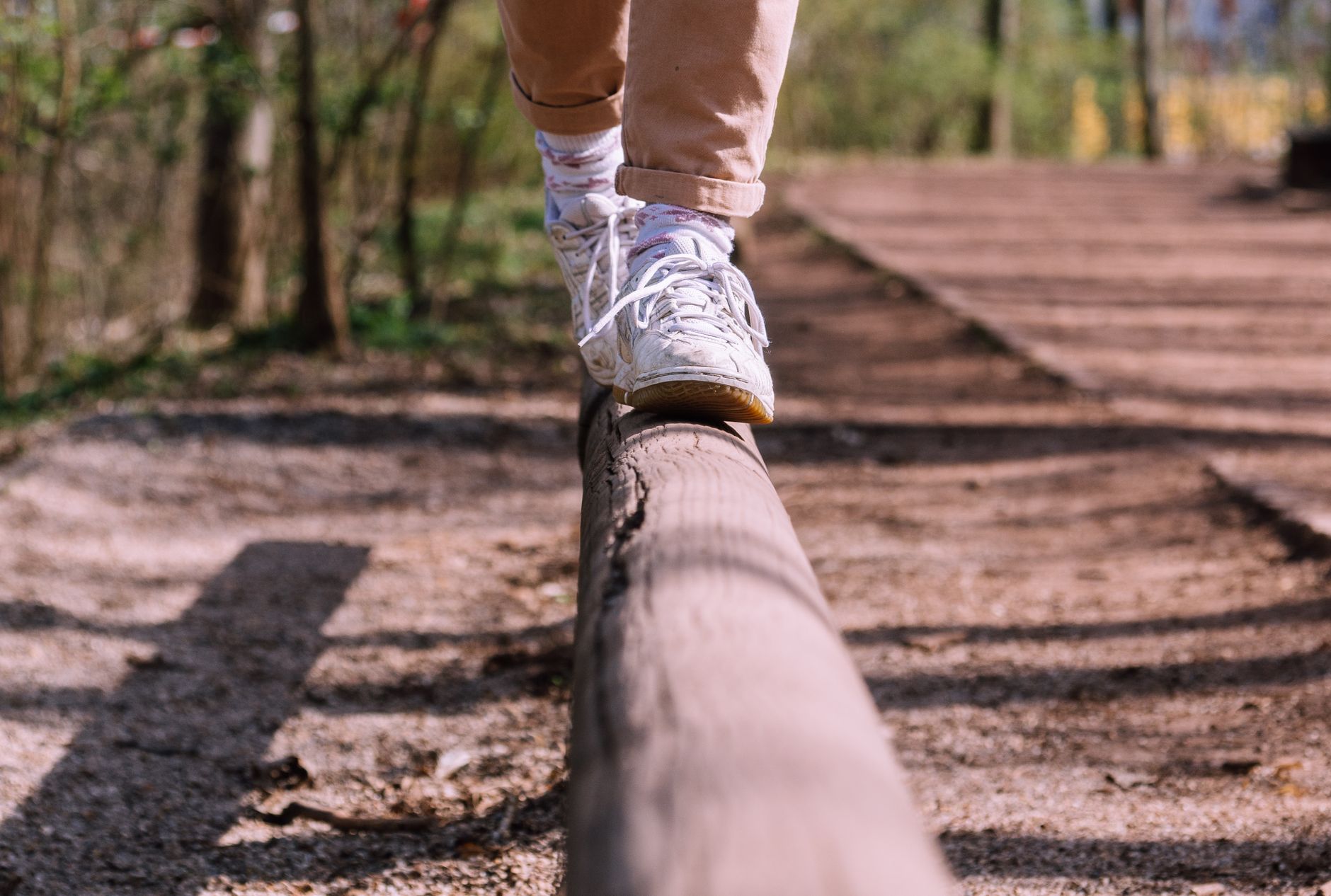
This exercise is deceptive—it looks easy but requires constant micro-adjustments from your core and ankles. The limitation is that it works differently for people with existing foot pain or arthritis. Someone with plantar fasciitis may find heel strikes painful, making this exercise either impossible or requiring modification (like walking heel-to-toe but with more bend in the knees to reduce impact). Single-leg balance is the benchmark everyone asks about: Can you stand on one foot without holding onto anything? The standard is 30 seconds per side without losing balance. But this number matters far less than the progression. Start holding a table or counter with both hands, progress to one finger, then progress to no contact. You can stand near a wall so you can reach out if you start to fall, which takes away the fear that makes muscles tense up. Tense muscles are worse at balance than weak muscles—tension narrows your actual balance window.
Dynamic Balance Training for Real-World Safety
Static balance exercises like standing still are important, but they’re not how you use balance in real life. You need dynamic balance work—movement that forces your balance system to adjust constantly. Step-overs are practical: set up a low obstacle (a small foam pad, a rolled towel, even an imaginary line) and step over it slowly, lifting your knee higher than normal and placing your foot carefully on the other side. Do this 10 times forward, then backward. This teaches your brain how to manage balance while stepping over things you might encounter on a sidewalk, in a hallway, or on a staircase. Tandem walks combine the challenge of balance with forward movement. Walk in a straight line, but place one foot directly in front of the other (heel of one foot nearly touching toe of the other) as you move forward.
This is harder than it sounds, and it’s closer to how you actually walk than standing still. The tradeoff is that tandem walks take more space and more concentration, so you shouldn’t do them in crowded areas or when you’re mentally fatigued. If you’re tired or distracted, your balance system doesn’t work well—it needs your brain’s full attention. Reaching movements under balance challenge are important because falls often happen when you’re doing something else. Stand on one leg and reach across your body to the opposite wall, or reach down toward the ground while balanced on one leg. This forces your balance system to work while your attention is split. In real life, you’re not just balancing—you’re balancing while getting something off a shelf, picking something up from the ground, or reaching for something in a cupboard. Training these combined movements prevents the most common fall scenarios.
Strength and Balance: How They Connect
Balance isn’t only about the inner ear and proprioception; it’s also about strength. You can have perfect balance signals from your inner ear, but if your legs and core are weak, you can’t respond quickly enough to stop a fall. Calf raises build the ankle stability that prevents the dreaded ankle roll. Do them standing at a counter, rising up onto your toes 10 to 15 times. Repeat three times. Your calves control the ankle’s front-to-back tilt, and weak calves are one reason people develop an unstable, shuffling gait in older age. Single-leg squats or step-ups build hip and leg strength while also challenging balance.
Step up onto a low step (or a thick book), then step back down. Do 8 to 10 repetitions on each leg. This mirrors the movement of climbing stairs or stepping up onto a curb, so it’s a direct transfer to real-world function. The limitation is that people with knee pain or arthritis may find this painful. If full step-ups aren’t possible, practicing partial squats while holding a counter does much of the same work without the same joint stress. Core strength is often overlooked in balance training, but your core is the center from which all balance adjustments happen. Dead bugs (lying on your back, extending one arm and the opposite leg while keeping your lower back flat) and modified planks (on your knees) both build core strength without the high fall risk of advanced planks. You need this foundation before you can effectively balance on one leg—your core holds everything still while your ankles and feet do the adjusting.
Building a Safe Practice Routine
A realistic balance routine takes 15 to 20 minutes, three to five times a week. On Monday, Wednesday, and Friday, spend 10 minutes on standing work—weight shifts, heel-to-toe walks, and single-leg balance practice. On Tuesday and Thursday, do 15 minutes of dynamic work and strength: step-overs, tandem walks, calf raises, and step-ups. This alternation lets your body recover between demanding sessions while keeping you working on balance most days. The recovery days matter. Your nervous system learns balance during rest, not during the workout itself, so cramming all your balance work into two days is less effective than spreading it across the week. The comparison between balance work and typical fitness is important: balance training doesn’t build endurance or significant strength, so it shouldn’t replace other exercise.
It should be addition. If you’re already doing walking or swimming, balance work is a focused add-on that takes 15 minutes. If you’re not doing other exercise, balance work alone is a good start, but you’ll eventually need more comprehensive fitness for broader health. The real advantage of starting with balance is that it builds confidence and reduces fear of falling, which often opens the door to doing other activities that older adults avoid because they feel unsteady. Starting your routine slowly means doing each exercise for just one or two sets the first week, then adding volume gradually. Soreness is normal after new types of exercise, but pain (sharp or localized) is not. If an exercise causes sharp pain, stop it and try a modified version or skip it entirely. There’s no single “right” exercise for everyone—your job is to find variations that challenge you without hurting you, and that you can actually do consistently.
Common Mistakes That Limit Progress
The biggest mistake is holding on too tightly. When people feel unsteady, they grip a railing or counter with a death grip, which actually tenses their muscles and makes balance worse. The grip should be just enough that you could let go without falling—your hand is there for safety, not for support. Practicing with a very light grip, or even just a fingertip on a surface, trains your body to hold the balance work rather than letting the railing do it. This distinction is the difference between exercise that transfers to real life and exercise that only works when a railing is present. Another common mistake is expecting results too fast. Balance improvements take weeks, not days.
You might feel a difference in confidence within a week or two, but measurable improvements in how long you can stand on one leg take four to eight weeks of consistent work. People often give up after two weeks because they feel the same. Patience is the limiting factor for most people, not the exercises themselves. If you can do a balance routine consistently for eight weeks, you’ll notice substantial changes. Fear of falling is a real limitation that some people face. Some older adults have fallen before, and the fear afterward is so strong that they avoid anything that feels risky—which ironically makes them less able to balance, which increases their actual fall risk. If you have significant fear of falling, consider starting your balance work with a physical therapist or trainer who can provide guided support and rebuild confidence safely. This is not a weakness; it’s recognizing that professional guidance provides value in this specific situation.

Balance Work for People With Medical Conditions
If you have inner ear problems, vertigo, or conditions that affect balance (like Parkinson’s disease or peripheral neuropathy), balance training is still important, but the exercises may need modification. People with neuropathy (reduced sensation in the feet) actually benefit from balance work more than most, because they need to compensate with stronger leg muscles and more attention. However, they may need more intensive instruction on safe practice to prevent injury.
People with arthritis, joint pain, or other mobility limitations should focus on the exercises that don’t trigger pain. Single-leg balance at a wall might work fine, but step-ups might not. The goal is to find your personal constellation of doable exercises and do those consistently. Partial progress is far better than perfect exercises you don’t actually do because they hurt.
Balance Training and Long-Term Independence
Balance work is preventive maintenance for independence. Studies show that people who maintain good balance into their 70s and 80s stay more active, have fewer falls, and maintain independence longer. The work now—spending 15 minutes a few times a week—is an investment in the years ahead when you might otherwise decline into a cycle of small falls, reduced activity, and loss of independence. Falls are the number one cause of injury-related deaths and injuries in older adults, and they’re almost always preventable through a combination of balance work, home safety, and medical evaluation.
The most important insight is that balance can improve at any age. You’re never too old to get better at balance, and decline is not inevitable. People in their 80s and 90s have rebuilt balance they thought was permanently lost. The work requires consistency and patience, but the payoff is real—you stay steadier, your fear of falling decreases, and you keep doing the things that matter to you.
Conclusion
The best exercises for balance are simple and doable: weight shifts, heel-to-toe walks, single-leg stance, step-overs, and calf raises. They take 15 to 20 minutes a few times a week, and they’re adjustable for almost any fitness level or physical limitation. The key is consistency—balance is a skill that declines when you don’t practice it, but improves quickly when you do. You’re not looking for perfection; you’re looking for steady, manageable progress over weeks and months. Start with standing work near a railing or counter where you feel safe.
Practice weight shifts and heel-to-toe walks for a week or two, then add single-leg balance work. After four to six weeks, add dynamic movements like step-overs and tandem walks. This gradual progression builds confidence and gives your nervous system time to adapt. If you fall or feel unstable in daily life, or if you have a history of falls, talk to your doctor—balance problems sometimes have medical causes that need treatment alongside the exercise work. Most importantly, do something. Balance work is one of the highest-return investments you can make in staying independent and staying safe as you age.
Frequently Asked Questions
How long does it take to notice a difference in balance?
You may feel increased confidence within a week or two, but measurable improvements in balance (like longer single-leg stance times) usually take four to eight weeks of consistent practice. The key is doing the work at least three times a week.
Is it safe to do balance exercises alone, or do I need someone with me?
Start balance exercises near a wall, railing, or sturdy piece of furniture that you can grab if you start to fall. You don’t necessarily need another person present, but someone checking in on you the first few times is a good idea. If you have a history of falls or significant fear, consider working with a physical therapist at least initially.
Can balance exercises prevent falls?
Balance training significantly reduces fall risk by improving your stability, reaction time, and confidence. However, falls also depend on home safety (removing tripping hazards, ensuring good lighting), footwear, medical conditions, and medications. Balance work is one part of fall prevention, not the whole answer.
What if balance exercises make me dizzy or nauseous?
Mild dizziness is sometimes normal when starting balance work, but severe dizziness or nausea should stop you from continuing. Talk to your doctor before resuming—dizziness can indicate an inner ear problem, blood pressure issue, or other medical condition that needs attention.
Do I need to go to a gym or get special equipment?
No. Balance exercises need only your body and a railing, wall, or sturdy counter to hold onto. A step or small platform is helpful for step-ups, but you can use a thick book or a sturdy low stool. Everything you need is probably already in your home.
Is balance training effective for people with arthritis or chronic pain?
Yes, but you’ll need to modify the exercises. Focus on movements that don’t trigger pain—for example, standing weight shifts and single-leg balance might work fine even if step-ups hurt your knees. The point is to do what you can consistently rather than avoiding all balance work because some exercises aren’t possible.