
Fireproofing a home where a parent still smokes requires a multifaceted approach that combines practical safety measures, designated smoking zones, and honest conversations about risk. The reality is that smoking remains one of the leading causes of residential fires in America, accounting for an estimated 15,209 to 18,100 home fires annually, with nearly 590 deaths and 1,130 injuries resulting from these fires each year. Yet many adult children caring for aging parents who smoke don’t know where to start—or they avoid the conversation altogether because the topic feels too sensitive or impossible to control. The good news is that there are concrete, actionable steps you can take that significantly reduce fire risk without requiring your parent to quit smoking entirely. Understanding the specific dangers of smoking in an aging household is the first step. Smoking materials cause 23 percent of all home fire fatalities—a disproportionately high rate considering they account for just 5 percent of reported home fires.
This concentration of risk exists because smoking fires, when they start, tend to be particularly deadly. They often ignite when someone falls asleep with a lit cigarette, when smoking occurs near flammable materials like bedding or upholstered furniture, or when improper ashtrays are used. For aging parents, these scenarios become even more likely. A parent taking sleep medication or pain relievers may doze off during a cigarette. Mobility limitations mean they might smoke in a chair where they’re more likely to drift off. Declining cognitive function can mean forgetting to fully extinguish a cigarette. These are not character flaws—they’re realities of aging, and they require environmental safeguards.
Table of Contents
- Why Smoking Creates Outsized Fire Risk for Aging Households
- Establishing Hard Boundaries Around Where Smoking Happens
- Smoke Alarms as Your Early Warning System
- Proper Ashtray Use and Cigarette Disposal
- Medical Oxygen and Medication Interactions
- Protecting Children and Dependents in the Household
- Long-Term Trends and Realistic Prevention Outlook
- Conclusion
- Frequently Asked Questions
Why Smoking Creates Outsized Fire Risk for Aging Households
The statistics around smoking fires tell a story that many families don’t fully grasp until it’s too late. Smoking materials are far more dangerous than their frequency suggests. A cigarette burning unattended in bedding or upholstered furniture generates sustained heat that can smolder for hours before flaming into a full fire—often while someone is asleep. In contrast, many other common fire causes, like cooking accidents or electrical faults, are noticed and extinguished more quickly. For aging parents, several factors compound this risk: sedating medications (pain relievers, sleep aids, anti-anxiety drugs) increase the likelihood of falling asleep while smoking, circulation problems can reduce sensation that might otherwise alert someone to a too-hot cigarette, and vision changes may make it harder to see whether a cigarette is actually extinguished. Consider a realistic scenario: Your 78-year-old father takes an opioid pain medication in the evening and sits on his recliner with a cigarette.
He intends to sit for just a moment, but the medication hits faster than expected, and he dozes off. The cigarette falls from his hand into the chair cushion, where it smolders. By the time anyone notices a smell or sees smoke, the fire has already started. If he’s alone, he may not wake up in time. If he has mobility issues, he may not be able to exit quickly. The downstairs smoke alarm might not be close enough to his bedroom to alert him early enough. This scenario plays out in emergency rooms and fire departments regularly, and it’s why the stakes feel so high when you’re managing an aging parent’s safety while also respecting their autonomy.

Establishing Hard Boundaries Around Where Smoking Happens
The single most effective rule you can establish in your parent‘s home is this: smoking outdoors only, with no exceptions. Not on the porch if it’s cold, not in the garage, not “just this once” in the bedroom—outdoors only. This isn’t arbitrary. Indoor smoking carries the risk that a lit cigarette will come into contact with flammable materials or that your parent will fall asleep with it. Outdoor smoking removes that entire category of risk. A cigarette left unattended on a patio table is far less dangerous than one left on a bed or couch. If your parent has mobility issues or lives in a climate where going outside is difficult, this rule may feel harsh, but it’s the most important boundary you can draw. Making this rule practical requires removing temptation from inside the home and making outdoor smoking genuinely easy.
This might mean setting up a comfortable outdoor chair or bench near the door, ensuring the path to the smoking area is clear and well-lit, and installing a roof or cover if weather is a concern. For some families, this means bringing a portable seating solution to a covered porch, a screened patio, or even a garage entrance that has proper ventilation but feels more sheltered than being fully outside. The tradeoff here is effort—yours and your parent’s. Making outdoor smoking inconvenient might seem like a way to encourage quitting, but if it’s too inconvenient, your parent may simply smoke indoors anyway, which is far riskier. The goal is to make outdoor smoking easier than indoor smoking while maintaining the firm rule that indoor smoking does not happen. One critical limitation to acknowledge: if your parent has advanced dementia, severe mobility restrictions, or refuses to follow this rule, you may need to consider more restrictive living arrangements or additional supervision. A parent with cognitive decline may not remember the rule or may smoke indoors when you’re not there. In these cases, adult day programs, assisted living facilities, or in-home caregivers who can actively supervise may be necessary—difficult decisions that many families face.
Smoke Alarms as Your Early Warning System
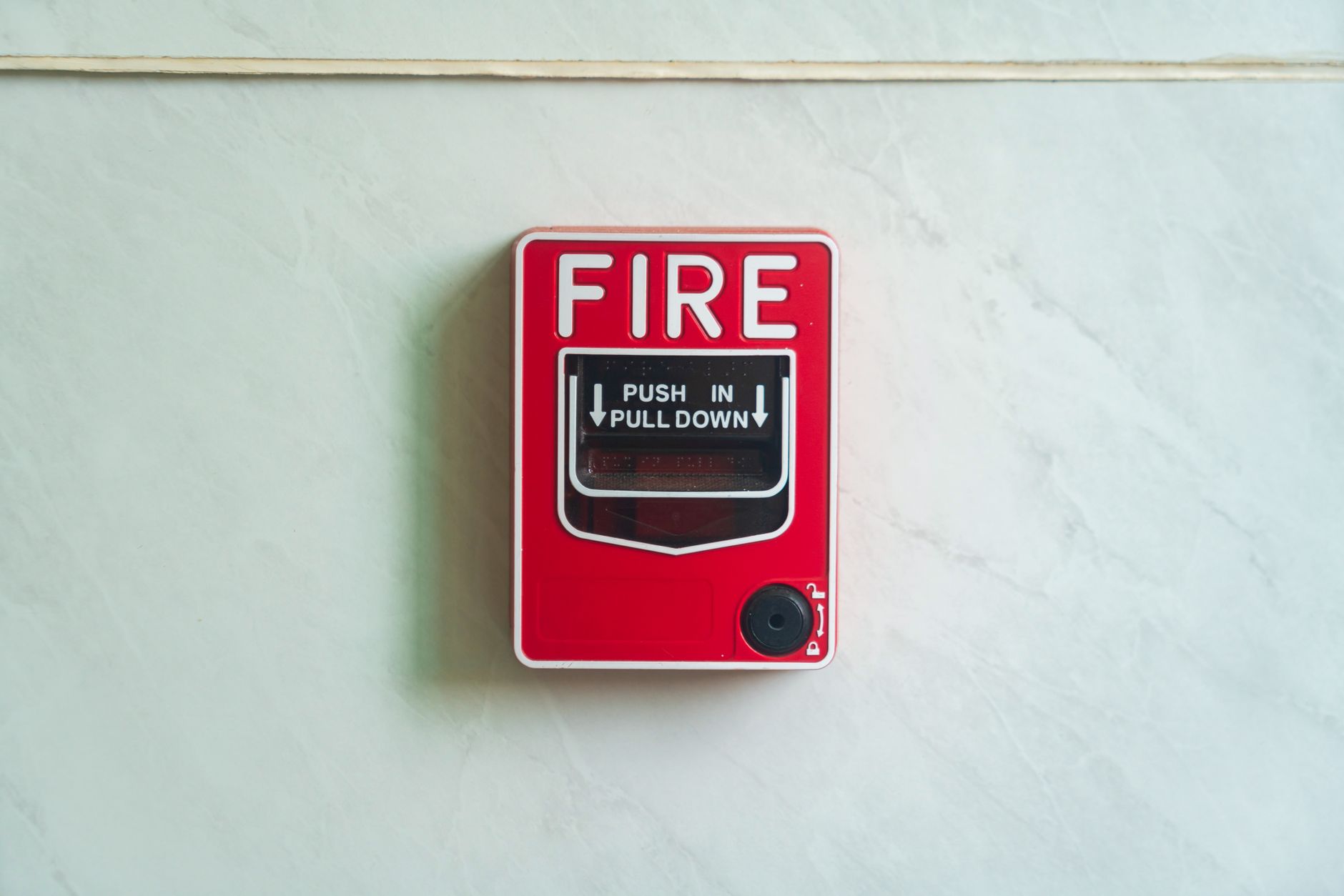
Smoke alarms are your first line of defense when prevention fails. The research is clear: working smoke alarms reduce your risk of dying in a home fire by more than 60 percent. Nearly all U.S. households (99 percent) have at least one smoke alarm, but the critical variable is whether those alarms actually work. A 2024 survey found that 61 percent of households test their smoke alarms less often than recommended, meaning many alarms are non-functional when a fire actually starts. For an aging parent’s home, this is unacceptable. Install smoke alarms in all the right places: hallways outside sleeping areas, inside bedrooms, in the kitchen (use ionization alarms rather than photoelectric ones in kitchens to reduce false alarms), in the garage, and on every level of the house.
This layered approach ensures that if a fire starts in one zone, the alarm will alert your parent no matter where they are. For aging parents with hearing loss, consider interconnected alarms that are louder or that include bed shakers and strobe lights. Test each alarm monthly by pressing the button—actually press it and listen to the full sound. Replace batteries twice a year (many families use the daylight saving time transitions as a reminder). Replace the entire alarm every 10 years, as the sensors degrade over time. The limitation here is that smoke alarms only work if someone is present to hear them and able to respond. If your parent is alone, asleep in a back bedroom, and has mobility issues that make quick evacuation difficult, an alarm alert may not provide enough time to escape safely. This is why smoke alarms work best as part of a broader safety plan that includes planning for rapid evacuation, potentially installing additional safety features like escape routes or fire extinguishers, and in some cases ensuring that someone checks in on your parent regularly or that a monitoring service is in place.
Proper Ashtray Use and Cigarette Disposal
This seems like a small detail, but it’s a critical one. Ashtrays matter enormously. A proper ashtray is large, heavy, and non-tippable, placed on a flat, stable surface where it cannot be knocked over. Plastic ashtrays can melt. Small, lightweight ashtrays tip over too easily. Ashtrays placed on armrests or held on a lap are disaster waiting to happen—if your parent falls asleep and drops the ashtray, cigarettes scatter into upholstery, bedding, or other flammable materials. Many families don’t realize that a tremendous number of smoking fires start not from the cigarette being held, but from an ashtray that tipped over when someone dozed off. Provide your parent with multiple heavy ceramic or glass ashtrays, all placed on stable surfaces in the outdoor smoking area and, if they absolutely must smoke indoors, in designated spots on sturdy tables or stands.
Make clear that these are the only places cigarettes go. Some families also establish a ritual: at the end of smoking, add water to the ashtray, stir the ashes and butts, and wait a few moments before emptying into the trash. This extra step—though it seems fussy—ensures that cigarettes don’t smolder in the trash can, where they can reignite hours later. Use a metal trash can with a lid for cigarette disposal, stored outside and away from the house. The tradeoff is that this approach requires consistent behavior from your parent and regular reminders. It also means accepting that mistakes will happen—you might find a cigarette stubbed out in a drinking glass or left on a windowsill. Aging parents often haven’t been managed about these details for decades, and breaking ingrained habits is genuinely difficult. Your role is to set up the environment to make the safe choice the easy choice, and to accept that you cannot prevent all mistakes, only reduce the likelihood and consequence of the ones that do occur.
Medical Oxygen and Medication Interactions
If your parent uses medical oxygen for any reason—whether regularly or intermittently—you need to have an explicit, serious conversation about smoking and oxygen safety. Oxygen itself is not flammable, but it dramatically accelerates the burning of other materials and lowers the ignition temperature required for fire to start. A lit cigarette near active oxygen can cause immediate ignition. Even oxygen that appears to be turned off can still pose a risk if residual oxygen remains in the tubing or around the delivery system. The combination of smoking and medical oxygen is essentially incompatible, and it’s one of the few situations where you may need to be direct and non-negotiable. If your parent requires oxygen, the only safe approach is that smoking must stop entirely or be separated completely from oxygen use. This might mean establishing a time when oxygen is removed and stored safely in a separate room, after which smoking can occur outdoors in a designated area. It might mean accepting that your parent will need to choose between using oxygen and using cigarettes during specific parts of the day.
This is difficult, and it requires honest discussion with your parent and their doctors about priorities and values. Some aging parents will choose their independence (by using oxygen to enable activity) over smoking. Others will choose smoking over oxygen use. That’s their decision, but you need to ensure they understand the stakes and that you’re not facilitating an unsafe combination. Many medications also interact poorly with smoking or increase fire risk. Sedating medications—pain relievers, sleep aids, anxiety medications—significantly increase the risk of falling asleep while smoking. Your parent’s doctor should be aware that smoking is ongoing, and you should ask directly: “Are there any medications Dad is taking that increase drowsiness?” If yes, establish the rule that no smoking within four hours of taking that medication. This is another area where you may need reminders, alarms on phones, or the involvement of a caregiver to enforce.
Protecting Children and Dependents in the Household
If your parent’s home includes any children or other dependents, additional safeguards become important. Children ages five and younger are particularly vulnerable in fires, with more than 50 percent of children in that age range who die in fires doing so while asleep. If your parent is providing childcare, this adds urgency to fire safety planning. Ensure that children sleep in a room with a smoke alarm nearby and with a clear evacuation route. If your parent tends to fall asleep while smoking and children are present, you may need to establish supervised visiting arrangements where smoking is not a possibility during times when children are present.
Additionally, children’s sleepwear matters. Dress children who visit in snug-fitting clothing labeled as flame-resistant. Standard loose pajamas can ignite more easily. This is a straightforward safety measure that takes no parent effort but requires that you actually purchase or bring appropriate sleepwear. Keep it at your parent’s house and establish that this is what children wear when visiting. For children old enough to understand, have an age-appropriate conversation about fire safety, evacuation plans, and the fact that fire is a danger in homes where people smoke.
Long-Term Trends and Realistic Prevention Outlook
There is one piece of good news in the fire safety landscape: smoking-related fire deaths have trended downward over the past 20 years. This decline is attributed to two main factors: reduced prevalence of smoking overall and the implementation of “fire-safe” cigarette standards mandated in the U.S. since 2003. Fire-safe cigarettes are designed to self-extinguish if left unattended, dramatically reducing the risk that a dropped cigarette will cause a fire. If your parent is smoking, ensure they’re using fire-safe cigarettes (nearly all cigarettes sold in the U.S.
are now fire-safe by law, but it’s worth confirming, especially if your parent purchases cigarettes through less common channels). This doesn’t mean smoking is safe—it’s not. But it does mean that the risk landscape has gradually improved. For adult children managing aging parents who smoke, this trend is reason for cautious optimism. Combined with proper prevention measures—outdoor smoking, working smoke alarms, designated ashtrays, clear rules—the actual risk of a smoking-related fire in a well-managed household is lower than it was a generation ago. Your role is to implement these measures consistently and to accept that you’re reducing risk, not eliminating it entirely.
Conclusion
Fireproofing your aging parent’s home when they still smoke is a balancing act between respecting their autonomy and managing real, quantifiable risk. Smoking materials cause nearly a quarter of all home fire fatalities in America, but the majority of smoking-related fires are preventable through concrete, practical measures: establishing the rule that smoking happens outdoors only, installing and regularly testing smoke alarms in multiple locations, using proper ashtrays on stable surfaces, and having difficult conversations about medications and oxygen that interact dangerously with smoking. These steps don’t require your parent to quit; they require environmental management and consistent boundaries. Start with a conversation. Explain what you’ve learned about smoking fire risk.
Involve your parent’s doctor if medical oxygen or sedating medications are involved. Work together to make outdoor smoking practical and convenient. Install smoke alarms and test them together. Make ashtrays accessible and establish disposal routines. Check in regularly and reinforce the rules without judgment. It’s possible to keep an aging parent reasonably safe while they continue to smoke, but it requires your sustained attention and your willingness to have uncomfortable conversations about risk and aging.
Frequently Asked Questions
What if my parent absolutely refuses to smoke outdoors?
This is the most common resistance. Start with understanding why—is it physical difficulty, habit, or something else? Work to solve the actual barrier. If refusal is absolute and you’re concerned about safety, you may need to limit unsupervised time in the home or discuss alternative living arrangements. You cannot force an adult to follow rules, but you can establish your own boundaries about what situations you’re comfortable with.
Are electronic cigarettes safer for fire prevention?
Yes, in the sense that e-cigarettes cannot start fires the way traditional cigarettes can—there’s no open flame or smoldering tobacco. However, e-cigarette batteries have been known to malfunction and catch fire, though this is rare. If your parent switches to e-cigarettes, the fire risk from a dropped or smoldering cigarette is eliminated, which is a significant safety improvement.
Should I buy fire-resistant blankets or bedding?
Fire-resistant bedding is available, but it’s most effective if your parent is not smoking around it at all. Resistant doesn’t mean fireproof. For aging parents who smoke, prevention (not smoking in bed) is far more effective than trying to make beds fire-resistant. That said, if you’re concerned about your parent’s sleep safety, fire-resistant sheets and blankets do add a layer of protection and are worth considering.
If my parent has dementia, what should I do?
This becomes a higher-risk situation that may require more active supervision or a change in living arrangements. A parent with cognitive decline cannot reliably follow safety rules or remember not to smoke indoors. If your parent is still living independently but has dementia, consider increasing the frequency of check-ins, involving a part-time caregiver to supervise, or discussing a move to assisted living where staff can manage both the smoking and the fire risk.
How often should smoke alarms be tested?
Once a month is the recommendation. It takes 10 seconds—press the button and listen for the alarm. Replace batteries twice a year, and replace entire units every 10 years. Yes, this seems frequent, but a non-functioning alarm is worse than no alarm at all.
What’s the first step I should take right now?
Install smoke alarms in your parent’s bedroom, the hallway outside the bedroom, the kitchen, and the living room if one isn’t there already. Test them to make sure they work. Then have a conversation about establishing outdoor-only smoking. These two steps alone reduce risk substantially.